
baarc rheumatology

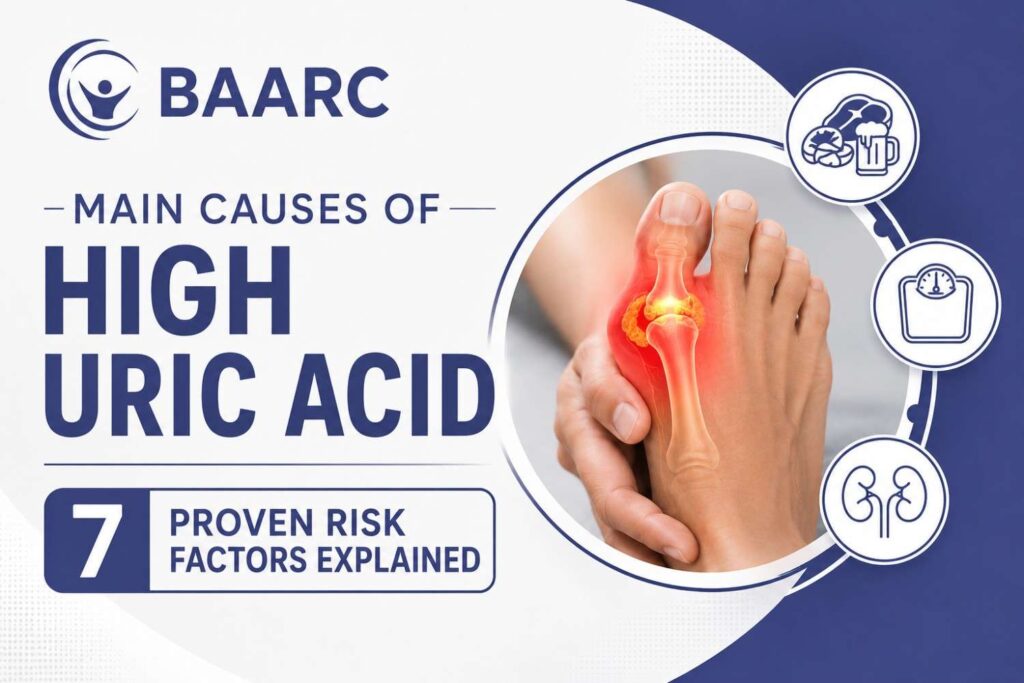
Feature image illustrating the main causes of high uric acid, showing an inflamed big toe joint associated with gout alongside icons representing key risk factors such as diet, obesity, and kidney-related issues.

Main Causes of High Uric Acid – 7 Proven Risk Factors Explained

High uric acid often develops due to a combination of lifestyle, metabolic, and medical factors. From dietary habits and excess weight to kidney function and genetic predisposition, understanding the underlying causes is essential for preventing hyperuricemia and reducing the risk of gout. This guide explains seven proven risk factors that can contribute to elevated uric acid levels and long-term health complications.

Main Causes of High Uric Acid – 7 Proven Risk Factors Explained Read More »

Illustration showing the question “Can Uric Acid Be Controlled Permanently?” with a gout-affected foot, a confirmation check mark, and healthy lifestyle elements including water, exercise shoes, fruits, and vegetables representing long-term uric acid management.

Can Uric Acid Be Controlled Permanently? What You Need to Know

Can uric acid be controlled permanently? While there may not be a permanent cure for the underlying tendency to develop high uric acid, long-term control is achievable through proper treatment, healthy lifestyle choices, dietary modifications, and regular medical monitoring. Understanding how uric acid is managed can help reduce the risk of gout attacks, joint damage, and related health complications.

Can Uric Acid Be Controlled Permanently? What You Need to Know Read More »

Call Us Now
WhatsApp