
How Is Fibromyalgia Diagnosed? 9 Powerful Clinical Insights
Understanding how is fibromyalgia diagnosed can be important for people experiencing widespread body pain, persistent tiredness, sleep problems, and difficulty concentrating. Fibromyalgia does not usually appear on an X-ray or a single blood test, so diagnosis involves carefully evaluating symptoms and excluding other possible medical conditions. For people seeking an evaluation in Kozhikode, understanding the diagnostic process can make medical consultations easier to follow and help them provide useful information about their symptoms.
Fibromyalgia is a chronic condition associated with widespread musculoskeletal pain, fatigue, sleep disturbances, cognitive difficulties, and increased sensitivity to pain. Because these symptoms can overlap with arthritis, thyroid disorders, autoimmune diseases, sleep disorders, and other conditions, diagnosis requires a systematic clinical assessment.
This guide explains how is fibromyalgia diagnosed, what symptoms are considered, which tests may be performed, and what happens after a diagnosis.
What Is Fibromyalgia
Fibromyalgia is a chronic disorder characterized primarily by widespread pain and tenderness. It can also affect sleep, energy levels, concentration, memory, and overall daily functioning.
Researchers believe fibromyalgia involves changes in how the nervous system processes pain signals. A person may therefore experience increased sensitivity to sensations that might not cause significant discomfort in someone without the condition.
Common fibromyalgia symptoms include:
- Widespread muscle and body pain
- Persistent fatigue
- Poor-quality or unrefreshing sleep
- Muscle stiffness
- Headaches
- Difficulty concentrating
- Memory problems
- Increased sensitivity to touch
- Tingling or numbness
- Digestive complaints in some people
Symptoms can fluctuate. Some people experience periods when symptoms become more noticeable, often referred to as flare-ups.
Because these symptoms are not unique to fibromyalgia, determining how is fibromyalgia diagnosed requires looking at the complete clinical picture rather than relying on one symptom.
How Is Fibromyalgia Diagnosed Initially
When explaining how is fibromyalgia diagnosed, the first point to understand is that there is currently no single laboratory or imaging test that independently confirms fibromyalgia.
Diagnosis is primarily clinical.
A healthcare professional generally considers three important areas:
- The person’s medical history
- The pattern and duration of symptoms
- Whether another condition could better explain those symptoms
The evaluation usually begins with a detailed conversation about pain. Patients may be asked where they experience discomfort, how long it has been present, whether it occurs continuously or intermittently, and whether other symptoms accompany it.
Sleep, fatigue, concentration difficulties, headaches, digestive symptoms, and emotional well-being may also be discussed.
This comprehensive approach is important because fibromyalgia affects people differently.
Medical History in Fibromyalgia Diagnosis
A detailed medical history is one of the most important parts of understanding how is fibromyalgia diagnosed.
The healthcare professional may ask when symptoms first appeared and whether they developed gradually or after a particular event.
Questions may cover:
- How long pain has been present
- Which areas of the body hurt
- Whether pain occurs on both sides
- Whether pain affects the upper and lower body
- Severity of fatigue
- Quality of sleep
- Morning stiffness
- Headaches or migraines
- Problems with concentration or memory
- Previous illnesses or injuries
- Current medications
- Other diagnosed medical conditions
Family and personal medical histories may also provide useful context.
Keeping a symptom diary before an appointment can help provide a clearer picture of symptom frequency, severity, and possible triggers.
How Is Fibromyalgia Diagnosed Based on Pain Patterns
Widespread pain is a central feature considered when evaluating fibromyalgia.
Rather than focusing on pain in a single joint or muscle, healthcare professionals examine whether discomfort occurs across multiple regions of the body.
Current diagnostic approaches may consider pain affecting areas such as:
- Left and right shoulders
- Upper and lower arms
- Hips
- Upper and lower legs
- Upper back
- Lower back
- Neck
- Chest
- Abdomen
- Jaw
The distribution and persistence of symptoms are more informative than pain at one isolated location.
Symptoms generally need to have persisted for a meaningful period before fibromyalgia is considered. This helps distinguish persistent widespread pain from temporary muscle soreness caused by exercise, infection, injury, or short-term illness.
Symptoms Considered During Fibromyalgia Evaluation
Pain is important, but it is not the only factor involved in how is fibromyalgia diagnosed.
Several associated symptoms may strengthen the overall clinical picture.
Fatigue
People with fibromyalgia may feel tired even after spending enough time in bed. Fatigue can interfere with work, household activities, exercise, and social activities.
Sleep Problems
Sleep may be interrupted or unrefreshing. A person can sleep for several hours and still wake feeling exhausted.
Cognitive Difficulties
Some people experience problems with concentration, memory, or mental clarity. This is sometimes informally called “fibro fog.”
It may involve:
- Forgetting information
- Difficulty concentrating
- Trouble following conversations
- Reduced mental clarity
- Difficulty completing complex tasks
Muscle Stiffness
Stiffness may be especially noticeable after waking or remaining in the same position for an extended period.
Headaches
Recurring headaches and migraines can occur alongside fibromyalgia.
Increased Sensitivity
Some individuals become particularly sensitive to pressure, touch, temperature, noise, or other sensations.
The combination and persistence of these symptoms help clinicians understand whether fibromyalgia may be present.
Physical Examination for Fibromyalgia
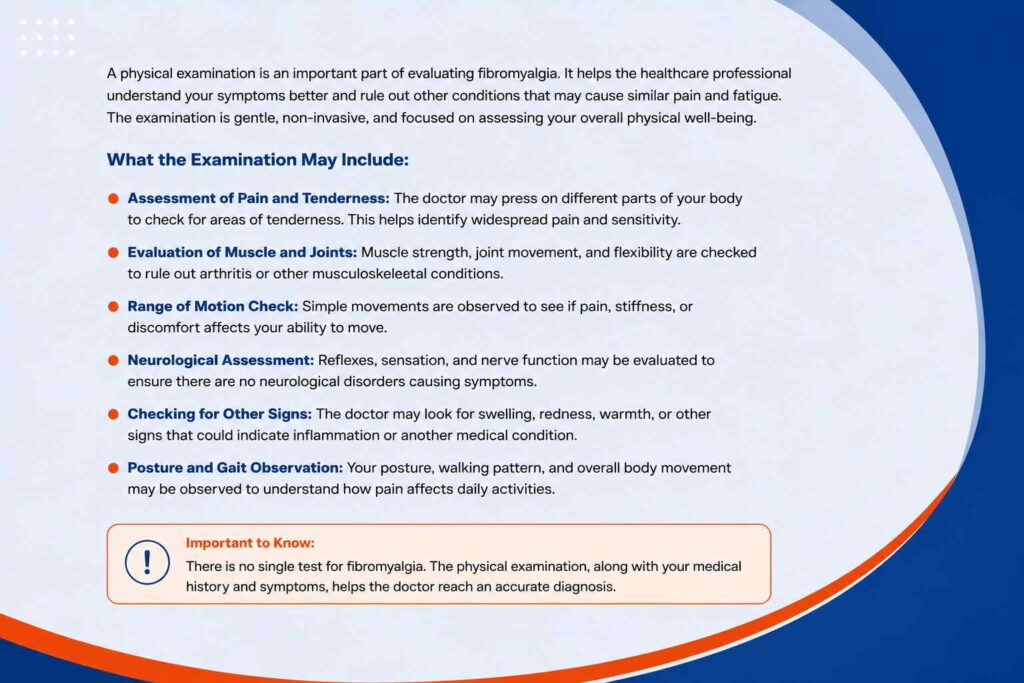
A physical examination is another important component of how is fibromyalgia diagnosed.
The examination can help identify the location of pain and, importantly, look for signs suggesting another medical condition.
A healthcare professional may evaluate:
- Painful areas
- Joint movement
- Muscle tenderness
- Muscle strength
- Reflexes
- Swelling
- Skin changes
- Range of motion
- Neurological function
Fibromyalgia generally does not produce the same visible joint inflammation associated with some inflammatory forms of arthritis.
Therefore, significant swelling, warmth, redness, or other objective signs may prompt investigation for additional or alternative conditions.
Are Tender Points Still Used?
Historically, fibromyalgia diagnosis relied heavily on examining specific “tender points” around the body.
Modern diagnostic approaches do not depend exclusively on these tender points. Greater emphasis is now placed on widespread pain, symptom severity, associated symptoms, and their duration.
This broader approach reflects the diverse ways fibromyalgia can present.
Diagnostic Criteria Used for Fibromyalgia
Clinical criteria can help healthcare professionals assess whether a person’s symptom pattern is compatible with fibromyalgia.
Two concepts commonly considered are the Widespread Pain Index (WPI) and Symptom Severity Scale (SSS).
Widespread Pain Index
The Widespread Pain Index evaluates how many areas of the body have experienced pain during a defined period.
It helps establish whether pain is genuinely widespread rather than confined to one specific region.
Symptom Severity Scale
The Symptom Severity Scale assesses important non-pain symptoms associated with fibromyalgia.
These can include:
- Fatigue
- Unrefreshing sleep
- Cognitive difficulties
- Other physical symptoms
These tools are interpreted as part of a broader clinical evaluation rather than being treated as stand-alone diagnostic tests.
Blood Tests and Other Tests
A common question after asking how is fibromyalgia diagnosed is whether a blood test can confirm the condition.
Routine blood tests cannot usually confirm fibromyalgia directly. Instead, laboratory investigations may be ordered to check for conditions capable of producing similar symptoms.
Depending on a person’s symptoms and medical history, testing may include assessments related to:
- Blood cell counts
- Thyroid function
- Inflammation
- Liver function
- Kidney function
- Nutritional deficiencies
- Autoimmune disorders when clinically indicated
The exact investigations vary from person to person.
Testing every possible condition is generally unnecessary. Healthcare professionals select investigations based on the symptoms, examination findings, age, medical history, and other relevant clinical information.
Why Other Conditions May Need to Be Ruled Out
An important part of how is fibromyalgia diagnosed involves considering alternative explanations for widespread pain and fatigue.
Several conditions can produce symptoms resembling fibromyalgia.
Examples include:
- Hypothyroidism
- Rheumatoid arthritis
- Lupus and other autoimmune disorders
- Polymyalgia rheumatica
- Vitamin or nutritional deficiencies
- Certain muscle disorders
- Neurological conditions
- Sleep disorders
- Chronic fatigue-related conditions
This does not mean every patient requires extensive testing for all these conditions.
Instead, clinical history and examination determine which possibilities need further investigation.
It is also possible for fibromyalgia to occur alongside another medical disorder. Having arthritis or another chronic condition does not automatically exclude fibromyalgia.
Is Imaging Required to Diagnose Fibromyalgia
X-rays, ultrasound scans, CT scans, and MRI scans generally do not directly diagnose fibromyalgia.
Imaging may nevertheless be useful when symptoms suggest another structural or inflammatory problem.
For example, imaging might be considered if a patient has symptoms suggesting:
- Joint damage
- Spinal problems
- Previous injury
- Significant localized pain
- Neurological compression
- Another musculoskeletal disorder
Normal imaging does not prove that a person has fibromyalgia. Similarly, fibromyalgia symptoms are genuine even though conventional imaging may not reveal a structural explanation for the pain.
Why Fibromyalgia Can Take Time to Diagnose
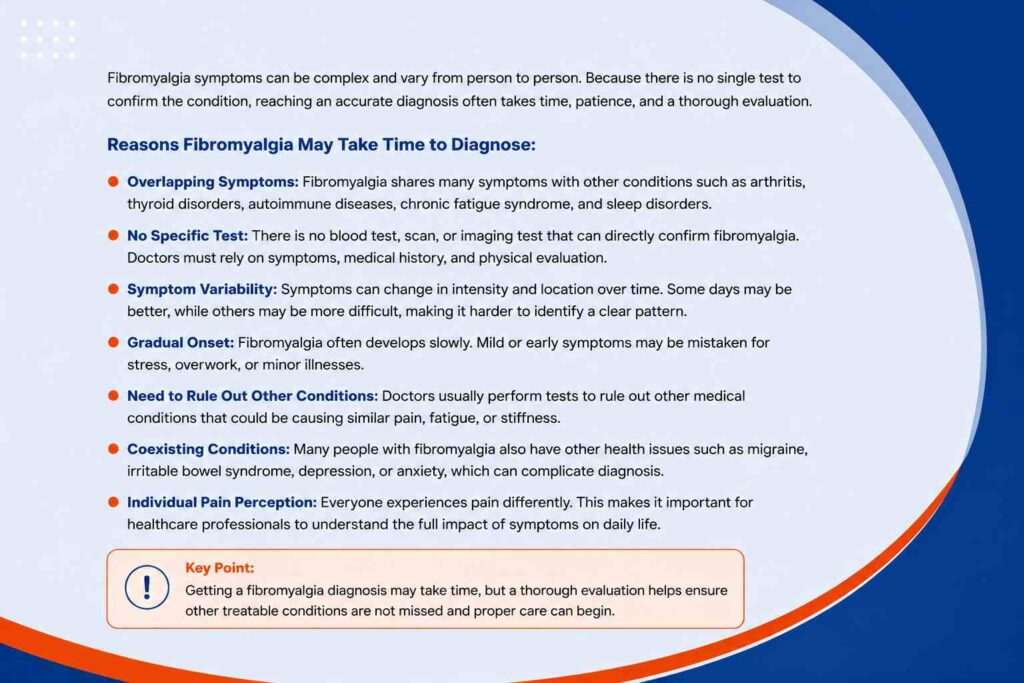
Understanding how is fibromyalgia diagnosed also explains why some people do not receive a diagnosis immediately.
Fibromyalgia symptoms overlap with numerous medical conditions. Symptoms can also develop gradually and change in intensity over time.
Diagnosis may therefore take longer when:
- Symptoms are initially mild
- Pain changes location
- Fatigue is the dominant complaint
- Several medical conditions exist together
- Symptoms resemble an autoimmune disorder
- Sleep problems complicate the clinical picture
A thorough assessment can help avoid attributing symptoms to fibromyalgia when another treatable condition requires attention.
Common Causes and Possible Triggers of Fibromyalgia
The exact cause of fibromyalgia is not completely understood.
Current understanding suggests that altered processing of pain signals within the nervous system may play an important role.
Possible contributing factors or triggers can include:
- Genetic susceptibility
- Physical trauma
- Certain infections
- Significant psychological stress
- Changes in pain-processing pathways
- Sleep disturbances
Not everyone can identify a specific event that triggered their symptoms.
Understanding potential contributing factors can provide clinical context, but identifying a trigger is not required for diagnosis.
Types and Patterns of Fibromyalgia Symptoms
Fibromyalgia is generally considered one clinical condition rather than being divided into rigid medical “types.” However, symptom patterns can differ substantially between individuals.
For example, one person may primarily experience severe widespread pain and stiffness, while another may be more affected by fatigue and poor sleep.
Symptoms may include combinations of:
- Widespread pain
- Fatigue-dominant symptoms
- Sleep-related problems
- Cognitive symptoms
- Headaches
- Digestive complaints
- Sensory sensitivity
Recognizing these variations is important when considering how is fibromyalgia diagnosed, because there is no single symptom pattern shared identically by every patient.
Benefits of an Accurate Fibromyalgia Diagnosis
Receiving an appropriate diagnosis can help patients better understand persistent symptoms and establish a structured management plan.
Potential benefits include:
- Identifying a possible explanation for widespread pain
- Avoiding unnecessary repeated investigations
- Beginning appropriate symptom management
- Addressing sleep difficulties
- Improving understanding of symptom triggers
- Developing realistic physical activity strategies
- Monitoring changes in symptoms
- Identifying other conditions that may coexist
An accurate diagnosis is especially valuable because treatment usually requires a combination of approaches rather than one universal solution.
Treatment After Fibromyalgia Is Diagnosed
Although the main question is how is fibromyalgia diagnosed, understanding what follows diagnosis can help patients see why a careful assessment matters.
Fibromyalgia management is individualized according to the person’s symptoms and functional limitations.
Physical Activity
Regular, gradual physical activity can be an important part of management. Low-impact activities may be introduced slowly according to individual tolerance.
Examples can include walking, swimming, stretching, or other appropriate aerobic activities.
Sleep Management
Because poor sleep can worsen fatigue and pain sensitivity, establishing consistent sleep habits may be helpful.
Stress Management
Relaxation techniques and strategies for managing stress may form part of a broader treatment plan.
Psychological Therapies
Approaches such as cognitive behavioural therapy may help some individuals develop strategies for managing chronic symptoms and their impact on daily life.
Medication
Depending on symptoms and individual circumstances, medication may sometimes be considered for pain, sleep difficulties, or related problems.
Medication decisions should be individualized and medically supervised.
Tips Before a Fibromyalgia Evaluation
Preparing for an appointment can make it easier to explain symptoms clearly.
Consider documenting:
- When symptoms started
- Areas affected by pain
- Duration of pain
- Severity and frequency of fatigue
- Sleep quality
- Headaches
- Cognitive problems
- Activities that worsen symptoms
- Factors that improve symptoms
- Current medications
- Previous medical conditions
- Relevant test results
A symptom diary can be particularly useful if symptoms vary from day to day.
Avoid focusing only on the most painful area. Fibromyalgia evaluation considers the overall distribution of pain and associated symptoms.
When Should Persistent Symptoms Be Evaluated
Persistent widespread pain, unexplained fatigue, sleep problems, or cognitive difficulties deserve appropriate medical evaluation, particularly when they interfere with everyday activities.
Earlier assessment may help determine whether symptoms are related to fibromyalgia or another condition.
Certain new or severe symptoms should not automatically be attributed to fibromyalgia. Significant weakness, unexplained fever, substantial swelling, unexpected weight changes, or rapidly changing neurological symptoms may require separate evaluation.
Conclusion
Understanding how is fibromyalgia diagnosed starts with recognizing that there is no single test that confirms the condition. Diagnosis generally depends on a detailed medical history, widespread pain assessment, associated symptoms, physical examination, established clinical criteria, and appropriate testing to investigate other possible causes.
Because symptoms vary considerably between individuals, the evaluation needs to consider the complete clinical picture. Anyone experiencing persistent widespread pain, fatigue, sleep disturbance, or concentration difficulties should consider an appropriate medical assessment rather than relying on symptoms alone. For individuals seeking evaluation in Thrissur, documenting symptoms and their duration beforehand can help support a more informative clinical consultation. For reliable information about fibromyalgia symptoms and diagnosis, visit the National Institute of Arthritis and Musculoskeletal and Skin Diseases (NIAMS) – Fibromyalgia.
Frequently Asked Questions
1. How is fibromyalgia diagnosed?
2. Is there a specific test for fibromyalgia?
3. What symptoms are considered when diagnosing fibromyalgia?
4. Are blood tests required for fibromyalgia diagnosis?
5. Can an MRI or X-ray diagnose fibromyalgia?
6. How long must symptoms last before fibromyalgia is diagnosed?
7. Are tender points still used to diagnose fibromyalgia?
8. What is the Widespread Pain Index in fibromyalgia diagnosis?
9. What conditions may need to be ruled out before diagnosing fibromyalgia?
10. Can fibromyalgia be diagnosed even if blood tests are normal?
BAARC Rheumatology Specialists

Dr Athul Paul
MD, Post Doctoral Fellowship in Rheumatology (CMC Vellore)
Consultant Rheumatologist
BAARC Rheumatology Clinic, Kozhikode

Dr Binoy J Paul
MD, PhD, DNB, FRCP (Edin.)
Senior Consultant Rheumatologist
BAARC Rheumatology Centre, Kozhikode