
Joint Pain Treatment in Kozhikode
Joint pain can range from occasional discomfort after physical activity to persistent pain that affects walking, working, sleeping, or performing everyday tasks. Finding suitable Joint Pain Treatment in Kozhikode starts with understanding why the pain is occurring rather than treating every type of joint pain in the same way.Joint pain can affect the knees, hips, shoulders, wrists, fingers, ankles, feet, elbows, or several joints at once. An injury, osteoarthritis, rheumatoid arthritis, gout, inflammation, repetitive strain, or another medical condition may be responsible. Because these causes require different approaches, proper evaluation is an important first step.A suitable Joint Pain Treatment in Kozhikode plan may include activity modification, physiotherapy, medicines, weight management, exercises, supportive measures, or specialist treatment depending on the underlying cause.
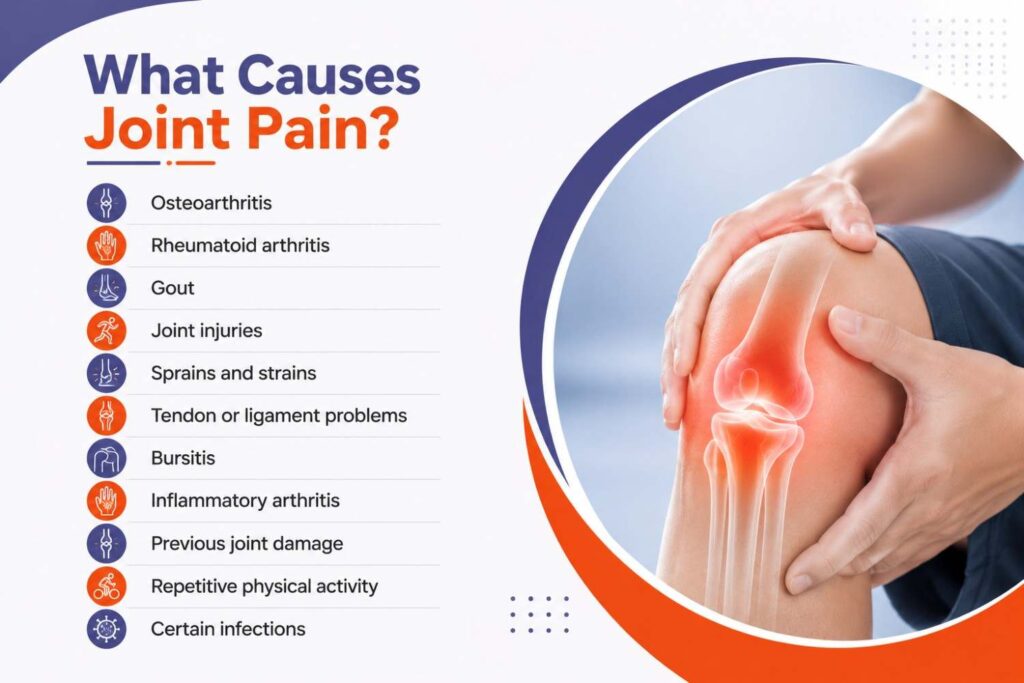
What Causes Joint Pain?
Joint pain has many possible causes. Some develop gradually, while others may appear suddenly.
Common Causes
- Osteoarthritis
- Rheumatoid arthritis
- Gout
- Joint injuries
- Sprains and strains
- Tendon or ligament problems
- Bursitis
- Inflammatory arthritis
- Previous joint damage
- Repetitive physical activity
- Certain infections
A painful joint does not automatically mean that arthritis is present. For example, sudden pain following an injury may have a different cause from gradually increasing knee pain associated with osteoarthritis.
This is why Joint Pain Treatment in Kozhikode should be based on an assessment of the symptoms, affected joint, duration, medical history, and physical findings.
Common Types of Joint Pain
Understanding the pattern of pain can provide useful clues about its possible cause.
Osteoarthritis-Related Joint Pain
Osteoarthritis commonly causes pain, stiffness, tenderness, and difficulty moving the affected joint. The knees, hips, and small joints of the hands are frequently involved.Pain may become more noticeable with activity, while stiffness can occur after periods of inactivity.
Rheumatoid Arthritis-Related Pain
Rheumatoid arthritis is an autoimmune inflammatory condition. It commonly causes joint pain, swelling, and stiffness, particularly in the hands, wrists, and feet.Morning stiffness that lasts longer than typical short-term stiffness can be an important feature. The condition may also affect both sides of the body.
Gout-Related Joint Pain
Gout can cause sudden, intense pain with swelling and warmth in a joint. The big toe is a common location, although other joints can also be affected.Because gout is associated with uric acid crystal formation, its management differs from treatment for osteoarthritis or rheumatoid arthritis.
Injury-Related Joint Pain
A fall, sports injury, twisting movement, repetitive strain, or direct impact can damage tissues around a joint.Pain following an injury may be accompanied by swelling, bruising, reduced movement, or difficulty putting weight on the affected area.
Symptoms That May Accompany Joint Pain
Pain is often not the only symptom.
Depending on the cause, you may experience:
- Joint stiffness
- Swelling
- Tenderness
- Warmth
- Reduced range of motion
- Difficulty walking
- Weakness
- Clicking or grinding sensations
- Morning stiffness
- Pain after activity
- Pain after prolonged inactivity
The combination and timing of symptoms can help a doctor determine the likely cause.For example, persistent swelling and prolonged morning stiffness may suggest an inflammatory condition, while pain that increases with use may occur with osteoarthritis.
When Should You Seek Medical Evaluation?
Not every episode of joint pain requires immediate specialist care. However, persistent or recurring symptoms should not be ignored.
Consider medical evaluation if:
- Joint pain continues for more than a short period
- Pain keeps returning
- Swelling is persistent
- Joint stiffness affects daily activities
- Pain interferes with sleep
- Walking becomes difficult
- Several joints become painful
- Symptoms gradually become worse
- Morning stiffness lasts for a prolonged period
Medical assessment becomes particularly important when joint pain is accompanied by swelling, warmth, fever, or feeling generally unwell. A hot, swollen joint with systemic symptoms can require urgent evaluation.
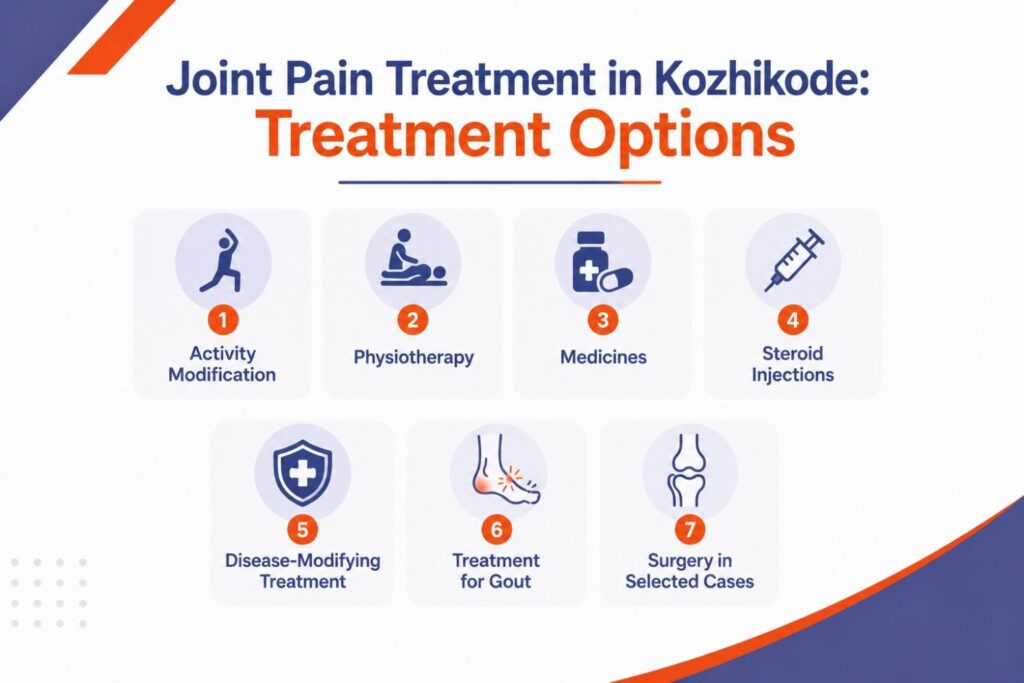
Joint Pain Treatment in Kozhikode: Treatment Options
Treatment depends primarily on the underlying cause. There is no universal treatment that works for every type of joint pain.
1. Activity Modification
Temporary changes to activities that aggravate the joint can help reduce additional strain.However, completely avoiding movement for long periods may increase stiffness and weakness. The goal is usually to find an appropriate level of activity.
2. Physiotherapy
Physiotherapy can be useful for many causes of joint pain.
A physiotherapist may develop exercises that focus on:
- Muscle strengthening
- Flexibility
- Joint mobility
- Balance
- Movement control
- Functional activities
For osteoarthritis, regular exercise and strengthening are important components of symptom management.
3. Medicines
Depending on the diagnosis, a doctor may recommend medicines for pain or inflammation.
These can include:
- Pain-relieving medicines
- Non-steroidal anti-inflammatory drugs
- Topical medicines
- Disease-modifying medicines for inflammatory arthritis
- Uric acid-lowering medicines for gout
- Other condition-specific treatments
The appropriate medicine depends on age, medical history, other medicines, kidney and liver function, and the underlying condition.Pain-relieving medicines may reduce discomfort, but they may not address the disease causing the joint problem.
4. Steroid Injections
In selected cases, a doctor may consider a corticosteroid injection into or around a painful joint.This approach is not suitable for every patient or every cause of joint pain. The decision depends on the diagnosis and clinical assessment.
5. Disease-Modifying Treatment
Inflammatory conditions such as rheumatoid arthritis may require disease-modifying medicines.These medicines are designed to control the underlying inflammatory process and reduce the risk of progressive joint damage. DMARDs and biologic treatments are among the therapies used for rheumatoid arthritis under specialist supervision.
6. Treatment for Gout
When gout is responsible for recurrent joint pain, management may include treatment of acute attacks and medicines that reduce uric acid levels over time.The treatment plan depends on the frequency of attacks, uric acid levels, kidney health, and other individual factors.
7. Surgery in Selected Cases
Surgery is not necessary for most people with joint pain.However, when severe joint damage causes substantial functional limitations and other treatments have not provided sufficient benefit, procedures such as joint repair or replacement may be considered.For osteoarthritis, surgery is generally reserved for selected cases where symptoms remain significant despite non-surgical management.
Role of Exercise in Joint Pain Management
Exercise may seem difficult when a joint hurts, but appropriate physical activity can help maintain strength, flexibility, and function.
Low-Impact Activities
Depending on the condition, suitable activities may include:
- Walking
- Swimming
- Cycling
- Gentle stretching
- Water-based exercise
- Strengthening exercises
Exercise should be adapted to the person’s condition.During a significant inflammatory flare or immediately after an injury, the exercise plan may need temporary modification.The objective is to maintain useful movement without placing excessive stress on the affected joint.
Lifestyle Changes That Can Support Joint Health
Daily habits can complement professional care.
Maintain a Healthy Weight
Excess body weight can place additional mechanical stress on weight-bearing joints such as the knees and hips.If weight reduction is appropriate, gradual changes in diet and physical activity are generally more sustainable than extreme approaches.
Eat a Balanced Diet
A varied diet containing vegetables, fruits, whole grains, pulses, lean proteins, nuts, and other nutrient-rich foods supports general health.No particular food should be presented as a cure for arthritis or chronic joint pain.
Avoid Smoking
Smoking can negatively affect overall health and may be associated with an increased risk of some inflammatory conditions.
Get Adequate Sleep
Persistent pain can interfere with sleep, while poor sleep may make pain and fatigue harder to manage. Maintaining a consistent sleep routine can support overall wellbeing.
Stay Active
Long periods of complete inactivity can contribute to stiffness and muscle weakness. Appropriate daily movement is generally preferable to avoiding activity altogether.
Benefits of Proper Joint Pain Management
A structured treatment approach can support several aspects of physical health.
Improved Movement
Reducing pain and stiffness may make walking, reaching, climbing stairs, or other activities easier.
Better Physical Function
Strengthening surrounding muscles can help support joint function.
Reduced Activity Limitations
Managing the underlying cause can make it easier to continue work, household activities, and exercise.
Better Long-Term Joint Health
Early recognition of inflammatory or progressive joint conditions can allow appropriate treatment before complications develop.
Improved Quality of Life
Effective management can help reduce the effect of chronic joint symptoms on sleep, mobility, work, and daily routines.
Why the Cause Matters More Than the Pain Alone
Two people can have pain in the same knee but require completely different treatments.
For example:
- One person may have osteoarthritis.
- Another may have gout.
- Another may have rheumatoid arthritis.
- Someone else may have a ligament injury.
- Another person may have bursitis.
Treating only the pain without identifying the cause can result in incomplete management.This is why Joint Pain Treatment in Kozhikode should begin with an appropriate clinical assessment when symptoms are persistent, recurrent, or associated with other concerning features.
Conclusion
Effective Joint Pain Treatment in Kozhikode begins with identifying the reason behind the pain. Arthritis, injuries, gout, inflammation, repetitive strain, and other conditions can produce similar symptoms but require different approaches.A combination of appropriate medical care, physiotherapy, suitable exercise, lifestyle changes, and regular monitoring can help many people improve movement and manage recurring joint problems. Persistent swelling, prolonged stiffness, worsening pain, or symptoms that interfere with everyday life should be assessed rather than managed indefinitely at home.The right treatment depends on the individual, so avoid assuming that one medicine, exercise, or home remedy will work for every type of joint pain. If you are looking for Joint Pain Treatment in Kozhikode, a proper clinical evaluation can help determine the cause and guide a suitable management plan.Learn more from global health authorities ->American College of Rheumatology (ACR)
FREQUENTLY ASKED QUESTIONS
BAARC Rheumatology Specialists

Dr Athul Paul
MD, Post Doctoral Fellowship in Rheumatology (CMC Vellore)
Consultant Rheumatologist
BAARC Rheumatology Clinic, Kozhikode

Dr Binoy J Paul
MD, PhD, DNB, FRCP (Edin.)
Senior Consultant Rheumatologist
BAARC Rheumatology Centre, Kozhikode