
Is Fibromyalgia an Autoimmune Disease? 10 Powerful Key Facts
Is fibromyalgia an autoimmune disease? This is a common question because fibromyalgia shares several symptoms with autoimmune conditions, including chronic pain, fatigue, sleep problems, and difficulty concentrating. For people in Thrissur and elsewhere who are trying to understand persistent widespread pain, distinguishing fibromyalgia from an autoimmune disease can make the condition easier to understand.
The short answer is that fibromyalgia is not currently classified as an autoimmune disease. It is generally understood as a chronic condition involving altered pain processing and increased sensitivity within the nervous system. However, ongoing research is examining possible relationships between the immune system and fibromyalgia.
This distinction matters because autoimmune diseases involve the immune system mistakenly attacking the body’s own tissues. Fibromyalgia behaves differently and does not typically produce the tissue inflammation, organ damage, or established autoimmune markers associated with many autoimmune disorders.
Understanding these differences can help explain symptoms, diagnostic testing, and available approaches to symptom management.
Is Fibromyalgia an Autoimmune Disease
When asking is fibromyalgia an autoimmune disease, it is important to understand how medical professionals currently classify the condition.
Fibromyalgia is a chronic disorder characterized primarily by widespread musculoskeletal pain, fatigue, sleep disturbances, cognitive difficulties, and increased sensitivity to physical sensations.
An autoimmune disease develops when the immune system incorrectly identifies healthy cells or tissues as harmful and attacks them. Conditions such as rheumatoid arthritis and systemic lupus erythematosus are examples of autoimmune disorders.
Fibromyalgia does not currently meet the established criteria for an autoimmune disease. People with fibromyalgia generally do not show the characteristic autoimmune tissue damage seen in these conditions.
However, fibromyalgia symptoms can sometimes resemble autoimmune disease symptoms. This overlap is one reason people frequently wonder whether fibromyalgia has an autoimmune origin.
Why Fibromyalgia May Seem Like an Autoimmune Condition
Several symptoms can occur in both fibromyalgia and autoimmune disorders, including:
- Persistent fatigue
- Muscle and joint pain
- Sleep disturbances
- Difficulty concentrating
- Headaches
- Reduced ability to perform daily activities
- Periods when symptoms become more noticeable
Despite these similarities, the biological mechanisms behind the conditions can be different.
What Is Fibromyalgia
Fibromyalgia is a long-term condition that affects how the body experiences and processes pain. A person may experience pain throughout multiple areas of the body even when there is no obvious injury or tissue damage explaining its intensity.
The nervous system appears to play an important role. Pain signals may become amplified, causing sensations that would normally be mild to feel significantly more painful.
Fibromyalgia can affect people differently. Some experience relatively stable symptoms, while others have periods when pain, fatigue, or sleep problems become more severe.
Common Areas Affected by Fibromyalgia
Widespread discomfort may involve the:
- Neck
- Shoulders
- Upper and lower back
- Arms
- Chest
- Hips
- Legs
Pain may feel aching, burning, throbbing, tender, or unusually sensitive depending on the individual.
What Is an Autoimmune Disease
To properly answer is fibromyalgia an autoimmune disease, understanding autoimmunity is essential.
The immune system normally protects the body against harmful organisms and substances. In an autoimmune disorder, the immune system mistakenly reacts against healthy tissues.
Depending on the disease, this immune response may affect joints, skin, muscles, blood vessels, glands, or internal organs.
Autoimmune disorders may produce measurable evidence of inflammation or immune activity. Blood tests, imaging studies, symptoms, physical findings, and medical history may all contribute to diagnosis.
Fibromyalgia differs because widespread pain can occur without the same type of inflammatory tissue damage.
Fibromyalgia vs Autoimmune Disease
Although symptoms can overlap, several characteristics help distinguish the two.
Fibromyalgia commonly involves:
- Widespread chronic pain
- Increased pain sensitivity
- Fatigue
- Poor-quality sleep
- Cognitive difficulties
- Headaches
- Symptoms without typical inflammatory tissue damage
Autoimmune diseases may involve:
- Abnormal immune activity
- Inflammation
- Tissue or organ involvement
- Disease-specific antibodies in some conditions
- Joint swelling or stiffness
- Skin or systemic changes
- Laboratory abnormalities depending on the disease
These differences are important during medical evaluation.
What Causes Fibromyalgia
The exact cause of fibromyalgia remains unclear. Researchers generally believe that multiple biological and environmental factors may contribute to its development.
Rather than having one identifiable cause, fibromyalgia may develop through a combination of changes affecting pain regulation and nervous system sensitivity.
Abnormal Pain Processing
One of the leading explanations involves altered pain processing.
The brain and spinal cord receive signals from nerves throughout the body. In fibromyalgia, the nervous system may become unusually sensitive to these signals.
This phenomenon is often discussed in relation to central sensitization, where the central nervous system becomes more responsive to sensory input.
As a result, pressure or sensations that would normally cause little discomfort may become painful.
Genetics
Fibromyalgia sometimes occurs among members of the same family. This suggests that genetic factors may influence susceptibility.
Having a family member with fibromyalgia does not mean a person will necessarily develop it, but genetics may contribute alongside other factors.
Physical or Emotional Stressors
For some individuals, symptoms appear after a significant physical illness, injury, surgery, or prolonged period of stress.
In other cases, symptoms develop gradually without a clearly identifiable triggering event.
Does the Immune System Play a Role in Fibromyalgia
The question is fibromyalgia an autoimmune disease has become particularly interesting because researchers continue to investigate whether immune-system abnormalities contribute to the condition.
Some studies have explored inflammatory molecules, immune responses, antibodies, and interactions between the nervous and immune systems.
These findings have generated scientific interest, but they have not resulted in fibromyalgia being formally established as an autoimmune disease.
Research into this area remains ongoing.
Why Research Is Continuing
The nervous system and immune system communicate extensively. Changes involving one system can potentially influence the other.
Researchers therefore continue investigating whether immune-related mechanisms contribute to pain sensitivity or other fibromyalgia symptoms.
This is different from demonstrating that fibromyalgia is a conventional autoimmune disorder.
Common Symptoms of Fibromyalgia
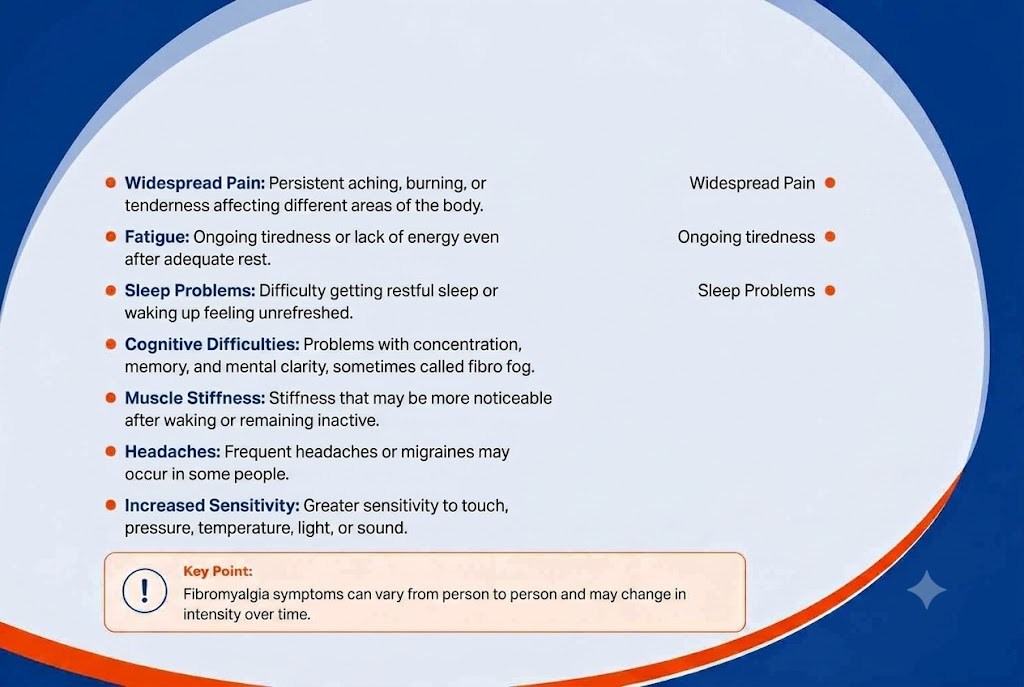
Fibromyalgia can cause symptoms beyond pain. The combination and severity vary considerably between individuals.
Widespread Pain
Persistent widespread pain is the main characteristic. Pain usually affects multiple areas rather than remaining confined to one specific joint or muscle.
The discomfort may fluctuate throughout the day and can sometimes become more noticeable after physical exertion, poor sleep, or stress.
Fatigue
Significant tiredness is another common complaint.
A person may sleep for several hours but still wake feeling unrefreshed. Persistent fatigue can interfere with work, exercise, household activities, and concentration.
Sleep Problems
Fibromyalgia is frequently associated with disturbed or non-restorative sleep.
Problems may include:
- Difficulty falling asleep
- Frequent nighttime waking
- Light or restless sleep
- Feeling tired after sleeping
Improving sleep quality can therefore be an important part of symptom management.
Cognitive Difficulties
Some people experience problems with concentration, memory, or mental clarity. This is sometimes informally called “fibro fog.”
It may involve difficulty remembering information, maintaining attention, or switching between tasks.
Other Possible Symptoms
Depending on the individual, fibromyalgia may also be associated with:
- Headaches
- Muscle stiffness
- Increased sensitivity to touch
- Tingling sensations
- Digestive complaints
- Sensitivity to temperature
- Mood changes
Not everyone experiences all these symptoms.
Fibromyalgia and Autoimmune Diseases Can Occur Together
Another reason people ask is fibromyalgia an autoimmune disease is that fibromyalgia can sometimes occur alongside an established autoimmune disorder.
A person with an autoimmune condition may also develop fibromyalgia symptoms. In such situations, distinguishing pain caused by inflammation from pain related to altered pain processing can be challenging.
This distinction matters because treatment strategies can differ.
Autoimmune inflammation may require therapies targeting immune activity, while fibromyalgia management generally focuses on reducing symptoms, improving sleep, increasing functional ability, and regulating pain processing.
Having fibromyalgia alongside an autoimmune disorder does not automatically make fibromyalgia itself autoimmune.
How Is Fibromyalgia Diagnosed
There is no single laboratory test that confirms fibromyalgia.
Diagnosis generally involves evaluating symptoms, medical history, duration of pain, physical findings, and possible alternative explanations.
A healthcare professional may ask about:
- Where pain occurs
- How long symptoms have been present
- Fatigue levels
- Sleep quality
- Concentration problems
- Other medical conditions
- Medications
- Changes in daily functioning
Why Blood Tests May Be Performed
Blood tests may sometimes be recommended, not necessarily to confirm fibromyalgia, but to investigate other conditions that could produce similar symptoms.
This is particularly relevant when symptoms could indicate inflammatory, endocrine, rheumatological, or autoimmune conditions.
Testing decisions depend on symptoms and individual clinical circumstances.
How Fibromyalgia Differs From Rheumatoid Arthritis
Rheumatoid arthritis is an autoimmune inflammatory disease primarily affecting joints, although other parts of the body may also be involved.
Fibromyalgia does not cause the same type of inflammatory joint destruction.
Both conditions can cause:
- Pain
- Fatigue
- Sleep difficulties
- Reduced physical activity
However, rheumatoid arthritis may cause persistent joint swelling, warmth, stiffness, and structural joint changes.
Fibromyalgia is more strongly associated with widespread pain sensitivity without inflammatory joint damage.
How Fibromyalgia Differs From Lupus
Lupus is another autoimmune disease that can sometimes produce symptoms resembling fibromyalgia.
Both conditions may involve fatigue, pain, headaches, and cognitive complaints.
However, lupus can produce immune-mediated inflammation affecting different organs and tissues. Depending on the individual, it may affect the skin, joints, kidneys, blood cells, lungs, heart, or nervous system.
Fibromyalgia does not typically produce this pattern of inflammatory organ damage.
A person can also have both conditions simultaneously, making careful clinical assessment particularly important.
Treatment Options for Fibromyalgia
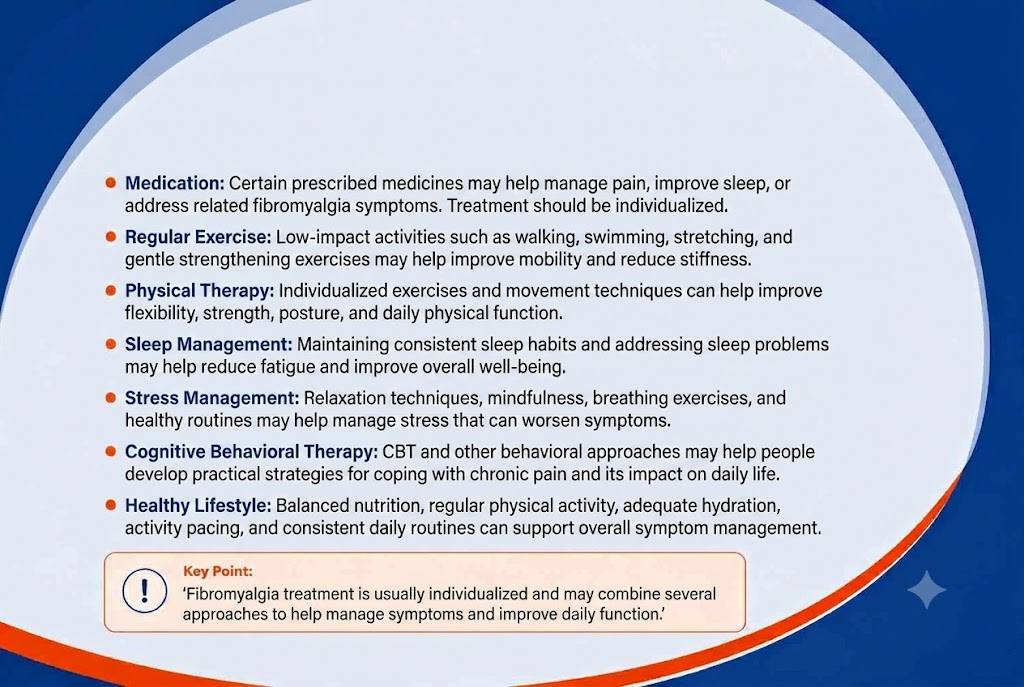
Because the answer to is fibromyalgia an autoimmune disease is currently no, treatment does not usually focus on suppressing the immune system specifically for fibromyalgia.
Instead, treatment is generally aimed at managing pain, improving sleep, increasing physical function, and reducing the overall impact of symptoms.
A combination of approaches may be recommended.
Medication
Depending on symptoms and individual health factors, medications may sometimes be used to help manage pain, sleep disturbances, or related symptoms.
Medication decisions should be individualized because not every medicine is appropriate for every person.
Physical Activity
Regular, appropriately paced physical activity is often an important part of fibromyalgia management.
Possible activities include:
- Walking
- Swimming
- Gentle strengthening exercises
- Stretching
- Low-impact aerobic activity
Starting gradually may help people who experience increased discomfort after activity.
Sleep Management
Improving sleep habits may help reduce fatigue and improve daily functioning.
Useful habits can include maintaining consistent sleep and wake times, creating a comfortable sleeping environment, and limiting activities that interfere with sleep.
Psychological and Behavioral Strategies
Chronic pain can affect stress levels, mood, sleep, and daily functioning. Behavioral approaches can help people develop strategies for coping with persistent symptoms.
The purpose is not to suggest that fibromyalgia symptoms are imaginary. Rather, these strategies can help influence the way chronic pain affects everyday life.
Benefits of Proper Fibromyalgia Evaluation
Accurate evaluation can help distinguish fibromyalgia from conditions that require different treatment approaches.
Potential benefits include:
- Better understanding of symptoms
- Identification of other possible conditions
- More appropriate symptom management
- Reduced unnecessary testing
- Improved activity planning
- Better sleep strategies
- More realistic treatment expectations
Proper assessment is especially important when symptoms are new, changing, or accompanied by signs that are not typical of fibromyalgia.
Tips for Living With Fibromyalgia
Fibromyalgia is usually managed over the long term rather than through a single treatment.
Pace Daily Activities
Alternating activity with appropriate rest can help prevent cycles of doing too much on better days and becoming significantly more uncomfortable afterward.
Exercise Gradually
Suddenly beginning intense exercise may aggravate symptoms. Gradual progression allows the body to adapt more comfortably.
Maintain a Regular Sleep Schedule
Consistent sleeping and waking times can support healthier sleep patterns.
Track Symptoms
Keeping a simple record of pain, fatigue, sleep, physical activity, and symptom changes can help identify patterns.
Manage Stress
Relaxation techniques, enjoyable activities, structured routines, and appropriate psychological support may help reduce the impact of stress on symptoms.
Maintain Balanced Nutrition
There is no single diet proven to cure fibromyalgia. A balanced eating pattern that supports general health is usually more practical than restrictive diets claiming to eliminate the condition.
Can Fibromyalgia Be Cured
There is currently no established cure for fibromyalgia.
However, symptoms can often be managed using a combination of lifestyle modifications, physical activity, sleep management, medications when appropriate, and other supportive strategies.
Treatment goals may include reducing pain, improving physical capacity, getting better-quality sleep, and helping the person maintain everyday activities.
Symptoms can fluctuate, so management plans may need adjustment over time.
Conclusion
So, is fibromyalgia an autoimmune disease? Based on current medical classification, fibromyalgia is not considered an autoimmune disorder. It is primarily associated with altered pain processing, nervous system sensitivity, widespread pain, fatigue, sleep disturbance, and cognitive symptoms. Research into possible immune involvement continues, but this has not established fibromyalgia as a conventional autoimmune disease.
Understanding the distinction can help people seek appropriate evaluation rather than assuming that chronic widespread pain automatically indicates autoimmunity. Anyone experiencing persistent or unexplained symptoms in Thrissur can consider a clinical assessment to determine whether fibromyalgia, an autoimmune disorder, or another condition may better explain the symptoms. For reliable information about fibromyalgia, visit the Centers for Disease Control and Prevention (CDC) – Fibromyalgia to learn more about its symptoms, diagnosis, and management.
Frequently Asked Questions
1. Is fibromyalgia an autoimmune disease?
2. Why is fibromyalgia sometimes confused with autoimmune diseases?
3. Does fibromyalgia affect the immune system?
4. What is the difference between fibromyalgia and an autoimmune disease?
5. Can fibromyalgia occur with an autoimmune disease?
6. Is fibromyalgia the same as rheumatoid arthritis?
7. Is fibromyalgia related to lupus?
8. Can blood tests show whether fibromyalgia is autoimmune?
9. Does fibromyalgia cause inflammation in the body?
10. How is fibromyalgia treated if it is not an autoimmune disease?
BAARC Rheumatology Specialists

Dr Athul Paul
MD, Post Doctoral Fellowship in Rheumatology (CMC Vellore)
Consultant Rheumatologist
BAARC Rheumatology Clinic, Kozhikode

Dr Binoy J Paul
MD, PhD, DNB, FRCP (Edin.)
Senior Consultant Rheumatologist
BAARC Rheumatology Centre, Kozhikode