
7 Powerful Facts About WHAT TESTS ARE DONE TO DIAGNOSE FIBROMYALGIA
Living with widespread pain, constant fatigue, and unexplained discomfort can be frustrating. Many people wonder WHAT TESTS ARE DONE TO DIAGNOSE FIBROMYALGIA because there is no single laboratory test or scan that can confirm the condition. Instead, healthcare professionals use a combination of medical history, physical examination, symptom evaluation, and specific laboratory tests to rule out other conditions before making a diagnosis. People seeking answers in Thrissur often want to understand how this process works and why multiple tests may be necessary.
Fibromyalgia is a long-term condition that affects the muscles, joints, and nervous system. It causes widespread pain, tenderness, sleep disturbances, fatigue, and cognitive problems often referred to as “fibro fog.” Understanding WHAT TESTS ARE DONE TO DIAGNOSE FIBROMYALGIA helps patients prepare for appointments and understand the diagnostic journey.
Why Diagnosing Fibromyalgia Can Be Difficult
Fibromyalgia shares symptoms with several other medical conditions, making diagnosis more challenging. Many illnesses can cause similar complaints, including:
- Rheumatoid arthritis
- Lupus
- Chronic fatigue syndrome
- Hypothyroidism
- Multiple sclerosis
- Vitamin deficiencies
- Autoimmune disorders
Since symptoms overlap, healthcare providers must carefully evaluate each patient before diagnosing fibromyalgia.
WHAT TESTS ARE DONE TO DIAGNOSE FIBROMYALGIA: Initial Medical Evaluation
The first step in understanding WHAT TESTS ARE DONE TO DIAGNOSE FIBROMYALGIA is a detailed medical assessment.
A healthcare provider typically asks about:
- Duration of pain
- Areas affected
- Fatigue levels
- Sleep quality
- Morning stiffness
- Memory problems
- Family history
- Previous illnesses
- Emotional health
- Current medications
This information provides valuable clues before any laboratory investigations begin.
Physical Examination
A complete physical examination is another essential part of WHAT TESTS ARE DONE TO DIAGNOSE FIBROMYALGIA.
The healthcare provider checks for:
- Joint swelling
- Muscle tenderness
- Range of motion
- Signs of inflammation
- Neurological abnormalities
- Skin changes
- Reflexes
- Muscle strength
Unlike inflammatory arthritis, fibromyalgia usually does not cause visible joint swelling or tissue damage.
Blood Tests Used to Diagnose Fibromyalgia
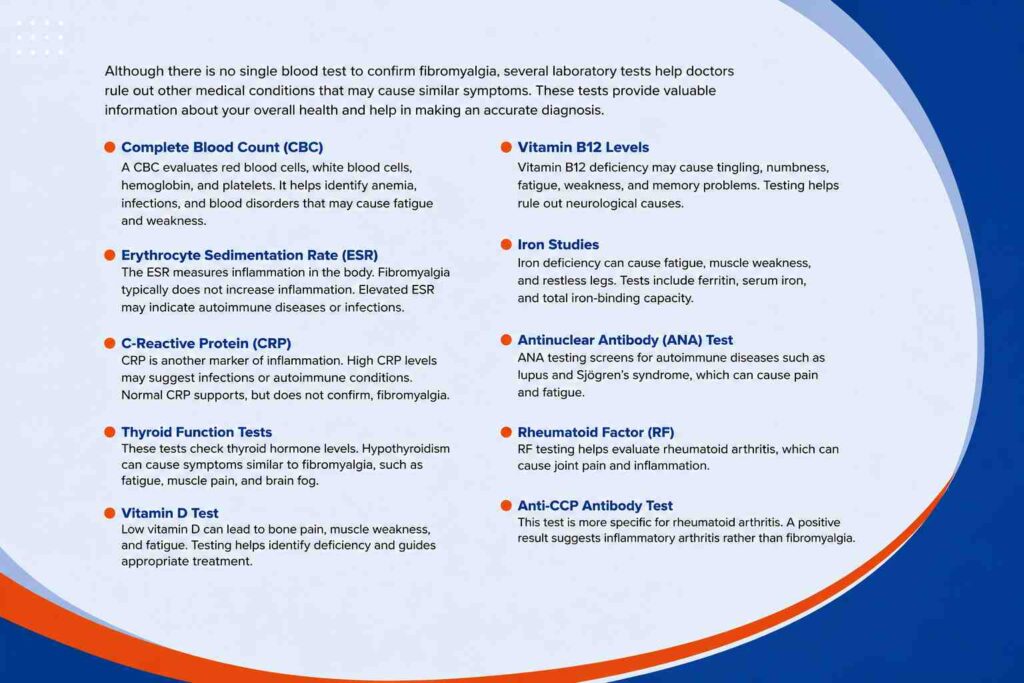
Although there is no blood test that directly confirms fibromyalgia, several laboratory tests help exclude other diseases.
Complete Blood Count (CBC)
A CBC evaluates:
- Red blood cells
- White blood cells
- Hemoglobin
- Platelets
This helps identify:
- Anemia
- Infections
- Blood disorders
These conditions may produce symptoms similar to fibromyalgia.
Erythrocyte Sedimentation Rate (ESR)
The ESR measures inflammation.
Fibromyalgia generally does not increase inflammation levels. If ESR is elevated, doctors may investigate:
- Rheumatoid arthritis
- Lupus
- Autoimmune diseases
- Chronic infections
C-Reactive Protein (CRP)
CRP is another marker of inflammation.
High CRP levels often indicate:
- Infection
- Autoimmune disorders
- Inflammatory arthritis
Normal CRP results support—but do not confirm—a fibromyalgia diagnosis.
Thyroid Function Tests
Hypothyroidism can closely resemble fibromyalgia.
Symptoms include:
- Fatigue
- Muscle pain
- Depression
- Weight gain
- Memory problems
Testing thyroid hormone levels helps rule out thyroid disease.
Vitamin D Test
Low vitamin D levels can cause:
- Bone pain
- Muscle weakness
- Fatigue
Correcting vitamin D deficiency may significantly improve symptoms if deficiency is the underlying cause.
Vitamin B12 Levels
Vitamin B12 deficiency may produce:
- Tingling sensations
- Numbness
- Fatigue
- Weakness
- Poor concentration
Testing helps differentiate neurological problems from fibromyalgia.
Iron Studies
Iron deficiency may contribute to:
- Fatigue
- Muscle weakness
- Restless legs syndrome
Iron testing often includes:
- Ferritin
- Serum iron
- Total iron-binding capacity
Antinuclear Antibody (ANA) Test
ANA testing screens for autoimmune disorders like:
- Lupus
- Sjögren’s syndrome
- Mixed connective tissue disease
Positive ANA results usually require additional investigation.
Rheumatoid Factor (RF)
RF testing helps evaluate rheumatoid arthritis.
While fibromyalgia does not increase RF, rheumatoid arthritis often does.
Anti-CCP Antibody Test
This blood test helps diagnose rheumatoid arthritis more accurately.
A positive result usually suggests inflammatory joint disease rather than fibromyalgia.
Imaging Tests
Many patients ask whether scans are included in WHAT TESTS ARE DONE TO DIAGNOSE FIBROMYALGIA.
Imaging is not used to confirm fibromyalgia, but it helps exclude other causes of pain.
Common imaging studies include:
X-rays
Used to identify:
- Arthritis
- Fractures
- Joint degeneration
MRI Scan
MRI helps detect:
- Herniated discs
- Multiple sclerosis
- Spinal disorders
- Soft tissue abnormalities
CT Scan
CT scans may identify:
- Bone problems
- Structural abnormalities
- Certain neurological conditions
Ultrasound
Ultrasound evaluates:
- Tendons
- Muscles
- Joint inflammation
These tests help rule out other conditions causing pain.
Tender Point Examination
Previously, diagnosis relied heavily on examining 18 tender points.
Healthcare providers applied gentle pressure to specific body areas.
Tender points commonly included:
- Neck
- Shoulders
- Upper back
- Chest
- Hips
- Knees
- Elbows
Today, diagnosis no longer depends solely on tender point testing.
Current Diagnostic Criteria
Modern diagnosis uses criteria developed by the American College of Rheumatology.
These include:
Widespread Pain Index (WPI)
The WPI records the number of painful body areas.
Higher scores indicate more widespread pain.
Symptom Severity Scale (SSS)
This scale evaluates:
- Fatigue
- Sleep quality
- Memory problems
- Cognitive issues
- Other physical symptoms
Together, the WPI and SSS help determine whether fibromyalgia criteria are met.
Conditions That Must Be Ruled Out
Healthcare providers often perform additional testing to exclude:
- Lupus
- Rheumatoid arthritis
- Polymyalgia rheumatica
- Hypothyroidism
- Vitamin deficiencies
- Lyme disease
- Multiple sclerosis
- Sleep disorders
- Depression
- Chronic fatigue syndrome
This comprehensive evaluation improves diagnostic accuracy.
Neurological Assessment
Neurological evaluation may include:
- Reflex testing
- Muscle strength assessment
- Balance examination
- Coordination testing
- Sensory examination
Normal neurological findings often support fibromyalgia rather than neurological disease.
Sleep Evaluation
Poor sleep is extremely common in fibromyalgia.
Doctors may recommend:
- Sleep studies
- Assessment for sleep apnea
- Evaluation for restless legs syndrome
Improving sleep often reduces symptom severity.
Mental Health Assessment
Fibromyalgia frequently occurs alongside:
- Anxiety
- Depression
- Stress-related disorders
Evaluating emotional well-being helps create a more complete treatment plan.
Symptoms That Support Fibromyalgia Diagnosis
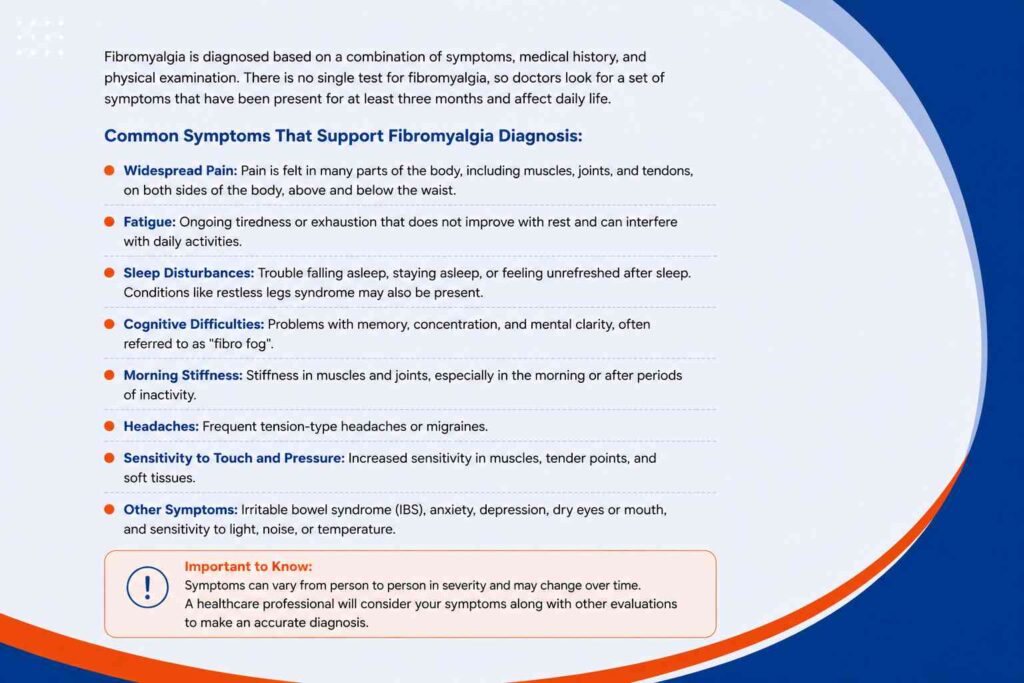
Typical symptoms include:
- Widespread muscle pain
- Chronic fatigue
- Morning stiffness
- Headaches
- Irritable bowel syndrome
- Fibromyalgia fog
- Poor concentration
- Sleep disturbances
- Tingling sensations
- Sensitivity to temperature
- Noise sensitivity
- Light sensitivity
The presence of these symptoms over several months strengthens the diagnosis.
Benefits of Early Diagnosis
Understanding WHAT TESTS ARE DONE TO DIAGNOSE FIBROMYALGIA encourages earlier medical evaluation.
Benefits include:
- Faster symptom management
- Better quality of life
- Reduced anxiety
- Improved sleep
- Personalized treatment
- Better physical function
- Reduced unnecessary investigations
- Improved emotional well-being
Treatment After Diagnosis
Once fibromyalgia is diagnosed, treatment focuses on symptom control.
Treatment options may include:
Medications
- Pain relievers
- Certain antidepressants
- Nerve pain medications
- Muscle relaxants
Exercise
Regular low-impact exercise can improve:
- Pain
- Flexibility
- Sleep
- Energy levels
Examples include:
- Walking
- Swimming
- Cycling
- Stretching
- Yoga
Physical Therapy
Physical therapy helps:
- Improve posture
- Reduce stiffness
- Strengthen muscles
- Increase flexibility
Stress Management
Helpful techniques include:
- Meditation
- Deep breathing
- Mindfulness
- Relaxation exercises
Better Sleep Habits
Good sleep hygiene includes:
- Maintaining a regular bedtime
- Limiting caffeine
- Reducing screen time before bed
- Creating a comfortable sleeping environment
Lifestyle Tips for Managing Fibromyalgia
Daily habits can make a meaningful difference.
Helpful tips include:
- Stay physically active
- Eat a balanced diet
- Drink enough water
- Maintain healthy body weight
- Manage stress
- Pace daily activities
- Avoid overexertion
- Follow prescribed treatments
- Keep a symptom diary
- Attend regular follow-up appointments
Common Myths About Fibromyalgia Diagnosis
Myth 1: One blood test confirms fibromyalgia.
Fact: No single laboratory test can diagnose fibromyalgia.
Myth 2: MRI scans always detect fibromyalgia.
Fact: Imaging is mainly used to rule out other conditions.
Myth 3: Fibromyalgia is “all in the mind.”
Fact: It is a recognized chronic pain disorder affecting the nervous system.
Myth 4: Normal blood tests mean nothing is wrong.
Fact: Normal test results often help support the diagnosis by excluding other illnesses.
When Should You See a Healthcare Provider
Seek medical evaluation if you experience:
- Pain lasting more than three months
- Persistent fatigue
- Sleep disturbances
- Memory problems
- Widespread body aches
- Daily activity limitations
- Symptoms that continue despite home care
Early evaluation improves symptom management and quality of life.
Conclusion
Understanding WHAT TESTS ARE DONE TO DIAGNOSE FIBROMYALGIA helps patients approach the diagnostic process with confidence. While no single blood test or imaging study confirms fibromyalgia, healthcare providers use a combination of medical history, physical examination, symptom assessment, laboratory investigations, and diagnostic criteria to rule out other conditions. Early diagnosis allows patients to begin effective treatment, improve their quality of life, and better manage chronic symptoms. If you are experiencing ongoing widespread pain and fatigue, seeking a comprehensive medical evaluation is an important first step toward finding answers and appropriate care in Thrissur. For trusted, patient-friendly information about fibromyalgia symptoms, diagnosis, and treatment, visit the National Institute of Arthritis and Musculoskeletal and Skin Diseases (NIAMS) .
Frequently Asked Questions
1. Is there one test that confirms fibromyalgia?
2. What blood tests are commonly ordered?
3. Why are blood tests necessary?
4. Can an MRI diagnose fibromyalgia?
5. What is the Widespread Pain Index (WPI)?
6. What is the Symptom Severity Scale (SSS)?
7. Are X-rays useful for diagnosing fibromyalgia?
8. How long do symptoms need to be present?
9. Can fibromyalgia occur with other diseases?
10. What is the first step in diagnosing fibromyalgia?
BAARC Rheumatology Specialists

Dr Athul Paul
MD, Post Doctoral Fellowship in Rheumatology (CMC Vellore)
Consultant Rheumatologist
BAARC Rheumatology Clinic, Kozhikode

Dr Binoy J Paul
MD, PhD, DNB, FRCP (Edin.)
Senior Consultant Rheumatologist
BAARC Rheumatology Centre, Kozhikode