

Main Causes of High Uric Acid — 7 Proven Risk Factors Explained
High uric acid medically known as hyperuricemia is one of the most common metabolic conditions seen at rheumatology clinics across Kerala. Yet most people discover it only after a painful gout attack or a routine blood test flags elevated levels. Understanding the main causes of high uric acid is the first step toward preventing long-term joint and kidney damage.
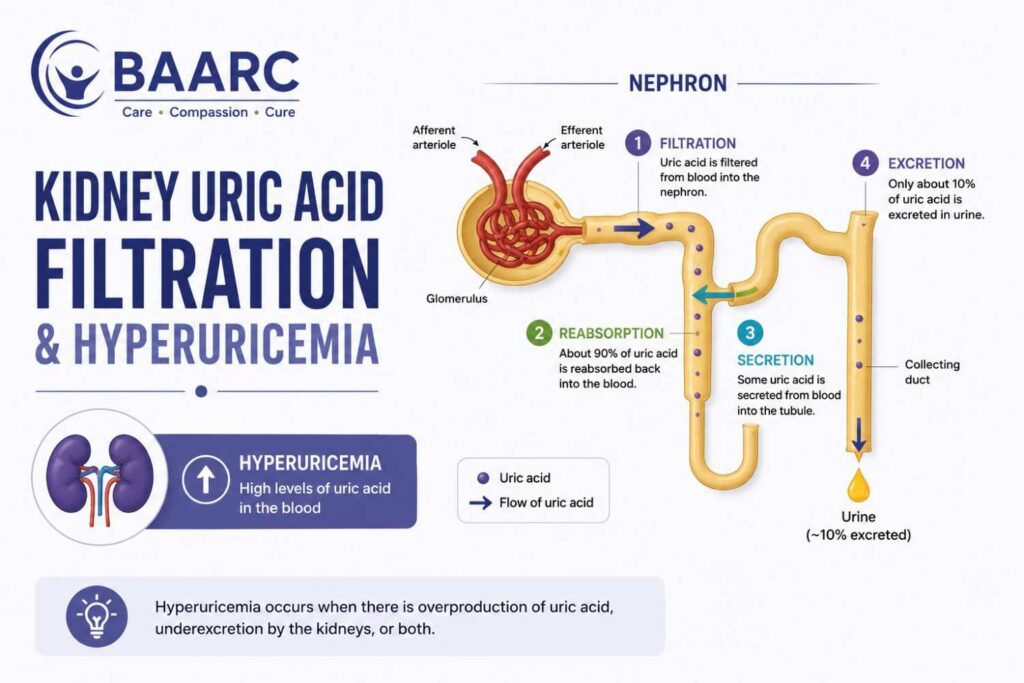
Uric acid is a natural waste product formed when the body breaks down purines compounds found in certain foods and in the body’s own cells. Under normal conditions, uric acid dissolves in the blood, travels to the kidneys, and leaves the body through urine. Problems begin when the body produces too much uric acid, the kidneys excrete too little, or both happen simultaneously.
1. Diet High in Purines
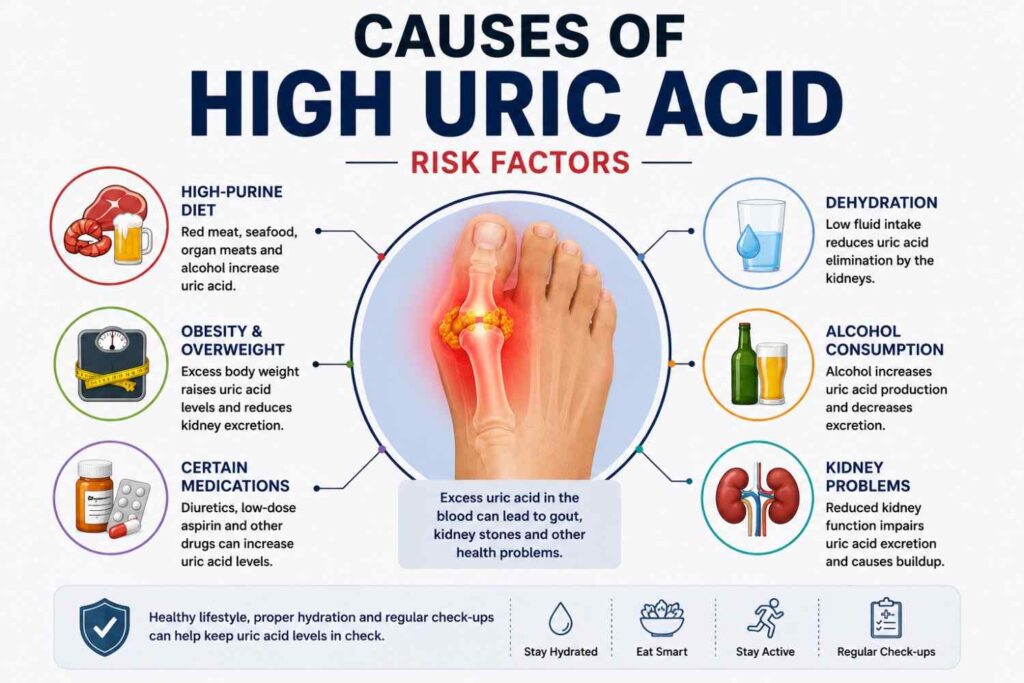
The single most controllable cause of high uric acid is what you eat. Foods rich in purines trigger a sharp rise in uric acid production after digestion.
High-purine foods to be aware of include:
- Red meat and organ meats – beef, lamb, liver, and kidney are among the highest purine-containing foods
- Shellfish and certain seafood – prawns, crabs, sardines, anchovies, and mackerel
- Beer and alcohol – beer in particular contains both purines and compounds that reduce uric acid excretion simultaneously
- Sugary drinks and fructose – high-fructose corn syrup found in sodas and packaged juices triggers uric acid production independently of purines
Reducing these foods is one of the most effective lifestyle changes for patients with elevated uric acid levels.
2. Dehydration
When fluid intake is insufficient, the kidneys cannot filter and excrete uric acid effectively. Uric acid becomes more concentrated in the blood, increasing the risk of crystal formation in joints and kidneys.
This is particularly relevant in Kerala’s climate, where heat and humidity increase daily fluid loss. Drinking 2.5 to 3 litres of water per day is a consistent recommendation from rheumatologists for patients managing uric acid levels.
3. Genetics and Family History
A significant number of patients with high uric acid have a direct family member with gout or hyperuricemia. Genetic variants can affect how efficiently the kidneys process and excrete uric acid meaning some people are predisposed to elevated levels regardless of diet.
If a parent or sibling has been diagnosed with gout, routine uric acid screening is advisable even before symptoms appear. Early detection allows for intervention before crystal deposits form in the joints.
4. Certain Medications
Several commonly prescribed medications can raise uric acid levels as a side effect. Patients who begin experiencing joint pain after starting a new medication should always mention this to their doctor.
Medications known to raise uric acid include:
- Diuretics (water pills) – frequently prescribed for high blood pressure and heart failure; they reduce the kidney’s ability to excrete uric acid
- Low-dose aspirin – even at the 75–100 mg dose used for cardiac protection, aspirin can elevate uric acid
- Some immunosuppressants – including cyclosporine, used after organ transplants
- Niacin (Vitamin B3) – when taken at high therapeutic doses
Never stop a prescribed medication without consulting your doctor. Instead, inform your rheumatologist about all medications you are taking so the treatment plan can account for their effects on uric acid.
5. Underlying Health Conditions
Several chronic health conditions directly interfere with uric acid metabolism and excretion. In many patients, high uric acid is not a standalone problem but a secondary consequence of another condition.
Key conditions linked with elevated uric acid:
- Chronic kidney disease – reduced kidney function means less uric acid is cleared from the blood
- Type 2 diabetes and insulin resistance – insulin impairs uric acid excretion by the kidneys
- High blood pressure (hypertension) – strongly associated with elevated uric acid, particularly in patients on diuretics
- Obesity – excess body fat increases uric acid production and reduces kidney excretion efficiency
- Hypothyroidism – an underactive thyroid reduces the kidney’s ability to excrete uric acid
Managing these underlying conditions is an integral part of uric acid treatment at BAARC, not an afterthought.
6. Excessive Alcohol Consumption
Alcohol deserves its own category beyond general diet. It raises uric acid through multiple simultaneous mechanisms it increases purine breakdown, promotes dehydration, and reduces the kidneys’ ability to excrete uric acid by competing for the same excretion pathway.
Beer is the highest-risk form of alcohol for uric acid elevation due to its yeast-derived purine content. Spirits and wine carry lower but still significant risk, particularly in patients who already have elevated baseline levels.
7. Rapid Weight Loss or Crash Dieting
Paradoxically, losing weight too quickly can temporarily spike uric acid levels. When the body breaks down fat tissue rapidly, it releases large amounts of purines into the bloodstream. This is one reason crash diets and extreme fasting can trigger gout attacks in people who are otherwise trying to improve their health.
Gradual, sustainable weight loss combined with appropriate hydration and medical supervision is the recommended approach for patients with hyperuricemia who need to lose weight.
When Should You See a Specialist?
If a routine blood test shows uric acid above 7.0 mg/dL, or if you experience sudden joint pain, swelling, or redness particularly in the big toe, ankle, or knee consult a rheumatologist without delay. Identifying the specific cause of your elevated uric acid is essential to choosing the right treatment approach.
BAARC, provide comprehensive uric acid evaluation including blood tests, dietary assessment, medication review, and kidney function monitoring all under one roof in Kozhikode.
Learn more from global health authorities ->American College of Rheumatology (ACR)
Conclusion
The main causes of high uric acid range from everyday dietary habits to genetics, medications, and underlying health conditions and in most patients, multiple factors are at work simultaneously. The good news is that once the root causes are identified, high uric acid is highly manageable. Whether the driver is a purine-rich diet, chronic dehydration, a long-term medication, or a condition like diabetes or kidney disease, BAARC’s specialist rheumatologists in Kerala are equipped to build a targeted treatment plan that addresses your specific triggers not just your uric acid number.
FREQUENTLY ASKED QUESTIONS
BAARC Rheumatology Specialists

Dr Athul Paul
MD, Post Doctoral Fellowship in Rheumatology (CMC Vellore)
Consultant Rheumatologist
BAARC Rheumatology Clinic, Kozhikode

Dr Binoy J Paul
MD, PhD, DNB, FRCP (Edin.)
Senior Consultant Rheumatologist
BAARC Rheumatology Centre, Kozhikode