
7 Powerful Gout and High Uric Acid Treatment in Kozhikode Now
Gout and high uric acid can cause sudden joint pain, swelling, redness, and tenderness that may interfere with walking, working, and everyday activities. Effective gout and high uric acid treatment in Kozhikode focuses not only on relieving painful attacks but also on controlling uric acid levels and preventing future flare-ups.
Uric acid is produced when the body breaks down substances called purines. Normally, the kidneys remove uric acid through urine. When the body produces too much uric acid or cannot eliminate enough of it, uric acid can accumulate in the blood. Over time, crystals may form inside joints and trigger gout.
Early evaluation and appropriate management can reduce symptoms and lower the risk of repeated attacks and joint damage.
What Is Gout and High Uric Acid
Gout is a form of inflammatory arthritis associated with excess uric acid in the body. High uric acid, also called hyperuricemia, does not always cause symptoms. Some people may have elevated uric acid levels without developing gout.
When uric acid crystals accumulate around a joint, the immune system can respond strongly, resulting in inflammation.
Gout commonly affects:
- Big toe
- Ankles
- Knees
- Feet
- Wrists
- Fingers
- Elbows
A gout attack can develop suddenly, sometimes during the night, and may cause intense pain and swelling.
What Causes High Uric Acid Levels
Several factors can contribute to elevated uric acid. Understanding these factors is an important part of gout and high uric acid treatment.
Dietary Factors
Foods that contain high amounts of purines can increase uric acid production. Examples include certain types of red meat, organ meats, and some seafood.
Frequent consumption of sugary drinks containing fructose may also contribute to higher uric acid levels.
Reduced Kidney Elimination
The kidneys play an important role in removing uric acid. Reduced kidney function can make it harder for the body to eliminate uric acid effectively.
Excess Weight
Being overweight can be associated with higher uric acid levels and may increase the likelihood of developing gout.
Alcohol Consumption
Alcohol, particularly beer and certain spirits, can interfere with uric acid metabolism and elimination.
Certain Medicines
Some medicines can increase uric acid levels. People taking long-term medications should not stop them independently but should discuss possible effects with their healthcare professional.
Family History
Genetic factors can influence how efficiently the body processes and removes uric acid. A family history of gout may increase the risk.
Common Symptoms of Gout
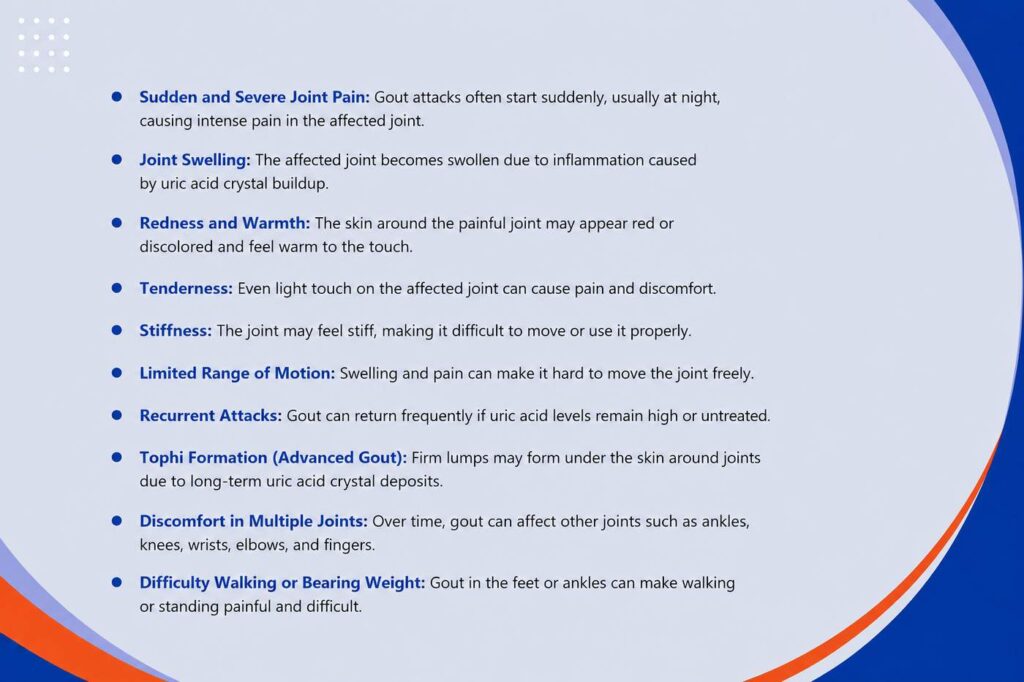
Recognizing gout symptoms can help people seek evaluation before repeated attacks become a long-term problem.
Common symptoms include:
- Sudden and severe joint pain
- Joint swelling
- Red or discolored skin around the affected area
- Warmth over the joint
- Significant tenderness
- Difficulty moving the joint
- Recurrent episodes of pain
The first attack often affects one joint. Without appropriate management, attacks may become more frequent or involve additional joints.
Some people also develop tophi, which are firm deposits of urate crystals under the skin. These can occur around joints and other areas after prolonged uncontrolled gout.
How Is Gout Diagnosed
A proper diagnosis is important because several other conditions can cause joint pain and swelling.
A healthcare professional may assess:
- Symptoms and their duration
- Pattern of previous attacks
- Medical history
- Family history
- Diet and lifestyle
- Current medicines
- Joint examination
A blood test may be used to measure serum uric acid. However, uric acid levels alone do not always confirm or exclude gout.
In certain situations, joint fluid may be examined for urate crystals. Imaging tests may also be considered when needed to assess joint changes or crystal deposits.
An accurate diagnosis helps determine the most suitable gout and high uric acid treatment approach.
Gout and High Uric Acid Treatment Options
Treatment generally has two major goals: controlling an acute gout attack and lowering uric acid over the long term.
Treatment During a Gout Attack
During an acute attack, medicines may be prescribed to reduce inflammation and pain. Depending on the individual’s health and other medicines, treatment may include nonsteroidal anti-inflammatory drugs, colchicine, or corticosteroids.
The choice depends on factors such as kidney function, other medical conditions, medication interactions, and the severity of the attack.
Self-medicating repeatedly without professional guidance may not be appropriate, particularly for people with kidney disease, stomach problems, cardiovascular conditions, or other chronic illnesses.
Long-Term Uric Acid Management
For people with recurrent gout or certain complications, long-term urate-lowering treatment may be recommended.
Medicines such as allopurinol or febuxostat can reduce uric acid production. Other medicines may work by increasing uric acid elimination in selected patients.
These medicines usually need to be taken consistently as prescribed. Stopping treatment when symptoms disappear can allow uric acid levels to rise again.
Benefits of Early Gout Management
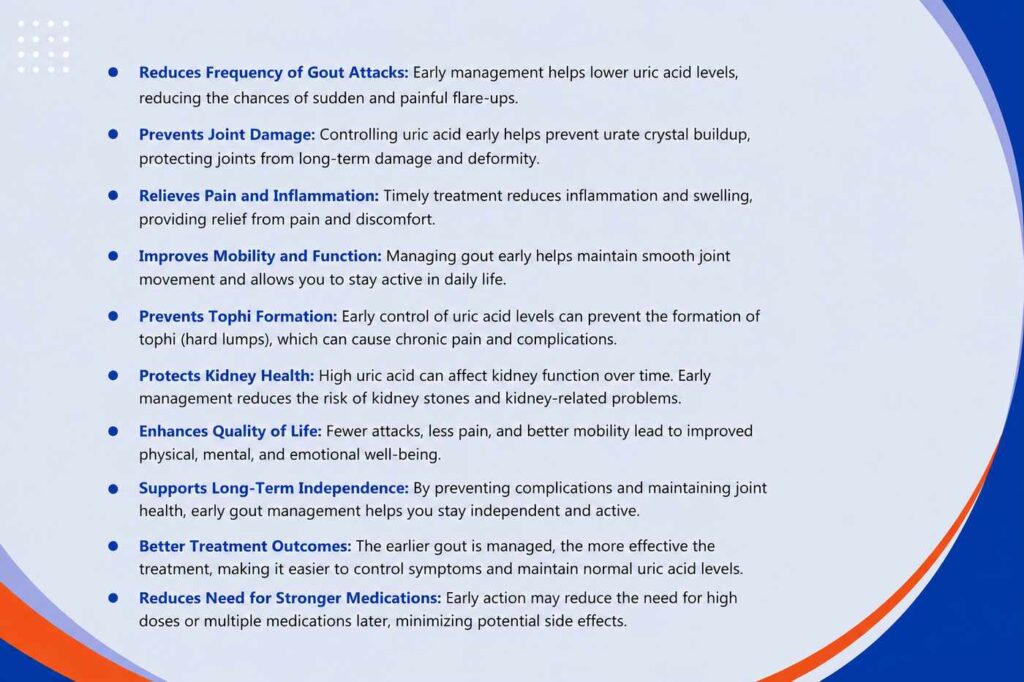
Timely management can provide several important benefits.
Fewer Gout Attacks
Maintaining appropriate uric acid levels can reduce the frequency of recurrent flare-ups in people who require long-term urate-lowering therapy.
Reduced Joint Damage
Persistent urate crystal accumulation can eventually affect joints. Controlling the underlying problem may help reduce the risk of progressive joint damage.
Better Daily Function
Repeated gout attacks can make walking, exercising, working, and performing routine activities difficult. Effective treatment can help improve mobility and quality of life.
Prevention of Tophi
Long-standing uncontrolled gout may lead to tophi. Appropriate uric acid management can help prevent or reduce these deposits over time.
Lower Risk of Complications
Gout may occur alongside conditions such as high blood pressure, obesity, kidney disease, and metabolic disorders. Comprehensive medical evaluation can help identify and manage associated health concerns.
Foods That May Help Manage Uric Acid
Dietary changes can support medical treatment, although diet alone may not be sufficient for everyone with gout.
Helpful habits may include:
- Drinking adequate water unless fluid restriction has been advised
- Eating more vegetables and whole grains
- Choosing low-fat or reduced-fat dairy products when appropriate
- Maintaining a healthy body weight
- Limiting sugary beverages
- Reducing excessive alcohol intake
- Limiting foods particularly high in purines
- Choosing balanced portions of protein
It is not necessary for everyone with gout to follow an extremely restrictive diet. A sustainable eating pattern is usually more practical than eliminating numerous foods unnecessarily.
Lifestyle Tips for Preventing Gout Flare-Ups
Lifestyle management can complement medical treatment and support long-term uric acid control.
Stay Hydrated
Adequate fluid intake can support normal kidney function and uric acid elimination. Individual fluid requirements vary, particularly in people with kidney or heart conditions.
Maintain a Healthy Weight
If weight reduction is appropriate, gradual and sustainable weight loss may support better metabolic health and help manage uric acid.
Crash diets and prolonged fasting may sometimes increase uric acid levels and should generally be avoided without professional guidance.
Exercise Regularly
Regular moderate physical activity can support healthy weight, cardiovascular health, and joint function. Exercise should be adjusted during an acute painful attack.
Follow Prescribed Treatment
If urate-lowering medicine has been prescribed, taking it consistently is an important part of long-term management.
Attend Follow-Up Appointments
Regular monitoring may be recommended to determine whether uric acid levels are responding appropriately and whether treatment needs adjustment.
When Should You Seek Medical Attention
Sudden severe joint pain should not automatically be assumed to be gout. Other forms of arthritis, joint infection, injuries, and inflammatory conditions can produce similar symptoms.
Seek medical evaluation when:
- You experience your first suspected gout attack
- Joint pain is severe or sudden
- Swelling repeatedly returns
- Symptoms are becoming more frequent
- You have persistent high uric acid levels
- You notice firm lumps around joints
- Treatment is no longer controlling symptoms
- You have other medical conditions that may affect treatment
A prompt assessment can help establish the cause and guide appropriate management.
Why Long-Term Management Matters
Gout is often a long-term condition rather than a problem that disappears permanently after one painful episode.
Pain may settle between attacks even when uric acid remains elevated. This means the absence of symptoms does not necessarily mean that the underlying problem has been resolved.
Long-term management may involve:
- Monitoring uric acid levels
- Taking prescribed medicines consistently
- Following appropriate dietary habits
- Maintaining a healthy weight
- Staying physically active
- Managing associated health conditions
- Attending recommended follow-up visits
The goal is not simply to treat pain after it occurs but to reduce the likelihood of future attacks and complications.
Conclusion
Gout and high uric acid can significantly affect joint health and daily activities when left unmanaged. Early diagnosis, appropriate medication, balanced dietary habits, regular physical activity, and consistent monitoring can help control uric acid levels and reduce the risk of recurrent gout attacks. Since treatment needs vary from person to person, professional evaluation is important for choosing the right approach. Seeking timely gout and high uric acid treatment in Kozhikode can support better long-term joint health and help prevent complications. For reliable information about gout and uric acid management, refer to the National Institute of Arthritis and Musculoskeletal and Skin Diseases (NIAMS) for evidence-based guidance on gout causes, symptoms, diagnosis, and treatment.
Frequently Asked Questions
1. What is the main treatment for gout?
2. Can high uric acid cause joint pain?
3. Can gout be completely cured?
4. Is high uric acid always gout?
5. Which foods should be limited with gout?
6. Can drinking water reduce uric acid?
7. Does gout only affect the big toe?
8. Should uric acid medicine be stopped when pain improves?
9. Can weight loss help with gout?
10. Can gout return after treatment?
BAARC Rheumatology Specialists

Dr Athul Paul
MD, Post Doctoral Fellowship in Rheumatology (CMC Vellore)
Consultant Rheumatologist
BAARC Rheumatology Clinic, Kozhikode

Dr Binoy J Paul
MD, PhD, DNB, FRCP (Edin.)
Senior Consultant Rheumatologist
BAARC Rheumatology Centre, Kozhikode