
7 Powerful Tips: Rheumatologist in Kozhikode for Arthritis
Choosing the right Rheumatologist in Kozhikode for Arthritis can make an important difference in managing persistent joint pain, stiffness, swelling, and reduced mobility. In Kozhikode, people experiencing ongoing symptoms may benefit from an evaluation by a specialist who understands autoimmune and inflammatory joint conditions.
Arthritis is not a single disease. It includes several conditions that can affect the joints, muscles, bones, and connective tissues. Some forms develop gradually, while others can cause sudden inflammation and significant discomfort. Early assessment can help identify the underlying condition and guide appropriate treatment.
A rheumatologist specializes in diagnosing and managing arthritis and other rheumatic diseases. Understanding when to seek specialist care, what to expect during evaluation, and which treatment approaches may be considered can help patients make informed healthcare decisions.
What Does a Rheumatologist Do
A rheumatologist is a medical specialist who evaluates and treats conditions involving the joints, muscles, bones, and immune system.
Unlike occasional joint discomfort, inflammatory arthritis may involve symptoms that persist or progressively worsen. A rheumatologist looks beyond the location of pain to understand why inflammation is occurring.
A specialist may evaluate:
- Joint pain and swelling
- Morning stiffness
- Reduced range of movement
- Autoimmune conditions
- Inflammatory arthritis
- Connective tissue disorders
- Certain muscle and bone conditions
- Recurrent unexplained inflammation
The goal is not simply to reduce pain but to identify the underlying condition and develop an appropriate long-term management strategy.
When Should You See a Rheumatologist for Arthritis
Not every episode of joint pain requires specialist care. However, persistent or recurring symptoms should not be ignored.
Consider consulting a Rheumatologist in Kozhikode for Arthritis if you experience:
- Joint pain lasting several weeks
- Repeated joint swelling
- Stiffness that is worse after waking
- Pain affecting several joints
- Difficulty performing everyday activities
- Unexplained fatigue associated with joint symptoms
- Recurrent episodes of inflammation
- Symptoms that interfere with sleep or work
- Joint symptoms that continue despite basic measures
Early evaluation may be particularly important when symptoms involve multiple joints or are accompanied by signs of systemic inflammation.
Common Types of Arthritis
Arthritis includes many different conditions. Identifying the specific type is important because treatment can vary significantly.
Osteoarthritis
Osteoarthritis is commonly associated with gradual wear and structural changes in the joints. It frequently affects weight-bearing joints such as the knees and hips, although other joints can also be involved.
Rheumatoid Arthritis
Rheumatoid arthritis is an autoimmune inflammatory condition in which the immune system mistakenly attacks joint tissues. It can cause persistent swelling, stiffness, and pain.
Psoriatic Arthritis
Psoriatic arthritis can occur in people with psoriasis. It may affect the joints, fingers, toes, or areas where tendons attach to bones.
Gout
Gout occurs when uric acid crystals accumulate in a joint, causing episodes of intense inflammation and pain. The big toe is a common site, although other joints may also be affected.
Ankylosing Spondylitis
This inflammatory condition primarily affects the spine and pelvic joints. It may cause prolonged back stiffness, particularly after periods of inactivity.
Correct diagnosis helps determine the most appropriate approach to arthritis management.
Common Symptoms of Arthritis
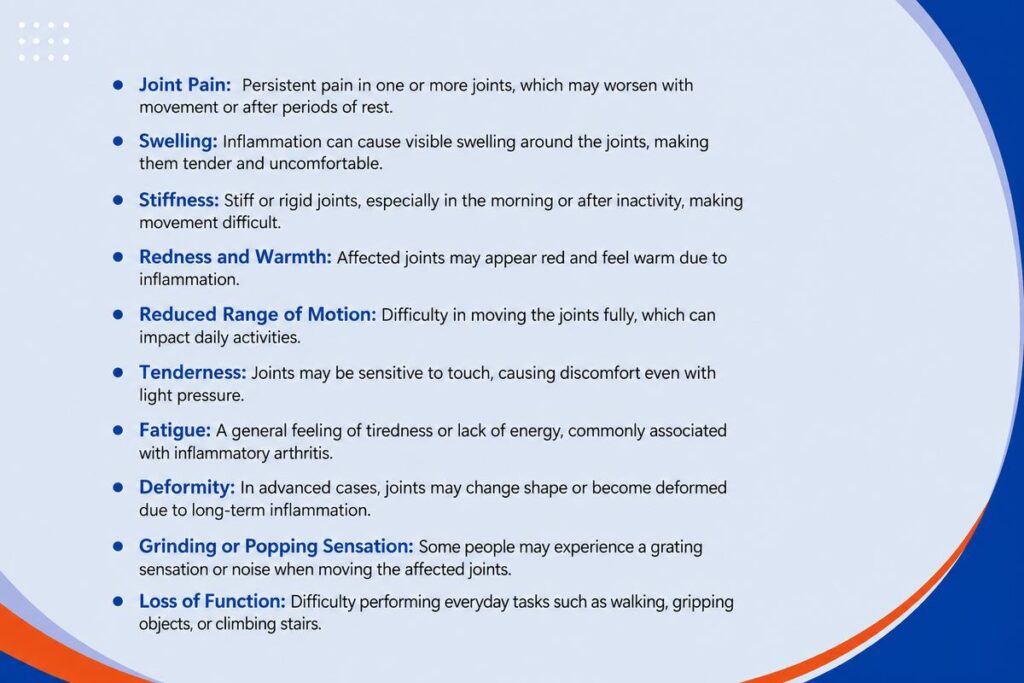
Arthritis symptoms vary according to the underlying condition, but several features are commonly reported.
Joint Pain
Pain may occur during movement, after prolonged activity, or even at rest depending on the type and severity of arthritis.
Swelling
Inflamed joints may appear swollen or feel warm and tender.
Stiffness
Morning stiffness or stiffness after sitting for a prolonged period can be an important clinical clue, particularly in inflammatory arthritis.
Reduced Mobility
Persistent pain and inflammation can make it difficult to bend, walk, grip objects, climb stairs, or perform other daily activities.
Fatigue
Some inflammatory rheumatic diseases may cause generalized tiredness in addition to joint symptoms.
Persistent combinations of these symptoms warrant medical assessment rather than relying solely on temporary pain relief.
What Causes Arthritis
The causes of arthritis depend on its specific type. Several factors may contribute to its development.
These can include:
- Age-related joint changes
- Autoimmune activity
- Genetic predisposition
- Previous joint injuries
- Certain infections
- Metabolic factors
- Excess body weight
- Repetitive stress on joints
- Abnormal immune responses
In some inflammatory conditions, the exact cause may not be completely understood. A rheumatologist evaluates the patient’s symptoms, medical history, examination findings, and test results to identify the most likely diagnosis.
How Is Arthritis Diagnosed
Diagnosis generally begins with a detailed medical history and physical examination.
A rheumatologist may ask about the location and duration of pain, stiffness patterns, swelling, previous illnesses, family history, and other symptoms.
Depending on the suspected condition, investigations may include:
- Blood tests
- Inflammatory markers
- Autoantibody testing
- Uric acid testing
- X-rays
- Ultrasound
- MRI scans
- Other imaging studies when necessary
No single test can diagnose every type of arthritis. Test results are interpreted alongside symptoms and physical findings.
This comprehensive approach helps distinguish inflammatory arthritis from osteoarthritis, injuries, infections, and other conditions that may produce similar symptoms.
Treatment Options for Arthritis
Treatment depends on the type of arthritis, disease severity, affected joints, overall health, and individual response to treatment.
A treatment plan may involve one or more of the following approaches.
Medicines
Depending on the diagnosis, medicines may be used to reduce pain, control inflammation, or slow disease progression.
For inflammatory arthritis, disease-modifying medicines may be considered when clinically appropriate.
Physical Therapy
Exercises and physical therapy can help maintain joint flexibility, muscle strength, balance, and functional movement.
Lifestyle Management
Healthy body weight, regular appropriate physical activity, adequate rest, and joint-friendly daily habits may support long-term management.
Advanced Treatments
Some inflammatory rheumatic diseases may require specialized therapies, including biologic or targeted medicines. These are prescribed based on the specific diagnosis and individual clinical needs.
Treatment should always be guided by a qualified medical professional rather than self-medication.
Benefits of Seeing a Rheumatology Specialist

Consulting a Rheumatologist in Kozhikode for Arthritis can be valuable when symptoms are persistent, complex, or suggestive of an inflammatory condition.
Potential benefits include:
- More focused evaluation of joint symptoms
- Identification of inflammatory arthritis
- Appropriate diagnostic testing
- Personalized treatment planning
- Monitoring of disease activity
- Management of medication-related concerns
- Early recognition of complications
- Long-term support for maintaining joint function
Specialist care can be especially useful when symptoms affect several joints or continue despite initial treatment.
Tips for Managing Arthritis
Medical treatment is only one part of long-term arthritis management. Everyday habits can also influence comfort and mobility.
Stay Physically Active
Low-impact activities such as walking, swimming, cycling, and appropriate strengthening exercises may help maintain mobility.
Maintain a Healthy Weight
Reducing excess weight can decrease mechanical stress on weight-bearing joints.
Follow the Treatment Plan
Take prescribed medicines as directed and attend recommended follow-up appointments.
Protect Your Joints
Avoid unnecessary repetitive strain and use appropriate techniques when lifting or performing physically demanding activities.
Pay Attention to Symptoms
Keep track of changes in pain, swelling, stiffness, mobility, and other symptoms. This information can help your healthcare professional assess disease activity.
Prioritize Rest and Recovery
Adequate rest can support recovery, particularly during periods of increased symptoms.
Why Early Arthritis Management Matters
Ignoring persistent joint symptoms may allow an underlying inflammatory condition to continue without appropriate treatment. Some forms of inflammatory arthritis can gradually damage joints and affect physical function.
Early diagnosis allows healthcare professionals to determine the cause of symptoms and consider appropriate treatment before complications become more significant.
Early management may help:
- Control inflammation
- Reduce pain and stiffness
- Preserve joint function
- Maintain mobility
- Improve daily activities
- Reduce the risk of long-term joint damage in certain inflammatory conditions
This does not mean every episode of joint pain represents serious arthritis. Rather, persistent or unexplained symptoms deserve proper evaluation.
What to Expect During a Rheumatology Consultation
During an appointment, the specialist will usually review your symptoms and medical history before performing a physical examination.
You may be asked:
- When did the symptoms begin?
- Which joints are affected?
- Is there swelling?
- How long does morning stiffness last?
- Does the pain improve with movement or rest?
- Have you experienced similar episodes previously?
- Are there other symptoms affecting your general health?
Bring previous medical reports, imaging results, and a list of current medicines if available.
Being prepared can make the consultation more informative and help the specialist understand how symptoms are affecting your everyday life.
Conclusion
Arthritis can affect mobility, comfort, work, sleep, and everyday activities, but appropriate evaluation can make its management more effective. Understanding the type of arthritis is an important first step because different conditions require different treatment approaches.
If persistent joint pain, swelling, stiffness, or reduced movement is affecting your daily life, seeking timely medical advice is worthwhile. A Rheumatologist in Kozhikode for Arthritis can assess the symptoms, identify the underlying condition, and develop a suitable management plan based on individual needs. You can learn more about arthritis symptoms, causes, diagnosis, and treatment from the National Institute of Arthritis and Musculoskeletal and Skin Diseases (NIAMS).
Frequently Asked Questions
1. What does a rheumatologist treat?
2. When should I see a Rheumatologist in Kozhikode for Arthritis?
3. Can arthritis affect younger adults?
4. Is arthritis always caused by ageing?
5. Can arthritis be completely cured?
6. What tests are used to diagnose arthritis?
7. Can exercise help arthritis?
8. Does arthritis always cause swelling?
9. Can diet affect arthritis?
10. Should I stop arthritis medicine when I feel better?
BAARC Rheumatology Specialists

Dr Athul Paul
MD, Post Doctoral Fellowship in Rheumatology (CMC Vellore)
Consultant Rheumatologist
BAARC Rheumatology Clinic, Kozhikode

Dr Binoy J Paul
MD, PhD, DNB, FRCP (Edin.)
Senior Consultant Rheumatologist
BAARC Rheumatology Centre, Kozhikode