

Is Fibromyalgia a Lifelong Condition? 7 Proven Facts to Know
Is fibromyalgia a lifelong condition? In most cases, fibromyalgia is considered a long-term or chronic condition. It can cause widespread pain, fatigue, sleep problems, stiffness, and difficulty concentrating. However, being diagnosed with fibromyalgia does not mean that symptoms will always remain severe or unchanged. Symptoms can fluctuate, with periods of improvement and periods of increased discomfort.
For people looking for appropriate evaluation and long-term care in Kozhikode, understanding the nature of fibromyalgia can make the condition less confusing and easier to manage.
Fibromyalgia does not currently have a definitive cure, but treatment and lifestyle strategies can reduce symptoms and improve daily functioning. The goal is generally not simply to eliminate every symptom but to help a person achieve better pain control, improved sleep, increased activity, and a better quality of life.
This guide explains whether fibromyalgia is lifelong, why it can persist, what can trigger flare-ups, and what approaches may help people manage the condition over time.
Is Fibromyalgia a Lifelong Condition
Yes, fibromyalgia is generally considered a lifelong or chronic condition, although the severity and pattern of symptoms can change considerably.
Some people experience persistent symptoms for many years, while others may have periods when symptoms become much less noticeable. A person may feel relatively well for some time and later experience a flare-up involving increased pain, fatigue, or sleep difficulties.
The word “lifelong” can sometimes sound alarming. It does not necessarily mean that severe pain will continue every day for the rest of a person’s life.
Instead, it means that fibromyalgia tends to be a long-term condition requiring ongoing management.
Important points include:
- Fibromyalgia is a chronic pain condition.
- Symptoms can improve or worsen over time.
- Flare-ups may occur periodically.
- There is currently no definitive cure.
- Treatment can help control symptoms.
- Regular physical activity may improve function and quality of life.
- Sleep and stress management can be important parts of care.
The American College of Rheumatology describes fibromyalgia as a chronic condition involving widespread pain and notes that medications, exercise, and therapy can help.
Why Is Fibromyalgia a Lifelong Condition
The exact reason fibromyalgia is a lifelong condition for many people is not completely understood.
Current evidence suggests that fibromyalgia is associated with changes in how the nervous system processes pain. The nervous system may become unusually sensitive to pain signals, causing sensations that would normally be less painful to feel more intense.
Fibromyalgia is not considered an inflammatory or autoimmune disease. The American College of Rheumatology notes that nervous-system involvement may contribute to changes in how painful stimuli are processed.
Several factors may contribute to the development or persistence of fibromyalgia, including:
- Genetic susceptibility
- Physical injury
- Certain infections
- Major surgery
- Emotional or psychological stress
- Sleep disturbances
- Other chronic pain conditions
The exact combination varies from person to person. Some individuals develop symptoms after an identifiable physical or emotional event, while others cannot identify a specific trigger.
What Are the Main Symptoms of Fibromyalgia
Understanding symptoms helps explain why fibromyalgia is a lifelong condition that can affect many areas of daily life.
The most commonly recognized symptom is widespread pain. This may be felt throughout the body and can sometimes feel aching, burning, stabbing, or unusually sensitive.
Other common symptoms include:
Widespread Pain
Pain can occur in multiple parts of the body. Its intensity may change from day to day.
Fatigue
Persistent tiredness is another major symptom. A person may feel exhausted even after spending enough time in bed.
Sleep Problems
Fibromyalgia may make it difficult to fall asleep, remain asleep, or feel refreshed after sleeping.
Fibro-Fog
Some people experience problems with concentration, memory, or mental clarity. This is commonly referred to as “fibro-fog.”
Muscle Stiffness
Stiffness may occur after waking up, sitting for extended periods, or remaining inactive.
Headaches
Recurring headaches may occur alongside other fibromyalgia symptoms.
Increased Sensitivity
Some people become unusually sensitive to touch, pressure, sound, light, temperature, or other sensations.
The symptoms of fibromyalgia can vary significantly from one person to another.
Are There Different Types of Fibromyalgia
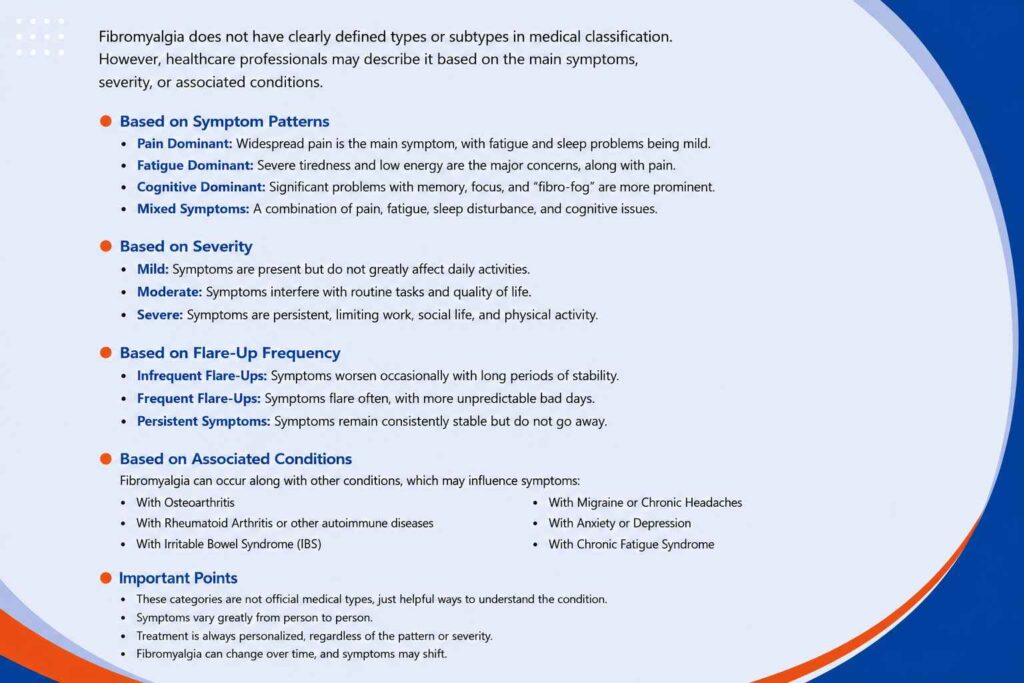
There are not universally accepted clinical “types” of fibromyalgia in the same way that some diseases have clearly defined subtypes.
However, healthcare professionals may describe fibromyalgia according to the dominant symptoms or associated conditions.
For example, some people may experience:
- Predominantly widespread pain
- Severe fatigue and sleep disturbance
- Significant cognitive symptoms
- Fibromyalgia occurring alongside another rheumatic condition
- Frequent symptom flare-ups
These descriptions are useful for understanding an individual’s experience, but they do not necessarily represent separate diseases.
Fibromyalgia may also occur alongside conditions such as osteoarthritis, rheumatoid arthritis, irritable bowel syndrome, anxiety, or depression. Having another condition does not automatically rule out fibromyalgia.
Can Fibromyalgia Symptoms Go Away
One of the most common questions after learning that fibromyalgia is a lifelong condition is whether the symptoms can completely disappear.
The answer is different for every person.
Some people experience substantial improvement, while others continue to have symptoms at varying levels. Even when symptoms improve significantly, they may return during a period of increased stress, poor sleep, illness, or physical strain.
A reduction in symptoms is therefore possible even though the underlying condition is considered chronic.
It is useful to distinguish between:
- Having a chronic condition: The tendency for symptoms to persist or recur over the long term.
- Having severe symptoms: Experiencing significant pain, fatigue, or other symptoms at a particular time.
These are not the same thing.
Someone can have a chronic condition and still experience long periods of relatively manageable symptoms.
What Causes Fibromyalgia Flare-Ups
A flare-up is a period when symptoms become noticeably worse.
If fibromyalgia is a lifelong condition, learning to recognize potential triggers can become an important part of long-term management.
Possible factors associated with worsening symptoms include:
- Poor sleep
- Emotional stress
- Physical overexertion
- Prolonged inactivity
- Illness or infection
- Major changes in routine
- Increased psychological pressure
- Poor recovery after strenuous activity
Not every flare-up has an obvious cause.
Keeping a simple symptom diary may help identify patterns. For example, a person may notice that several nights of poor sleep are consistently followed by increased pain and fatigue.
Identifying personal triggers does not guarantee that flare-ups can be prevented, but it may help with planning and symptom management.
How Is Fibromyalgia Diagnosed
There is no single blood test, X-ray, or scan that confirms fibromyalgia.
Diagnosis generally involves evaluating symptoms, medical history, physical findings, and the possibility of other conditions that could produce similar symptoms.
Healthcare professionals may ask about:
- The location and duration of pain
- Fatigue
- Sleep quality
- Concentration and memory
- Other medical conditions
- How symptoms affect daily activities
- Changes in symptoms over time
Blood tests or imaging may sometimes be used to investigate other possible conditions rather than to directly confirm fibromyalgia.
This evaluation is important because widespread pain and fatigue can occur with several different medical conditions.
A proper assessment can help ensure that another treatable condition is not being overlooked.
Can Fibromyalgia Be Treated
Although fibromyalgia is a lifelong condition, it can be managed.
Current treatment generally focuses on reducing symptoms and improving quality of life rather than providing a permanent cure.
Treatment may involve a combination of:
- Physical activity
- Exercise programmes
- Psychological therapies
- Sleep improvement
- Stress-management techniques
- Appropriate medications
- Healthy lifestyle habits
No single treatment works equally well for everyone. Treatment plans are often individualized according to symptoms, physical ability, preferences, and other health conditions.
Exercise and Physical Activity
Regular, appropriately paced activity can help improve physical function and may reduce pain.
Walking, stretching, swimming, gentle strengthening exercises, or other suitable activities may be considered.
Starting slowly is important, particularly for someone who has been inactive because of pain.
Talking Therapies
Cognitive behavioural therapy and acceptance and commitment therapy may help some people cope with chronic pain, stress, sleep difficulties, and the emotional effects of living with persistent symptoms.
Medicines
Certain medicines may be used to help manage pain, sleep problems, or associated symptoms. The appropriate medication depends on the individual and should be discussed with a qualified healthcare professional.
Medication should not be started, stopped, or changed without appropriate medical advice.
What Are the Benefits of Long-Term Fibromyalgia Management
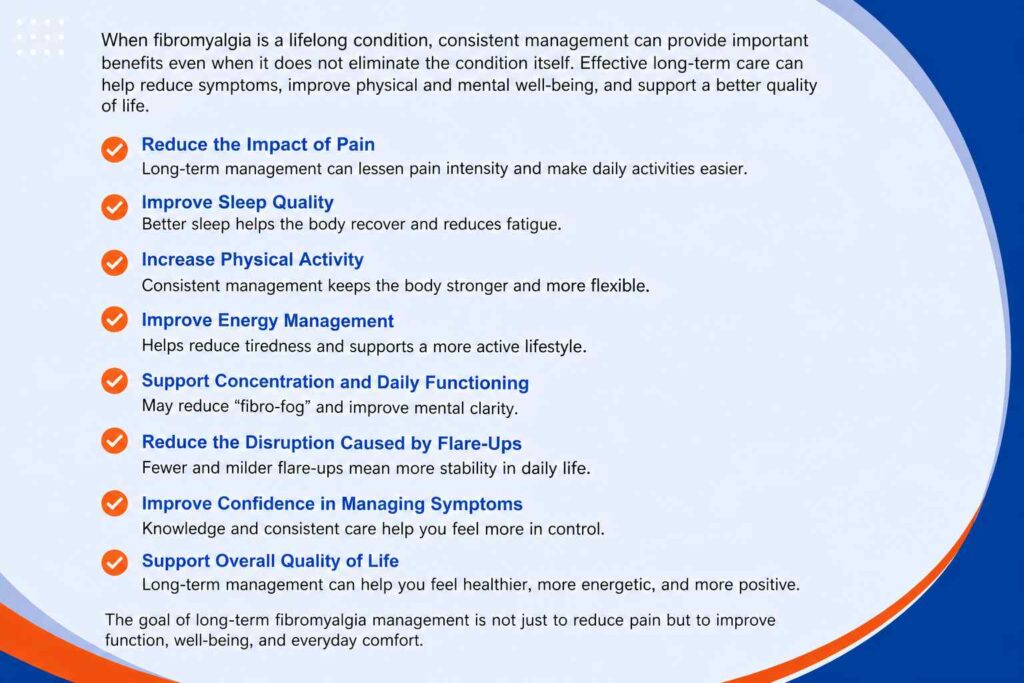
When fibromyalgia is a lifelong condition, consistent management can provide important benefits even when it does not eliminate the condition itself.
Effective symptom management may help:
- Reduce the impact of pain
- Improve sleep quality
- Increase physical activity
- Improve energy management
- Support concentration and daily functioning
- Reduce the disruption caused by flare-ups
- Improve confidence in managing symptoms
- Support overall quality of life
The purpose of treatment is therefore broader than simply reducing pain.
A successful long-term approach may help someone return to activities they enjoy, maintain social connections, work more comfortably, and manage everyday responsibilities more effectively.
Lifestyle Tips for Living With Fibromyalgia
Living with fibromyalgia as a lifelong condition can become easier when daily habits support symptom control.
Maintain Regular Movement
Avoiding all physical activity may contribute to reduced strength and physical function. Gentle, consistent movement is generally more useful than suddenly doing intense exercise.
Prioritize Sleep
Try to maintain a regular sleep and wake schedule. A comfortable, quiet, dark sleeping environment may also support better sleep.
Manage Stress
Stress can make symptoms feel more difficult to manage. Relaxation, breathing exercises, mindfulness, hobbies, and appropriate psychological support may be useful.
Pace Activities
Trying to complete too much on a good day can sometimes lead to increased symptoms afterward. Breaking larger activities into smaller tasks may make daily routines easier.
Maintain Healthy Habits
A balanced diet, adequate hydration, regular activity, and avoidance of unhealthy habits can support general health.
Track Symptoms
A simple diary can help identify connections between sleep, activity, stress, and symptoms.
Does Fibromyalgia Get Worse With Age
There is no single pattern that applies to everyone.
Some people may experience more manageable symptoms as they learn which activities, treatments, and lifestyle strategies work for them. Others may continue to experience persistent or fluctuating symptoms.
Age alone does not determine how severe fibromyalgia will become.
Other health conditions, physical activity, sleep, stress, medications, and general health may influence how a person experiences symptoms.
Therefore, the fact that fibromyalgia is a lifelong condition should not automatically be interpreted as meaning that it will continuously worsen.
The course can be variable, and symptom severity may change over time.
When Should You Seek Medical Evaluation
Persistent widespread pain should not simply be assumed to be fibromyalgia.
A medical evaluation is appropriate when pain, fatigue, sleep problems, or cognitive difficulties are persistent or interfere with normal activities.
You should seek professional assessment if:
- Pain continues for an extended period
- Symptoms interfere with work or daily activities
- Fatigue is persistent
- Sleep remains poor despite lifestyle changes
- Pain is becoming increasingly difficult to manage
- New or unusual symptoms develop
- You are unsure whether fibromyalgia explains your symptoms
Because several conditions can produce similar symptoms, proper evaluation is important. Fibromyalgia can also exist alongside other medical conditions
What Is the Long-Term Outlook for Fibromyalgia
The long-term outlook can be different for every individual.
The fact that fibromyalgia is a lifelong condition does not mean that a person will necessarily experience the same level of symptoms throughout life.
Symptoms can fluctuate. Some periods may involve significant discomfort, while other periods may be more manageable.
Long-term success often depends on finding a sustainable combination of:
- Appropriate medical care
- Regular physical activity
- Good sleep habits
- Stress management
- Pacing
- Healthy daily routines
- Emotional and social support
The goal is to develop strategies that can realistically be continued over time rather than relying on short-term approaches alone.
Conclusion
Is fibromyalgia a lifelong condition? In general, yes. Fibromyalgia is considered a chronic condition, but lifelong does not mean lifelong severe symptoms. Pain, fatigue, sleep difficulties, and other symptoms can fluctuate, and many people can improve their daily functioning through a personalized management plan.
The most useful approach is to focus on what can be managed: maintaining suitable physical activity, improving sleep, managing stress, addressing flare-ups, and receiving appropriate medical support. Because symptoms can overlap with other conditions, professional evaluation is important before assuming that persistent widespread pain is caused by fibromyalgia.
With consistent care and realistic lifestyle adjustments, living with a chronic condition can become more manageable. For individuals seeking appropriate evaluation and ongoing support in Kozhikode, discussing persistent symptoms with a qualified healthcare professional can be an important step toward better long-term symptom management. You can learn more about fibromyalgia symptoms, diagnosis, and treatment from the National Institute of Arthritis and Musculoskeletal and Skin Diseases (NIAMS).
Frequently Asked Questions
1. Is fibromyalgia a lifelong condition?
2. Can fibromyalgia symptoms go away completely?
3. Does fibromyalgia always cause pain?
4. Can fibromyalgia symptoms get worse suddenly?
5. Is fibromyalgia an autoimmune disease?
6. Can exercise help manage fibromyalgia?
7. Can stress make fibromyalgia worse?
8. Does fibromyalgia get worse with age?
9. Is there a permanent cure for fibromyalgia?
10. Can people live a normal life with fibromyalgia?
11. Why do fibromyalgia symptoms keep coming back?
12. Should fibromyalgia treatment continue when symptoms improve?
BAARC Rheumatology Specialists

Dr Athul Paul
MD, Post Doctoral Fellowship in Rheumatology (CMC Vellore)
Consultant Rheumatologist
BAARC Rheumatology Clinic, Kozhikode

Dr Binoy J Paul
MD, PhD, DNB, FRCP (Edin.)
Senior Consultant Rheumatologist
BAARC Rheumatology Centre, Kozhikode