

10 Powerful Tips – What Lifestyle Changes Help Fibromyalgia
Understanding what lifestyle changes help fibromyalgia can make everyday life more manageable for people living with widespread pain, fatigue, sleep difficulties, and other symptoms. Fibromyalgia is a long-term condition that can affect how the nervous system processes pain and other sensations. While there is no single lifestyle approach that works for everyone, consistent healthy habits can support symptom management and overall quality of life. In Thrissur, as elsewhere, people with fibromyalgia can benefit from building practical routines that match their energy levels and individual needs.
Lifestyle changes are generally used alongside appropriate medical care rather than as a replacement for professional treatment. The most helpful approach often involves several small changes, including regular physical activity, adequate sleep, balanced nutrition, stress reduction, activity pacing, and maintaining social connections.
What Lifestyle Changes Help Fibromyalgia
Several lifestyle changes may help people manage fibromyalgia symptoms more effectively. The goal is not to make dramatic changes overnight but to establish sustainable habits that the body can tolerate.
Important lifestyle strategies include:
- Regular low-impact physical activity
- Consistent sleep habits
- Stress management
- Balanced nutrition
- Activity pacing
- Gentle stretching
- Maintaining a healthy routine
- Taking regular breaks
- Staying socially connected
- Tracking symptoms and triggers
These strategies can work differently from person to person. A gradual approach is usually more practical than making several major changes at once.
Follow a Regular Exercise Routine
One of the most important answers to what lifestyle changes help fibromyalgia is regular, gentle exercise. Physical activity may initially feel difficult when pain and fatigue are present, but gradually increasing activity can help improve physical function and reduce stiffness.
Low-impact activities are often easier to tolerate than high-intensity workouts.
Suitable activities may include:
- Walking
- Swimming
- Water-based exercise
- Stationary cycling
- Gentle yoga
- Stretching
- Light strengthening exercises
The key is consistency rather than intensity. Starting with a few minutes of activity and gradually increasing the duration can be more manageable than attempting a demanding workout.
Exercise should not consistently cause severe symptom flare-ups. If an activity significantly increases pain or fatigue, reducing the intensity or duration may be appropriate.
Improve Sleep Quality
Poor sleep and fibromyalgia symptoms can influence each other. Pain may make it difficult to sleep, while insufficient or disrupted sleep can contribute to greater fatigue and discomfort during the day.
Developing a consistent sleep routine can therefore be an important part of symptom management.
Helpful sleep habits include:
- Going to bed and waking up at similar times
- Keeping the bedroom comfortable and quiet
- Limiting stimulating activities before bedtime
- Reducing caffeine late in the day
- Following a relaxing bedtime routine
- Avoiding unnecessary daytime naps
A regular sleep schedule can help the body establish a predictable sleep-wake rhythm. Persistent sleep problems should be discussed with a healthcare professional because conditions such as sleep apnea or restless legs syndrome may also affect sleep quality.
Manage Stress Effectively
Stress can increase muscle tension, worsen fatigue, and make pain more difficult to manage. Learning how to reduce physical and emotional stress can therefore be an important part of a fibromyalgia lifestyle plan.
Stress management does not necessarily require long periods of meditation. Small activities performed consistently can be useful.
Consider:
- Deep breathing exercises
- Mindfulness
- Gentle meditation
- Relaxing music
- Reading
- Spending time outdoors
- Maintaining enjoyable hobbies
- Taking short breaks during demanding activities
The most useful technique is often the one that can realistically become part of the person’s regular routine.
Maintain a Balanced Diet
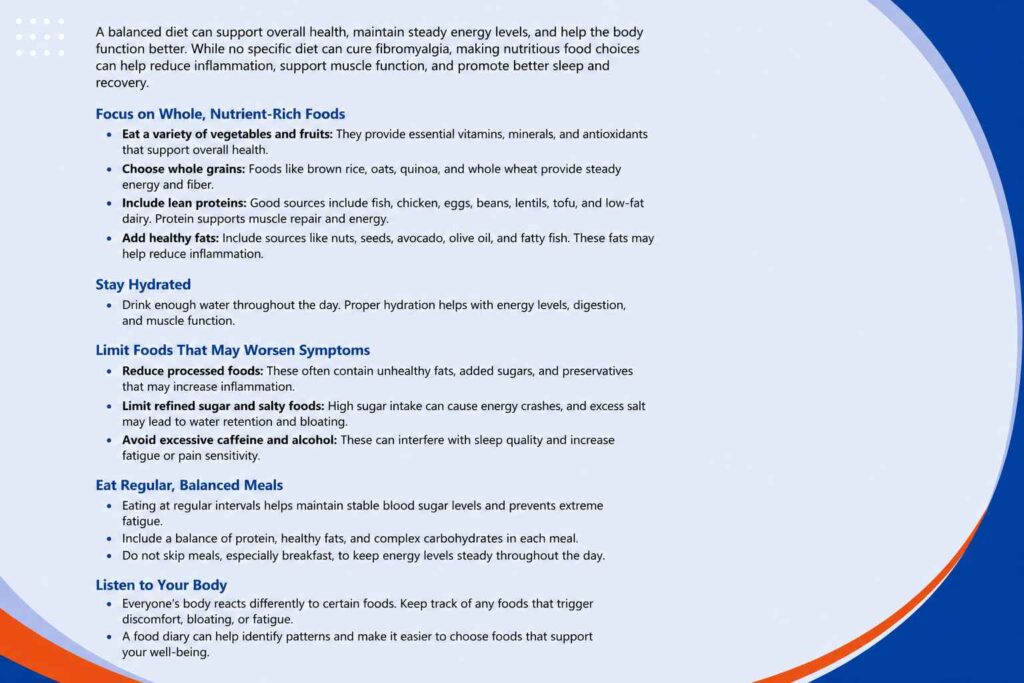
There is no specific diet that universally cures or eliminates fibromyalgia. However, a balanced eating pattern can support general health and provide the energy needed for daily activities.
A nutritious diet can include a variety of:
- Vegetables and fruits
- Whole grains
- Beans and legumes
- Lean protein sources
- Fish
- Nuts and seeds
- Healthy sources of dietary fats
- Adequate fluids
Highly processed foods and excessive added sugars may provide limited nutritional value. Instead of following restrictive diets without professional guidance, it is generally more practical to focus on balanced meals and consistent eating habits.
If certain foods appear to trigger digestive or other symptoms, keeping a food and symptom diary may help identify patterns.
Learn Activity Pacing
Pacing is particularly useful for people who experience fluctuations in energy and fatigue. It involves balancing activity with adequate rest instead of repeatedly pushing beyond physical limits.
A common pattern is doing too much on a relatively good day and then experiencing increased symptoms afterward. Pacing can help reduce this cycle.
Practical pacing strategies include:
- Breaking large tasks into smaller steps
- Taking planned rest periods
- Alternating demanding and easier activities
- Avoiding long periods of continuous activity
- Prioritizing essential tasks
- Planning ahead for physically demanding days
Pacing is not the same as avoiding activity. It is about finding a sustainable level of activity that can be maintained more consistently.
Practice Gentle Stretching
Muscle stiffness and discomfort can make movement feel difficult. Gentle stretching may help maintain flexibility and make everyday movements more comfortable.
Stretching can be incorporated into the morning routine, before physical activity, or during breaks from prolonged sitting.
Examples include gentle:
- Neck movements
- Shoulder stretches
- Back stretches
- Hip stretches
- Leg stretches
- Calf stretches
Movements should be slow and controlled. Stretching should not be forced into painful positions.
Create a Sustainable Daily Routine
A predictable routine can make daily activities easier to organize when symptoms fluctuate. Instead of planning every day around how much energy is available at that moment, creating a flexible schedule can help balance responsibilities and recovery time.
A daily routine may include:
Morning: Wake at a consistent time, eat breakfast, and perform gentle movement.
Afternoon: Complete important tasks while allowing short breaks between activities.
Evening: Reduce demanding activities, follow a relaxing routine, and prepare for sleep.
The routine should remain flexible. Fibromyalgia symptoms can change from day to day, so the schedule may need adjustment.
Avoid the Push-Crash Cycle
The push-crash cycle occurs when a person does significantly more activity during a better period and then experiences increased fatigue or pain afterward.
Recognizing this pattern can help people adjust their activity levels.
For example, instead of completing several household tasks in one day, tasks can be divided across several days. Similarly, a longer exercise session can be replaced with shorter periods of movement spread throughout the day.
This approach can make activity more sustainable and may reduce the likelihood of severe post-activity fatigue.
Maintain Healthy Social Connections
Living with chronic pain can sometimes lead to isolation. Maintaining relationships with family members, friends, colleagues, or support groups may provide emotional support and help reduce feelings of loneliness.
Social activity does not have to be physically demanding. A phone conversation, short visit, online discussion, or shared hobby can provide meaningful connection.
It can also be useful to explain fibromyalgia symptoms to trusted people. Because symptoms may not always be visible, clear communication can help others understand why activity levels may vary.
Track Symptoms and Identify Triggers
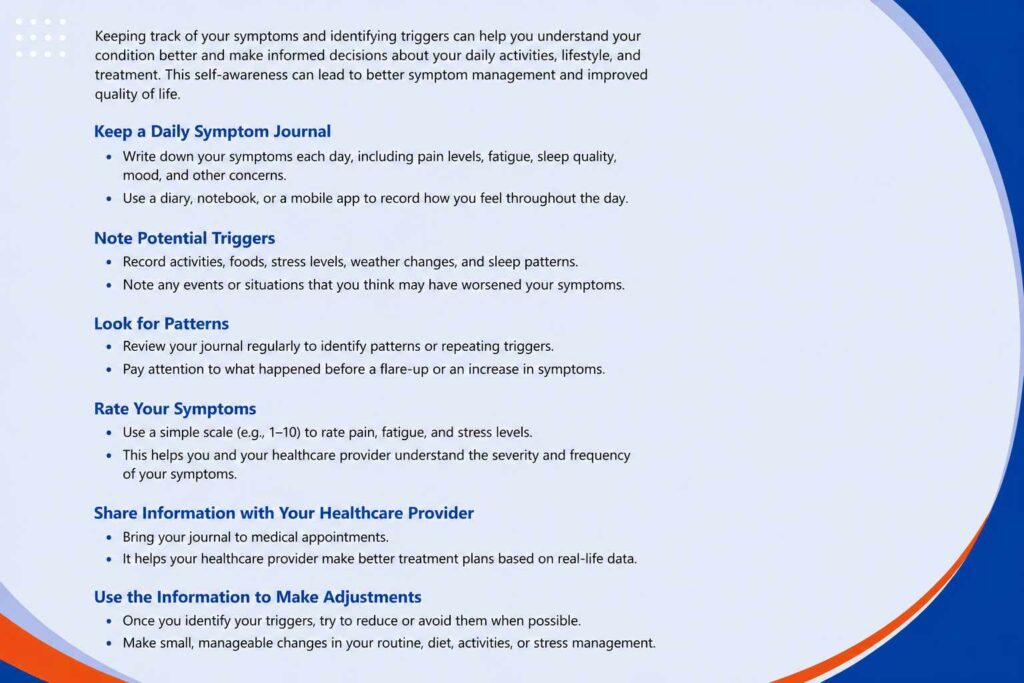
Keeping a simple symptom diary can help identify patterns in pain, fatigue, sleep, physical activity, stress, and daily routines.
A diary may record:
- Pain intensity
- Energy levels
- Sleep duration and quality
- Exercise
- Meals
- Stressful events
- Workload
- Rest periods
- Symptom flare-ups
Over time, this information may help identify activities or circumstances that appear to worsen symptoms. It can also provide useful information to discuss with a healthcare professional.
Benefits of Making Lifestyle Changes
The main purpose of lifestyle modification is to support symptom management and daily functioning. Benefits can vary between individuals, but consistent healthy habits may contribute to:
- Better physical function
- Improved sleep habits
- Greater flexibility
- Better stress management
- Improved energy management
- Increased confidence with daily activities
- More predictable routines
- Better overall quality of life
Lifestyle changes are generally most effective when they are realistic and sustainable. A small habit that can be maintained for months may be more valuable than a demanding routine that lasts only a few days.
Can Lifestyle Changes Cure Fibromyalgia
Lifestyle changes are not considered a cure for fibromyalgia. Fibromyalgia is a chronic condition, and symptoms may vary over time.
However, lifestyle strategies can be an important component of comprehensive symptom management. Exercise, sleep improvement, stress management, pacing, and balanced nutrition may complement treatments recommended by a healthcare professional.
People should be cautious about products or programs that promise a guaranteed cure through a particular diet, supplement, exercise routine, or alternative treatment.
How to Start Making Lifestyle Changes
Trying to change everything at once can feel overwhelming. A gradual approach may be easier to maintain.
Start by selecting one or two realistic changes.
For example:
- Establish a consistent bedtime.
- Add five to ten minutes of gentle movement.
- Take planned breaks during demanding activities.
- Keep a simple symptom diary.
- Add more nutritious foods to regular meals.
- Practice a few minutes of relaxation each day.
Once a habit becomes comfortable, another change can be introduced. This approach allows people to learn what works best for their own symptoms and energy levels.
When Should You Seek Professional Help
Lifestyle management is only one part of fibromyalgia care. Professional guidance may be appropriate when symptoms significantly interfere with work, sleep, mobility, relationships, or everyday activities.
A healthcare professional can assess symptoms, identify other possible conditions, and help develop an individualized treatment and management plan.
Seek prompt medical assessment for new, severe, or unusual symptoms that are not typical of a person’s established fibromyalgia pattern.
Conclusion
Knowing what lifestyle changes help fibromyalgia can make symptom management more practical and sustainable. Gentle exercise, quality sleep, balanced nutrition, stress reduction, pacing, stretching, social support, and symptom tracking can all contribute to a healthier daily routine.
The goal is not perfection. Sustainable habits that match individual abilities are more useful than sudden, demanding changes. With appropriate professional guidance and consistent self-care, people can work toward better daily functioning and quality of life. For people seeking support with fibromyalgia management in Thrissur, an individualized approach can help determine which lifestyle strategies are most appropriate.
Frequently Asked Questions
1. What lifestyle changes help fibromyalgia most?
2. Can exercise make fibromyalgia better?
3. What type of exercise is best for fibromyalgia?
4. Does sleep affect fibromyalgia symptoms?
5. Can diet improve fibromyalgia?
6. Is stress linked to fibromyalgia flare-ups?
7. What is pacing in fibromyalgia?
8. Should people with fibromyalgia avoid physical activity?
9. Can a daily routine help fibromyalgia?
10. How can I identify my fibromyalgia triggers?
BAARC Rheumatology Specialists

Dr Athul Paul
MD, Post Doctoral Fellowship in Rheumatology (CMC Vellore)
Consultant Rheumatologist
BAARC Rheumatology Clinic, Kozhikode

Dr Binoy J Paul
MD, PhD, DNB, FRCP (Edin.)
Senior Consultant Rheumatologist
BAARC Rheumatology Centre, Kozhikode