
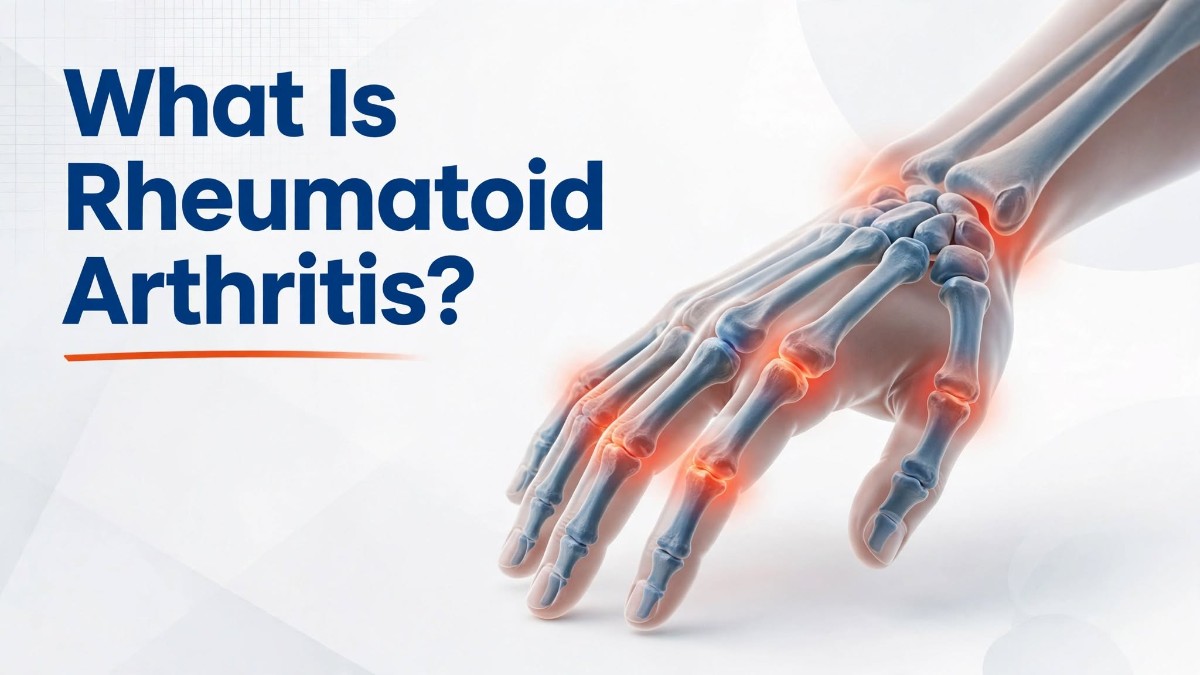
What Is Rheumatoid Arthritis?
What Is Rheumatoid Arthritis? It is a chronic autoimmune disease in which the immune system mistakenly attacks the lining of the joints, causing inflammation, pain, swelling, and stiffness. It most commonly affects joints in the hands, wrists, and feet, often on both sides of the body. Without appropriate treatment, persistent inflammation can damage joints and affect everyday activities.
Rheumatoid arthritis (RA) is different from ordinary joint pain caused by ageing or wear and tear. It is an inflammatory condition that may require specialist assessment, medication, and long-term monitoring. Recognising the symptoms early and seeking medical advice can help people receive appropriate care.
What Happens in Rheumatoid Arthritis?
In a healthy joint, the joint lining helps the bones move smoothly against each other. In rheumatoid arthritis, the immune system mistakenly targets the body’s own tissues, leading to inflammation in the lining of the joints. This inflammation can cause the joint lining to become thickened and swollen. As the condition progresses, ongoing inflammation may damage cartilage, bone, and surrounding structures.
Rheumatoid arthritis can also affect areas beyond the joints. Some people experience fatigue, general weakness, or other symptoms related to inflammation. In certain cases, the eyes, lungs, heart, blood vessels, or other parts of the body may be affected. The severity of the disease varies. Some people experience periods of mild symptoms, while others develop persistent inflammation that needs more intensive treatment.
What Are the Main Symptoms of Rheumatoid Arthritis?
The symptoms of rheumatoid arthritis can develop gradually or begin over a shorter period. They may fluctuate, with periods of increased symptoms known as flares.
Common symptoms include:
Joint pain: Pain may affect the hands, wrists, feet, knees, or other joints.
Joint swelling: The affected joints may appear swollen or feel tender.
Morning stiffness: Stiffness may be particularly noticeable after waking up or after sitting still for a long time.
Warmth around joints: Inflamed joints may feel warmer than the surrounding skin.
Fatigue: Ongoing inflammation can contribute to tiredness and low energy.
Reduced movement: Pain and stiffness may make it harder to grip objects, walk comfortably, or complete daily tasks.
Symptoms on both sides: Rheumatoid arthritis often affects corresponding joints on both sides of the body, although this pattern is not present in every person.
These symptoms do not automatically mean that someone has rheumatoid arthritis. Other conditions can cause similar problems, so a medical evaluation is important.
Which Joints Are Commonly Affected?
Rheumatoid arthritis frequently affects small joints before involving larger joints.
Hands and Fingers
The finger joints and knuckles may become painful, swollen, or stiff. Tasks such as buttoning clothes, writing, opening jars, or holding small objects may become difficult.
Wrists
Inflammation in the wrists can cause tenderness, swelling, and reduced movement. Some people find it uncomfortable to bend their wrists or place weight on their hands.
Feet and Toes
The joints near the toes may become painful or swollen, making standing and walking uncomfortable. Shoes may feel tighter when swelling is present.
Knees, Ankles, and Other Joints
Rheumatoid arthritis can also affect the knees, ankles, elbows, shoulders, and other joints. The number of joints involved and the intensity of symptoms differ from person to person.
What Causes Rheumatoid Arthritis?
The exact cause of rheumatoid arthritis is not fully understood. It develops when the immune system mistakenly attacks the body’s own joint tissues. A combination of genetic susceptibility and environmental factors is believed to contribute to the risk.
Factors associated with an increased risk include:
Genetic factors: Certain inherited characteristics can make a person more susceptible.
Smoking: Smoking is an established risk factor and is associated with a greater risk of developing rheumatoid arthritis.
Environmental influences: Some environmental exposures may contribute to the development of the disease in susceptible individuals.
Hormonal factors: Rheumatoid arthritis is more common in women than men, suggesting that hormonal and other biological factors may play a role.
Having one or more risk factors does not mean a person will definitely develop rheumatoid arthritis. The condition can also occur in people without an obvious family history. Rheumatoid arthritis is not caused simply by ageing, and it is not the result of a person doing something wrong.
How Is Rheumatoid Arthritis Different From Osteoarthritis?
Rheumatoid arthritis and osteoarthritis can both cause joint pain and stiffness, but they develop in different ways.
| Feature | Rheumatoid arthritis | Osteoarthritis |
|---|---|---|
| Main process | Autoimmune inflammation | Changes involving cartilage and other joint structures |
| Joint pattern | Often affects joints on both sides | May affect one or several joints unevenly |
| Morning stiffness | Can last longer, often over 30 minutes | Often shorter, commonly under 30 minutes |
| Swelling | Inflammatory swelling may occur | Swelling may occur due to joint changes |
| General symptoms | Fatigue and other systemic symptoms may occur | Usually mainly affects the joints |
| Treatment approach | Often includes disease-modifying medication | Depends on symptoms, function, and joint changes |
These are general differences, not a way to diagnose the condition at home. Some symptoms overlap, and a healthcare professional can help determine the likely cause.
How Is Rheumatoid Arthritis Diagnosed?
There is no single test that confirms every case of rheumatoid arthritis. Diagnosis involves combining symptoms, a physical examination, medical history, blood tests, and imaging when appropriate.
1. Medical History and Joint Examination
A clinician may ask when the symptoms began, how long morning stiffness lasts, which joints are affected, and whether symptoms change over time. The examination may assess swelling, tenderness, joint movement, and the distribution of symptoms.
2. Blood Tests
Blood tests can help assess inflammation and identify markers associated with rheumatoid arthritis.
Tests may include:
Rheumatoid factor (RF): An antibody that may be present in people with rheumatoid arthritis but can also occur in other conditions.
Anti-CCP antibodies: These can provide useful evidence supporting the diagnosis.
C-reactive protein (CRP): A marker that can indicate inflammation.
Erythrocyte sedimentation rate (ESR): Another measure that may help assess inflammation.
A positive result does not always confirm rheumatoid arthritis, and some people with the disease have negative RF or anti-CCP results.
3. Imaging Tests
X-rays, ultrasound, or MRI may be recommended depending on the clinical situation. These tests can help identify inflammation, joint changes, or damage. The choice of investigation depends on the symptoms and findings. A specialist interprets test results alongside the clinical examination rather than relying on one result alone.
Why Is Early Diagnosis Important?
Early assessment is important because persistent inflammation can gradually damage joints. Identifying rheumatoid arthritis and starting suitable treatment at the right time can help control disease activity and reduce the risk of long-term joint damage.
Early management may help:
Reduce joint pain and swelling.
Improve movement and physical function.
Limit progressive joint damage.
Support daily activities and mobility.
Monitor the condition before significant complications develop.
Anyone experiencing persistent joint swelling, prolonged morning stiffness, or unexplained joint pain should consider medical evaluation. Early symptoms can be subtle, so waiting until the pain becomes severe may delay diagnosis.
How Is Rheumatoid Arthritis Treated?
There is no single treatment plan that works for everyone with rheumatoid arthritis. Treatment depends on disease activity, affected joints, other medical conditions, previous treatment, and how the person responds to medication.
Disease-Modifying Antirheumatic Drugs
Disease-modifying antirheumatic drugs (DMARDs) help control the underlying disease process and reduce inflammation. Methotrexate, hydroxychloroquine, sulfasalazine, and leflunomide are examples that may be prescribed depending on the individual case. These medicines require medical supervision. Some need regular blood tests or other monitoring to assess effectiveness and possible side effects.
Biologic and Targeted Therapies
Some patients may need biologic medicines or targeted synthetic therapies when conventional treatment is not sufficiently effective or when other clinical factors support their use.
These treatments act on specific parts of the immune system. A specialist considers potential benefits, infection risks, medical history, and monitoring requirements before recommending them.
Medicines for Symptom Relief
Certain medicines may help reduce pain and inflammation. However, reducing pain alone does not necessarily control the disease. Treatment may need to address both symptoms and the underlying inflammatory process. Do not start, stop, or change prescribed rheumatoid arthritis medication without consulting the treating healthcare professional.
Physiotherapy and Appropriate Exercise
Exercise and physiotherapy may help maintain flexibility, strength, and mobility. Activities should be adapted to the person’s symptoms and joint condition.
During a flare, strenuous activities that increase pain may need to be reduced temporarily. A suitable plan can help balance movement, rest, and everyday activities.
Regular Follow-Up
Rheumatoid arthritis is often a long-term condition. Regular follow-up helps assess disease activity, monitor treatment response, review medication safety, and adjust the management plan when necessary.
Can Rheumatoid Arthritis Be Cured?
There is currently no established cure that permanently eliminates rheumatoid arthritis. However, treatment can help control inflammation, reduce symptoms, preserve joint function, and support a better quality of life. Some people achieve remission, meaning that disease activity becomes very low or there are few signs of active inflammation.
Remission does not necessarily mean the condition has disappeared permanently, so continued medical monitoring may still be needed. Following the prescribed treatment plan and attending regular reviews are important parts of long-term management.
When Should You Consult a Rheumatologist?
Consider consulting a healthcare professional if you have persistent joint swelling, morning stiffness that lasts for a prolonged period, pain affecting several joints, or difficulty carrying out normal activities. Seek prompt medical assessment if a joint becomes suddenly very painful, hot, and swollen, particularly if you also have a fever. These symptoms can indicate an infection or another condition requiring urgent attention.
A rheumatologist specialises in diagnosing and managing inflammatory joint diseases and autoimmune conditions. Specialist evaluation can help distinguish rheumatoid arthritis from other causes of joint pain and guide appropriate treatment.
Rheumatoid Arthritis Care at BAARC
BAARC (Dr. Binoy’s Arthritis and Rheumatology Centre) in Kozhikode provides evaluation and management for rheumatoid arthritis and other rheumatic and autoimmune conditions. Its services include comprehensive assessment, diagnostic support, medication management, advanced therapies, joint injections, and long-term disease management. The appropriate approach depends on the person’s symptoms, examination findings, investigations, and response to treatment. A rheumatology consultation can help determine whether symptoms are consistent with rheumatoid arthritis and what further assessment or management may be needed.
To learn more about the centre’s rheumatoid arthritis services, visit the BAARC Rheumatoid Arthritis Treatment page or contact the centre through its official website. Recognising symptoms early, obtaining an accurate diagnosis, and following an appropriate treatment plan can help people with rheumatoid arthritis protect joint function and manage the condition over time.