
Rheumatoid Arthritis Treatment in Kozhikode
Rheumatoid arthritis is a long-term autoimmune condition that can cause joint inflammation, stiffness, swelling, and discomfort. Choosing appropriate Rheumatoid Arthritis Treatment in Kozhikode can help manage inflammation, protect joint function, and support better daily movement. Early assessment is particularly important because rheumatoid arthritis may gradually affect joints and other parts of the body if inflammation remains uncontrolled.
Unlike ordinary joint wear and tear, rheumatoid arthritis develops when the immune system mistakenly attacks healthy tissues around the joints. The condition can vary from person to person, so treatment needs to be based on symptoms, examination findings, blood tests, imaging results, disease activity, and overall health.
A planned approach to Rheumatoid Arthritis Treatment in Kozhikode may include disease-modifying medicines, targeted therapies, physical activity, rehabilitation, lifestyle changes, and regular medical monitoring. The main objective is not simply to reduce pain but also to control inflammation and reduce the risk of progressive joint damage.
What Is Rheumatoid Arthritis?
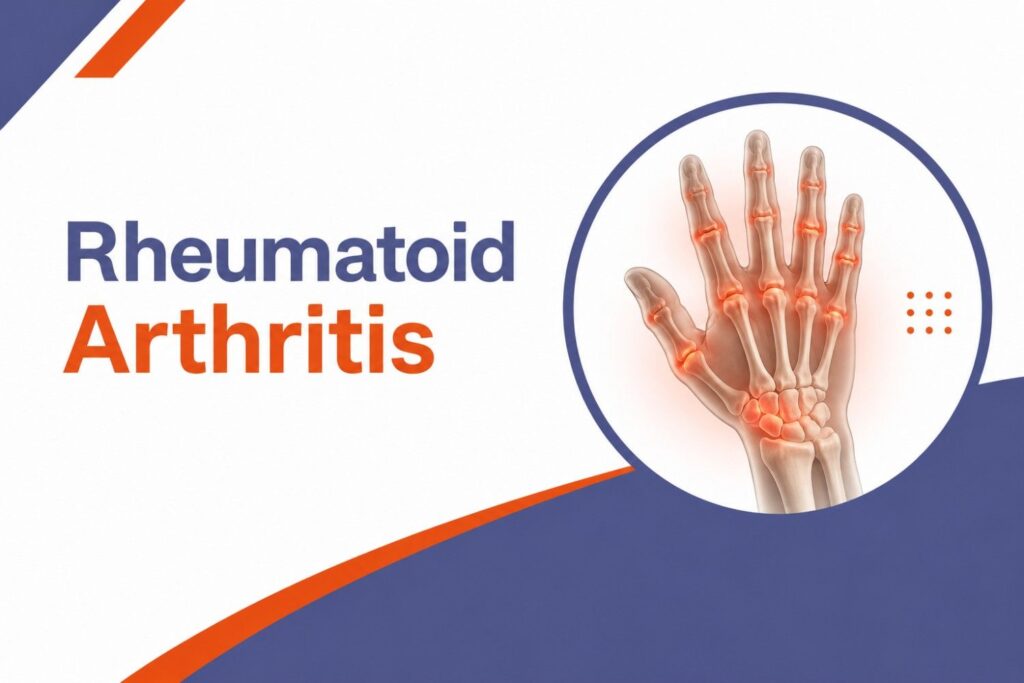
Rheumatoid arthritis is an autoimmune inflammatory disease that primarily affects the joints. The immune system becomes overactive and causes inflammation in the lining of the joints, known as the synovium.Persistent inflammation can gradually affect cartilage, bone, tendons, and ligaments. This may result in reduced movement, weakness, deformity, and difficulty performing everyday activities.A major feature of rheumatoid arthritis is that symptoms often affect joints on both sides of the body. For example, both hands, wrists, knees, or feet may become painful or stiff.Effective Rheumatoid Arthritis Treatment in Kozhikode focuses on identifying the condition early and controlling inflammation before significant structural damage develops.
Common Risk Factors
Several factors may increase the likelihood of developing rheumatoid arthritis:
- Family history of autoimmune conditions
- Genetic susceptibility
- Certain environmental exposures
- Smoking
- Hormonal influences
- Some infections
- Long-term immune system abnormalities
Having a risk factor does not necessarily mean a person will develop rheumatoid arthritis. Similarly, people without an obvious risk factor can also develop the condition.
Understanding possible causes helps doctors develop a more complete assessment before recommending Rheumatoid Arthritis Treatment in Kozhikode.
Types and Patterns of Rheumatoid Arthritis
Rheumatoid arthritis does not affect every individual in exactly the same way. Disease activity, symptoms, affected joints, and response to medicines can differ significantly.
Seropositive Rheumatoid Arthritis
Some patients have specific antibodies in their blood, such as rheumatoid factor or anti-cyclic citrullinated peptide antibodies. This pattern is often referred to as seropositive rheumatoid arthritis.
Seronegative Rheumatoid Arthritis
Some individuals have symptoms and clinical findings consistent with rheumatoid arthritis but do not have these antibodies in their blood. This is known as seronegative rheumatoid arthritis.
Early Rheumatoid Arthritis
Early disease may present with subtle symptoms such as morning stiffness, mild swelling, tiredness, or discomfort in smaller joints. Recognizing these changes can support earlier assessment and Rheumatoid Arthritis Treatment in Kozhikode.
Established Rheumatoid Arthritis
When inflammation has continued for a longer period, patients may experience persistent pain, reduced mobility, weakness, or structural joint changes. Treatment may then require more intensive disease control and rehabilitation.
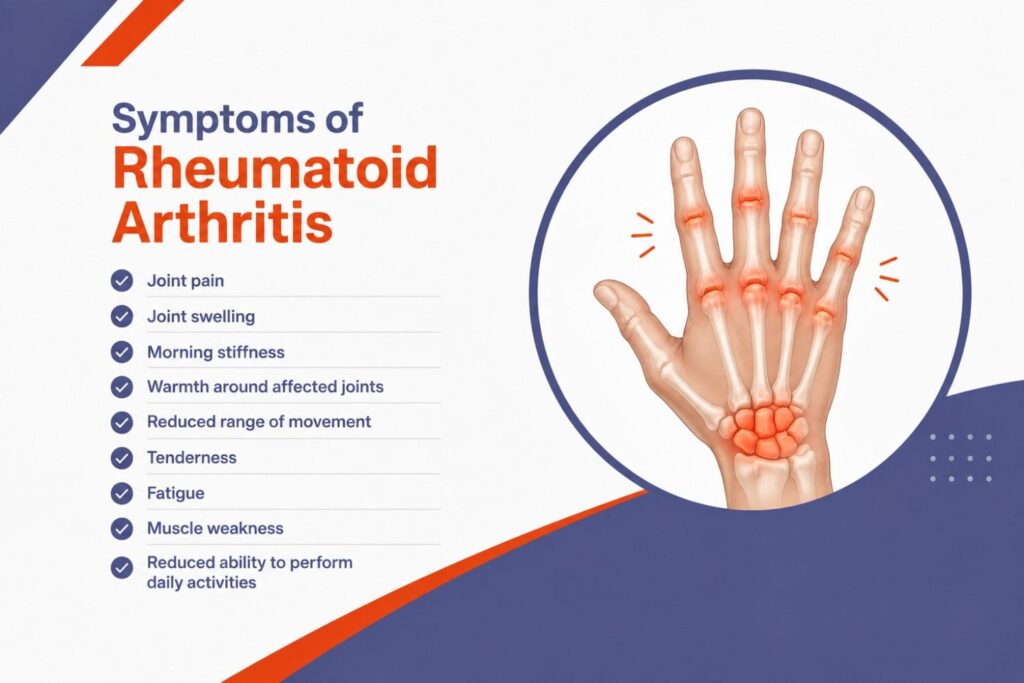
Symptoms of Rheumatoid Arthritis
Recognizing symptoms early can encourage timely medical evaluation. Rheumatoid arthritis commonly develops gradually, although some people may experience a more noticeable onset.
Common Symptoms Include
- Joint pain
- Joint swelling
- Morning stiffness
- Warmth around affected joints
- Reduced range of movement
- Tenderness
- Fatigue
- Muscle weakness
- Reduced ability to perform daily activities
Morning stiffness lasting for a significant period can be an important clue, particularly when it occurs repeatedly.Symptoms may initially appear in the hands, wrists, feet, or other small joints. As the condition progresses, larger joints may also become involved.Appropriate Rheumatoid Arthritis Treatment in Kozhikode should be considered when persistent joint symptoms interfere with work, sleep, exercise, or routine activities.
Why Early Diagnosis Matters
Early diagnosis is one of the most important parts of rheumatoid arthritis care. Persistent inflammation can gradually damage joint structures, making treatment more difficult if intervention is delayed.
A rheumatologist may assess:
- Medical history
- Pattern of joint symptoms
- Physical examination
- Inflammatory markers
- Rheumatoid factor
- Anti-CCP antibodies
- Blood cell counts
- Liver and kidney function
- X-rays or other imaging when appropriate
There is no single test that confirms every case of rheumatoid arthritis. Doctors generally combine clinical findings with laboratory and imaging information.Early Rheumatoid Arthritis Treatment in Kozhikode can therefore support better disease control and help reduce the likelihood of preventable joint damage.
Rheumatoid Arthritis Treatment in Kozhikode: Main Approaches
Treatment is personalized according to disease activity, duration, affected joints, other health conditions, age, medication history, and response to previous therapies.
1. Disease-Modifying Antirheumatic Drugs
Disease-modifying antirheumatic drugs, commonly called DMARDs, are an important part of rheumatoid arthritis management.These medicines aim to control the underlying inflammatory process rather than simply providing temporary pain relief.
Examples may include:
- Methotrexate
- Hydroxychloroquine
- Sulfasalazine
- Leflunomide
The choice of medicine should always be made by a qualified doctor after evaluating the individual patient.
2. Biologic Medicines
Biologic medicines may be considered when conventional DMARDs do not adequately control disease activity or when specific clinical circumstances support their use.
These therapies target particular pathways involved in inflammation.Biologic treatment requires medical supervision because doctors need to consider infection risk, previous medical history, vaccination status, and other factors before and during treatment.
3. Targeted Synthetic Therapies
Targeted medicines can act on specific immune pathways involved in rheumatoid arthritis. They may be considered for selected patients depending on disease activity and previous treatment response.Regular monitoring is important when using these medicines.
4. Anti-Inflammatory and Pain-Relieving Medicines
Some medicines may help reduce pain, stiffness, or inflammation while disease-modifying treatment takes effect.However, pain relief alone does not address the underlying autoimmune process. This is why comprehensive Rheumatoid Arthritis Treatment in Kozhikode generally focuses on controlling the disease itself.
5. Corticosteroids
Corticosteroids can provide rapid control of inflammation in certain situations. Doctors may use them for short periods or specific clinical circumstances.Because prolonged corticosteroid use can cause side effects, the dose and duration should be carefully managed by a medical professional.
Role of Physiotherapy and Exercise
Physical activity is an important part of rheumatoid arthritis management. Appropriate exercises can help maintain joint flexibility, muscle strength, balance, and overall physical function.
Helpful Activities May Include
- Walking
- Gentle stretching
- Swimming
- Stationary cycling
- Strengthening exercises
- Range-of-motion exercises
The type and intensity of exercise should match the person’s symptoms and physical ability.During periods of significant inflammation, a temporary adjustment in activity may be appropriate. A physiotherapist can help create a safe exercise plan as part of Rheumatoid Arthritis Treatment in Kozhikode.
Benefits of Appropriate Rheumatoid Arthritis Treatment in Kozhikode
A carefully planned treatment strategy can provide several important benefits.
Better Control of Inflammation
The primary goal is to reduce excessive immune-driven inflammation and maintain low disease activity where possible.
Protection of Joint Function
Controlling inflammation early can help reduce the risk of progressive structural joint damage.
Improved Mobility
Managing stiffness, pain, weakness, and inflammation may make everyday movement easier.
Better Quality of Life
Effective disease management can help patients participate more comfortably in work, family activities, exercise, and social life.
Reduced Risk of Complications
Rheumatoid arthritis can affect more than the joints. Regular monitoring helps doctors identify and manage possible complications or treatment-related concerns.
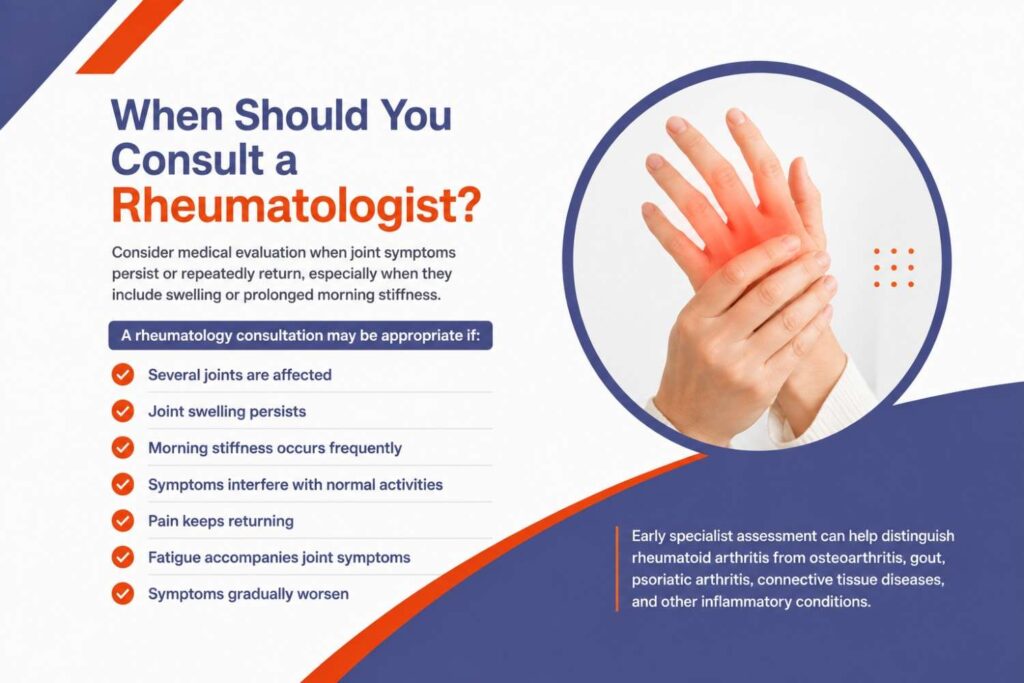
When Should You Consult a Rheumatologist?
Consider medical evaluation when joint symptoms persist or repeatedly return, especially when they include swelling or prolonged morning stiffness.
A rheumatology consultation may be appropriate if:
- Several joints are affected
- Joint swelling persists
- Morning stiffness occurs frequently
- Symptoms interfere with normal activities
- Pain keeps returning
- Fatigue accompanies joint symptoms
- Symptoms gradually worsen
Early specialist assessment can help distinguish rheumatoid arthritis from osteoarthritis, gout, psoriatic arthritis, connective tissue diseases, and other inflammatory conditions.
Conclusion
Effective Rheumatoid Arthritis Treatment in Kozhikode involves much more than managing occasional joint pain. Early diagnosis, appropriate disease-modifying treatment, regular monitoring, physical activity, rehabilitation, and healthy lifestyle habits can work together to control inflammation and preserve joint function.Because rheumatoid arthritis can vary considerably between individuals, treatment should always be personalized rather than based on a single approach. Consulting a rheumatologist when persistent joint swelling, stiffness, or pain develops can support timely assessment and appropriate care.With consistent follow-up and a structured treatment plan, many people can manage rheumatoid arthritis effectively and continue their daily activities. If you are looking for Rheumatoid Arthritis Treatment in Kozhikode, professional evaluation can help identify the right management approach for your individual needs.Learn more from global health authorities ->American College of Rheumatology (ACR)
FREQUENTLY ASKED QUESTIONS
BAARC Rheumatology Specialists

Dr Athul Paul
MD, Post Doctoral Fellowship in Rheumatology (CMC Vellore)
Consultant Rheumatologist
BAARC Rheumatology Clinic, Kozhikode

Dr Binoy J Paul
MD, PhD, DNB, FRCP (Edin.)
Senior Consultant Rheumatologist
BAARC Rheumatology Centre, Kozhikode