
7 Powerful Benefits: Arthritis Specialist in Kozhikode
Arthritis can affect the joints, muscles, and surrounding tissues, making everyday activities uncomfortable or difficult. If joint pain, stiffness, swelling, or reduced mobility continues, consulting an Arthritis Specialist in Kozhikode can help identify the underlying problem and guide appropriate care.
Arthritis is not a single condition. It includes several disorders that can affect people differently. Some types develop gradually, while others may cause sudden inflammation and significant discomfort. Early assessment can help determine the type of arthritis and whether treatment is needed to control symptoms and protect joint function.
What Is Arthritis
Arthritis refers to a group of conditions that cause inflammation, pain, stiffness, or other problems involving one or more joints. It can affect the hands, knees, hips, feet, spine, shoulders, and other parts of the musculoskeletal system.
An Arthritis Specialist in Kozhikode evaluates symptoms in detail rather than treating joint pain based only on its location. Understanding the specific cause is important because treatment for one form of arthritis may differ significantly from another.
Arthritis may involve:
- Joint inflammation
- Cartilage deterioration
- Autoimmune activity
- Crystal deposits
- Changes in surrounding tissues
- Reduced range of motion
- Persistent or recurring pain
Common Types of Arthritis
Different forms of arthritis have different causes and patterns. Some of the commonly recognized types include:
Osteoarthritis
Osteoarthritis is commonly associated with gradual changes in the cartilage and structures within a joint. It frequently affects weight-bearing joints such as the knees and hips, although other joints can also be involved.
Rheumatoid Arthritis
Rheumatoid arthritis is an autoimmune condition in which the immune system mistakenly attacks tissues around the joints. It can cause persistent inflammation, swelling, stiffness, and pain.
Gout
Gout occurs when uric acid crystals accumulate in a joint. Attacks may develop suddenly and can cause intense pain, swelling, warmth, and redness.
Psoriatic Arthritis
Psoriatic arthritis is an inflammatory joint condition associated with psoriasis. It may affect different joints and can also involve areas such as the fingers, toes, and tendons.
Other Inflammatory Arthritis
Several other inflammatory and connective-tissue conditions can cause joint symptoms. A detailed clinical evaluation helps distinguish among them.
Common Symptoms of Arthritis
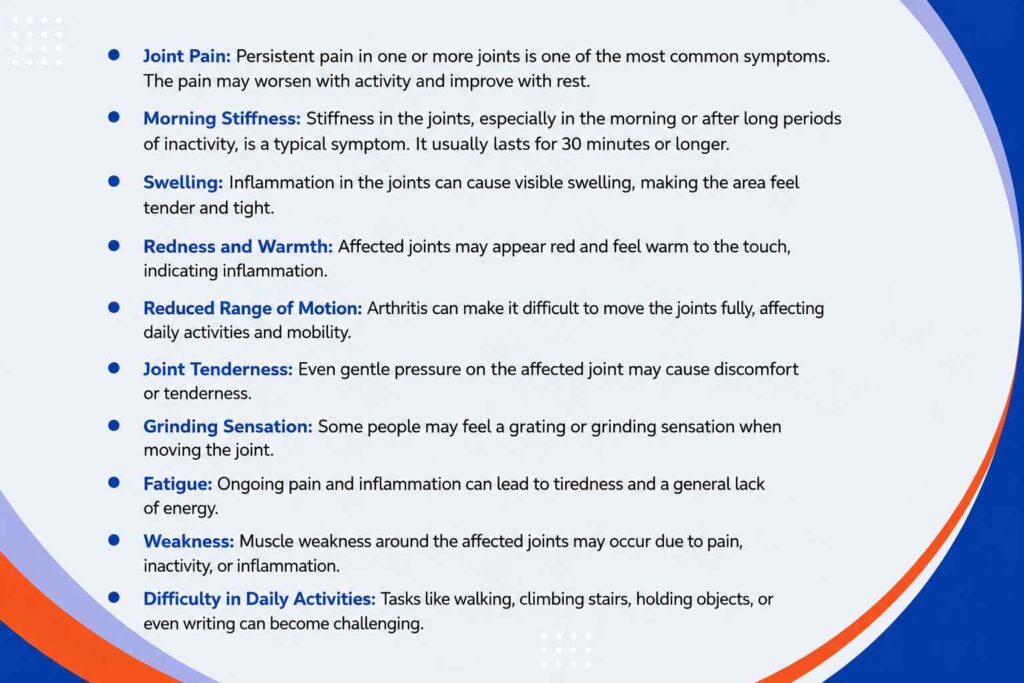
Arthritis symptoms can vary according to the type and severity of the condition. Common symptoms include:
- Joint pain
- Morning stiffness
- Swelling around joints
- Warmth or tenderness
- Difficulty moving a joint
- Reduced flexibility
- Joint weakness
- Pain after physical activity
- Recurring episodes of inflammation
- Difficulty performing everyday activities
Some people experience mild symptoms initially, while others may develop considerable discomfort. Persistent symptoms should not simply be attributed to ageing or overuse.
When Should You Consult an Arthritis Specialist
Occasional joint discomfort may improve with rest, but persistent or recurring symptoms deserve professional evaluation.
Consider consulting an Arthritis Specialist in Kozhikode if you experience:
- Joint pain that does not improve
- Repeated swelling
- Prolonged morning stiffness
- Pain affecting daily activities
- Unexplained joint inflammation
- Sudden episodes of severe joint pain
- Multiple joints becoming painful
- Reduced joint movement
- Symptoms that repeatedly return
- Increasing difficulty walking or using your hands
Early evaluation can provide an opportunity to understand what is causing the symptoms and determine whether intervention is appropriate.
How Is Arthritis Diagnosed
Diagnosis usually begins with a detailed medical history and physical examination. The specialist may ask about when symptoms started, which joints are affected, the pattern of pain, stiffness, previous episodes, and factors that make symptoms better or worse.
Depending on the suspected condition, investigations may include:
Blood Tests
Blood tests can help identify signs of inflammation and may support evaluation for certain autoimmune or metabolic conditions.
Imaging Tests
X-rays, ultrasound, MRI, or other imaging studies may be recommended when structural changes or inflammation need further assessment.
Joint Fluid Analysis
In selected cases, fluid from an affected joint may be examined to identify crystals or other abnormalities.
The combination of clinical findings and appropriate investigations is generally more useful than relying on one test alone.
Benefits of Seeing an Arthritis Specialist
Consulting an Arthritis Specialist in Kozhikode can provide several advantages when joint symptoms require specialized assessment.
Accurate Identification of the Condition
Joint pain can result from many different problems. Specialist evaluation can help distinguish arthritis from other musculoskeletal conditions.
Personalized Treatment Planning
Treatment can be selected according to the type of arthritis, affected joints, symptoms, overall health, and individual needs.
Better Symptom Management
A structured treatment plan may help reduce pain, stiffness, and inflammation while supporting everyday mobility.
Monitoring Disease Progression
Some forms of arthritis require ongoing assessment. Regular follow-up can help evaluate whether treatment is working and whether adjustments are necessary.
Support for Joint Function
Appropriate treatment and lifestyle measures may help people maintain movement and participate in normal activities.
Treatment Options for Arthritis
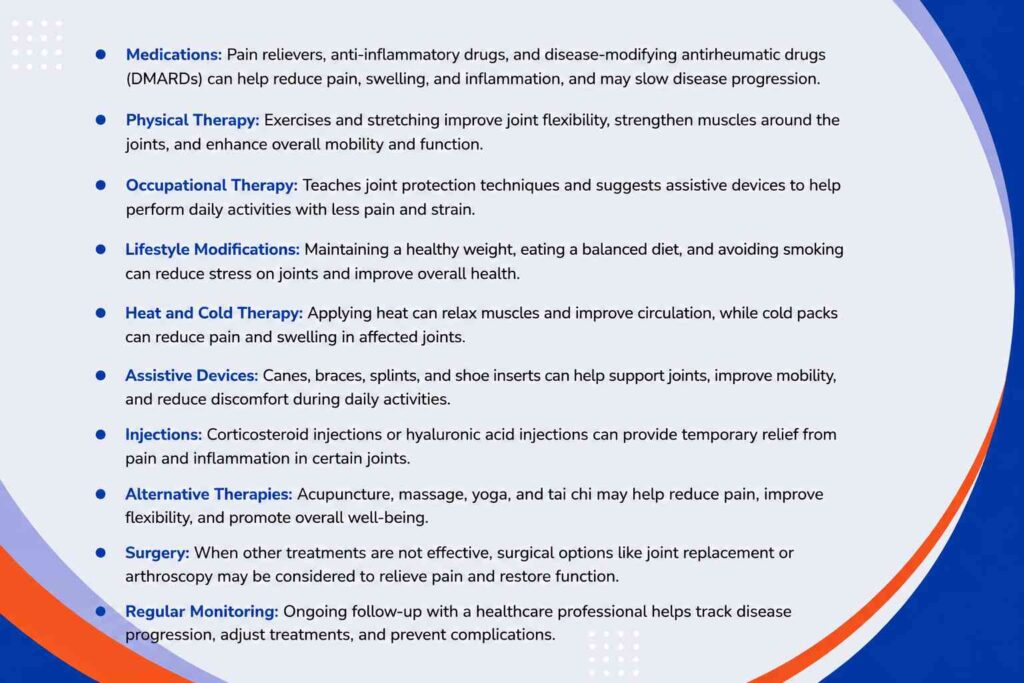
Arthritis treatment depends on the underlying condition. There is no single treatment that is appropriate for every person.
Common approaches may include:
Medicines
Depending on the diagnosis, healthcare professionals may recommend medicines to control pain, inflammation, autoimmune activity, or other underlying factors.
Physical Therapy
Exercises and supervised physical therapy can help improve flexibility, strength, balance, and joint function when appropriate.
Lifestyle Changes
Maintaining a healthy body weight, staying physically active within comfortable limits, and following appropriate exercise routines can support joint health.
Joint-Specific Treatments
Certain conditions may require targeted treatments directed at a particular joint or inflammatory process.
Advanced Treatment
When symptoms are severe or do not respond adequately to conservative management, additional treatment options may be considered based on the individual’s diagnosis and circumstances.
Lifestyle Tips for Managing Arthritis
Medical care is only one part of long-term arthritis management. Practical daily habits may also support joint health.
Helpful measures can include:
- Maintaining a healthy weight
- Choosing low-impact physical activities
- Following recommended exercises
- Taking regular movement breaks
- Avoiding prolonged inactivity
- Using supportive footwear when appropriate
- Getting adequate rest
- Following prescribed treatment consistently
- Tracking recurring symptoms
- Attending recommended follow-up appointments
Exercise should be appropriate for the individual’s condition. Activities that cause significant or persistent pain should be discussed with a healthcare professional.
Why Early Arthritis Management Matters
Ignoring persistent joint symptoms can make it harder to understand the underlying problem. Certain inflammatory forms of arthritis may require timely treatment to reduce ongoing inflammation and protect joint function.
Early assessment can help with:
- Identifying the underlying condition
- Starting appropriate management
- Controlling inflammation
- Improving mobility
- Reducing disruption to daily activities
- Monitoring changes over time
- Adjusting treatment when necessary
Not every episode of joint pain indicates serious arthritis, but recurring symptoms should be evaluated rather than repeatedly self-treated without understanding the cause.
What to Expect During an Arthritis Consultation
During an appointment with an Arthritis Specialist in Kozhikode, the consultation may begin with questions about your symptoms, medical history, medications, previous diagnoses, lifestyle, and family history where relevant.
The specialist may then examine the affected joints for:
- Swelling
- Tenderness
- Warmth
- Movement limitations
- Joint stability
- Muscle strength
Additional investigations may be recommended when necessary. Once the findings are reviewed, the specialist can explain the likely diagnosis and discuss appropriate management options.
Keeping a record of symptom patterns before the appointment can also be useful. Note when pain occurs, which joints are affected, how long stiffness lasts, and whether particular activities appear to trigger symptoms.
Conclusion
Persistent joint pain should not automatically be considered a normal part of ageing. Arthritis includes several different conditions, and each may require a different approach to diagnosis and management.
Consulting an Arthritis Specialist in Kozhikode can help you understand the cause of ongoing joint symptoms and explore suitable treatment and lifestyle strategies. With appropriate evaluation, monitoring, and consistent care, many people with arthritis can work toward better symptom control and improved joint function. You can learn more about arthritis, its symptoms, causes, and treatment options from the National Institute of Arthritis and Musculoskeletal and Skin Diseases (NIAMS).
Frequently Asked Questions
1. What does an Arthritis Specialist treat?
2. When should I see an arthritis specialist?
3. Can arthritis affect young adults?
4. Is arthritis always caused by ageing?
5. Can arthritis be cured?
6. What tests are used to diagnose arthritis?
7. Can exercise help arthritis?
8. Does every joint pain mean arthritis?
9. Can diet affect arthritis?
10. Is long-term arthritis treatment necessary?
BAARC Rheumatology Specialists

Dr Athul Paul
MD, Post Doctoral Fellowship in Rheumatology (CMC Vellore)
Consultant Rheumatologist
BAARC Rheumatology Clinic, Kozhikode

Dr Binoy J Paul
MD, PhD, DNB, FRCP (Edin.)
Senior Consultant Rheumatologist
BAARC Rheumatology Centre, Kozhikode