
7 Effective Rheumatoid Arthritis Doctor in Kozhikode: Advice
Rheumatoid arthritis (RA) is a chronic autoimmune condition that can cause joint pain, swelling, stiffness, and reduced movement. Unlike ordinary joint discomfort, rheumatoid arthritis involves the immune system mistakenly attacking healthy joint tissues. Seeking timely medical guidance can help control inflammation and reduce the risk of long-term joint damage. If you are looking for a Rheumatoid Arthritis Doctor in Kozhikode, understanding the condition, available treatments, and when to seek specialist care can help you make informed decisions about your health.
Rheumatoid arthritis can affect people differently. Some experience mild symptoms that come and go, while others develop persistent inflammation that affects daily activities. Early evaluation and appropriate treatment are important for maintaining joint function and overall quality of life.
What Is Rheumatoid Arthritis
Rheumatoid arthritis is an autoimmune inflammatory disease that primarily affects the joints. The immune system becomes overactive and attacks the lining of the joints, known as the synovium.
This can result in:
- Joint inflammation
- Pain and tenderness
- Swelling
- Morning stiffness
- Reduced range of motion
- Fatigue
- Difficulty performing everyday activities
Over time, uncontrolled inflammation may damage cartilage, bone, tendons, and ligaments. In some people, RA can also affect areas outside the joints, including the skin, eyes, lungs, heart, and blood vessels.
Why Consult a Rheumatoid Arthritis Doctor
A Rheumatoid Arthritis Doctor in Kozhikode can evaluate symptoms, identify signs of inflammatory arthritis, and recommend an appropriate management plan.
Professional evaluation can be particularly important when symptoms are persistent or progressively worsening.
A specialist may help with:
- Identifying the possible cause of joint inflammation
- Differentiating rheumatoid arthritis from other forms of arthritis
- Assessing disease activity
- Ordering appropriate blood tests and imaging
- Starting suitable treatment
- Monitoring treatment response
- Adjusting medications when necessary
- Preventing or reducing long-term joint damage
Early treatment is often an important part of effective rheumatoid arthritis management
Common Causes and Risk Factors
The exact cause of rheumatoid arthritis is not completely understood. It is believed to develop through a combination of genetic, immune-system, environmental, and hormonal factors.
Possible risk factors include:
- Family history of rheumatoid arthritis
- Certain genetic factors
- Smoking
- Exposure to some environmental factors
- Hormonal influences
- Abnormal immune-system activity
Having one or more risk factors does not necessarily mean that a person will develop rheumatoid arthritis. The condition can occur in people without a clear family history.
Different Types of Rheumatoid Arthritis
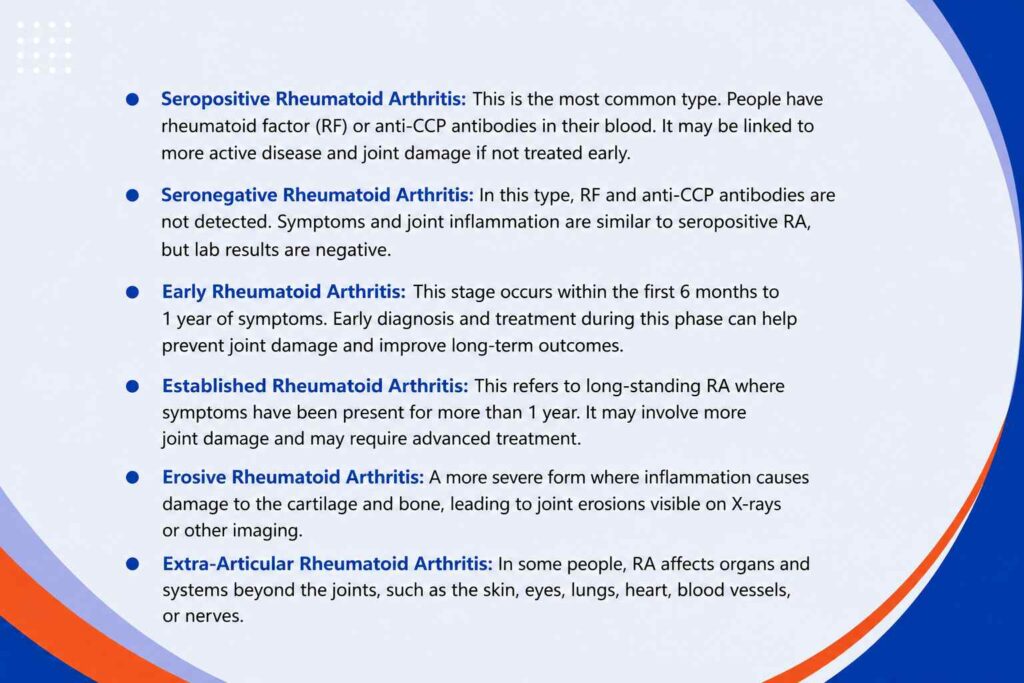
Rheumatoid arthritis can present in different patterns and degrees of severity.
Seropositive Rheumatoid Arthritis
People with seropositive RA usually have certain antibodies in their blood, such as rheumatoid factor or anti-cyclic citrullinated peptide antibodies. This form can sometimes be associated with more persistent disease.
Seronegative Rheumatoid Arthritis
In seronegative RA, these commonly tested antibodies may not be detected. However, a person can still have rheumatoid arthritis based on symptoms, physical examination, imaging, and other clinical findings.
Juvenile Rheumatoid Arthritis
Inflammatory arthritis can also occur in children and adolescents. This is generally considered under juvenile idiopathic arthritis rather than adult rheumatoid arthritis.
Common Symptoms to Watch For
Recognizing early symptoms can encourage timely medical evaluation. Common signs include:
- Pain in multiple joints
- Swollen or warm joints
- Morning stiffness lasting for an extended period
- Difficulty moving affected joints
- Persistent fatigue
- Reduced grip strength
- Loss of appetite in some cases
- Mild fever in certain individuals
- Symptoms affecting both sides of the body
RA often affects smaller joints such as those in the hands and feet, although larger joints can also become involved.
If joint stiffness and swelling continue for several weeks, professional assessment is advisable rather than assuming the symptoms are simply due to aging or physical activity.
How Rheumatoid Arthritis Is Diagnosed
There is no single test that confirms every case of rheumatoid arthritis. Diagnosis generally combines medical history, physical examination, laboratory investigations, and imaging.
A rheumatoid arthritis evaluation may include:
- Rheumatoid factor testing
- Anti-CCP antibody testing
- C-reactive protein testing
- Erythrocyte sedimentation rate
- Complete blood count
- X-rays
- Ultrasound
- Magnetic resonance imaging when appropriate
The results are interpreted together with symptoms and physical findings. This comprehensive approach helps distinguish RA from osteoarthritis, gout, psoriatic arthritis, lupus-related arthritis, and other inflammatory conditions.
Treatment Options for Rheumatoid Arthritis
Treatment aims to control inflammation, relieve symptoms, protect joints, and maintain normal function.
A Rheumatoid Arthritis Doctor in Kozhikode may recommend different treatments depending on disease severity, affected joints, medical history, and response to previous therapies.
Disease-Modifying Antirheumatic Drugs
DMARDs are commonly used to slow disease progression and reduce inflammation. Methotrexate is frequently used, while other conventional DMARDs may also be considered.
Biologic Medicines
Biologic therapies target specific components of the immune system. They may be recommended when conventional treatment does not adequately control disease activity.
Targeted Synthetic Medicines
Certain targeted medicines work on specific immune pathways involved in rheumatoid arthritis. Their use depends on individual clinical factors.
Symptom-Relief Medicines
Pain-relieving or anti-inflammatory medicines may sometimes be used to manage symptoms. Medication choices should be based on professional medical advice because different medicines have different risks and precautions.
Benefits of Early Rheumatoid Arthritis Management
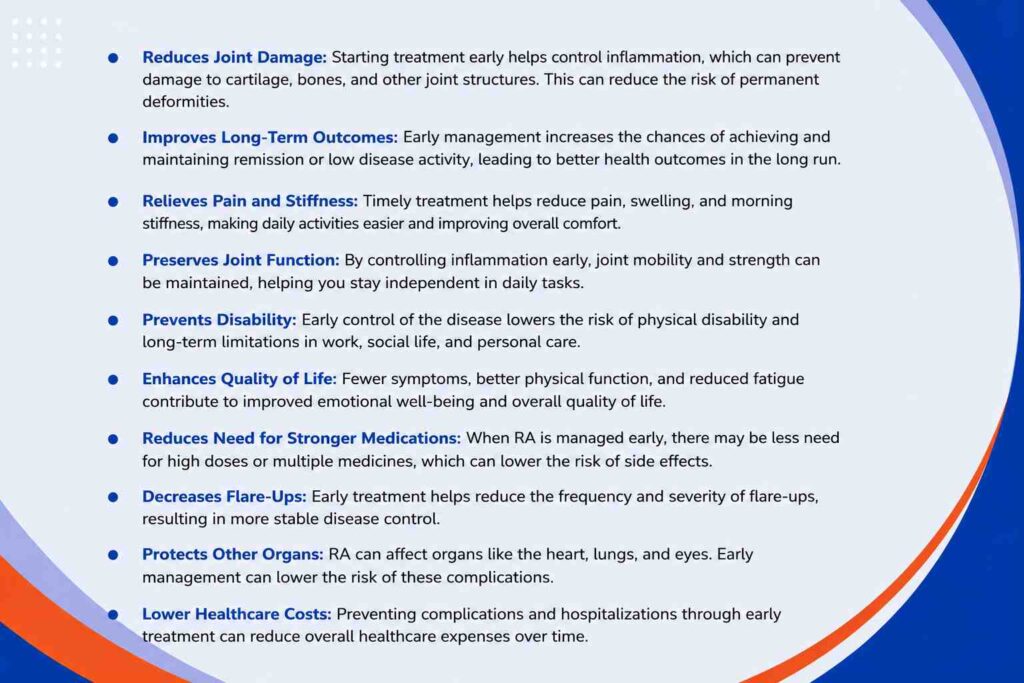
Early assessment and appropriate treatment can provide several potential benefits.
Better Inflammation Control
Reducing inflammation can help decrease pain, swelling, and stiffness.
Protection of Joint Function
Effective disease control may reduce the likelihood of progressive joint damage.
Improved Daily Activities
Better symptom control can make activities such as walking, writing, dressing, and household tasks easier.
Reduced Disease Complications
Consistent medical management can help identify and address complications associated with chronic inflammatory disease.
Better Long-Term Quality of Life
A structured treatment plan can help people remain active and maintain greater independence.
Lifestyle Tips for Supporting Joint Health
Medical treatment is central to rheumatoid arthritis management, but healthy daily habits can complement professional care.
Helpful measures may include:
- Maintaining a healthy body weight
- Following a balanced diet
- Staying physically active within comfortable limits
- Performing appropriate stretching and strengthening exercises
- Getting adequate sleep
- Avoiding smoking
- Managing stress
- Following prescribed treatment consistently
- Attending recommended follow-up appointments
Low-impact activities such as walking, swimming, cycling, and suitable mobility exercises may be beneficial for some people.
Exercise should be adapted to individual symptoms and physical ability, particularly during periods of significant inflammation.
When Should You See a Rheumatoid Arthritis Doctor
Persistent joint symptoms should not always be dismissed as temporary discomfort. Consider seeking professional evaluation if you experience:
- Persistent joint swelling
- Recurrent joint pain
- Prolonged morning stiffness
- Increasing difficulty moving a joint
- Unexplained fatigue along with joint symptoms
- Pain affecting several joints
- Symptoms that interfere with work or daily activities
Early assessment is particularly important when symptoms continue or progressively worsen.
A Rheumatoid Arthritis Doctor in Kozhikode can determine whether the symptoms are consistent with rheumatoid arthritis or another musculoskeletal condition and guide appropriate investigations.
What to Expect During a Consultation
During an initial consultation, the doctor may ask about the duration, location, severity, and pattern of your symptoms.
You may also be asked about:
- Previous joint problems
- Family medical history
- Current medications
- Other health conditions
- Morning stiffness
- Previous blood tests or scans
- Changes in physical activity
- Response to earlier treatments
A physical examination may assess joint swelling, tenderness, movement, muscle strength, and other signs of inflammation.
Keeping a record of symptoms can make the consultation more productive. Note when symptoms began, which joints are affected, how long morning stiffness lasts, and whether symptoms improve or worsen with activity.
Conclusion
Rheumatoid arthritis is a long-term inflammatory condition that requires timely diagnosis, appropriate treatment, and regular monitoring. Recognizing symptoms such as persistent joint pain, swelling, morning stiffness, and reduced mobility can help encourage early medical evaluation. With the right treatment plan and healthy lifestyle habits, it is possible to manage symptoms, protect joint function, and support a better quality of life. Consulting a qualified Rheumatoid Arthritis Doctor in Kozhikode can help ensure appropriate evaluation and personalized management based on individual needs. You can learn more about rheumatoid arthritis symptoms, diagnosis, and treatment from the National Institute of Arthritis and Musculoskeletal and Skin Diseases (NIAMS), a reliable medical information source.
Frequently Asked Questions
1. What does a rheumatoid arthritis doctor treat?
2. What are the earliest symptoms of rheumatoid arthritis?
3. Can rheumatoid arthritis be cured completely?
4. Is rheumatoid arthritis different from osteoarthritis?
5. Can rheumatoid arthritis affect organs other than joints?
6. What blood tests are used for rheumatoid arthritis?
7. Is exercise safe for people with rheumatoid arthritis?
8. How long does rheumatoid arthritis treatment take?
9. Can rheumatoid arthritis symptoms come and go?
10. When should persistent joint pain be evaluated?
BAARC Rheumatology Specialists

Dr Athul Paul
MD, Post Doctoral Fellowship in Rheumatology (CMC Vellore)
Consultant Rheumatologist
BAARC Rheumatology Clinic, Kozhikode

Dr Binoy J Paul
MD, PhD, DNB, FRCP (Edin.)
Senior Consultant Rheumatologist
BAARC Rheumatology Centre, Kozhikode