
7 Proven Rheumatoid Arthritis Treatment and Management Tips
Rheumatoid arthritis treatment and management in Kozhikode focuses on controlling inflammation, reducing joint pain, protecting joint function, and helping people maintain an active daily life. Rheumatoid arthritis (RA) is a chronic autoimmune condition in which the immune system mistakenly attacks the body’s joint tissues.
Unlike ordinary wear-and-tear arthritis, rheumatoid arthritis can cause persistent inflammation and may affect several joints at the same time. Early recognition and appropriate rheumatoid arthritis treatment and management can help reduce the risk of long-term joint damage.
A structured approach may combine medicines, physical activity, physiotherapy, nutrition, rest, and regular medical monitoring. Since symptoms and treatment responses vary from person to person, management should be individualized.
What Is Rheumatoid Arthritis
Rheumatoid arthritis is an autoimmune inflammatory disorder that commonly affects the lining of the joints. The resulting inflammation can cause pain, swelling, stiffness, and reduced movement.
The condition often develops gradually, although some people may experience symptoms more suddenly. It commonly affects the hands, wrists, feet, knees, and other joints.
Unlike osteoarthritis, which is mainly associated with cartilage wear and mechanical stress, rheumatoid arthritis is driven by an abnormal immune response.
Effective rheumatoid arthritis treatment and management aims to control this immune-mediated inflammation before it causes significant structural changes.
Causes and Risk Factors of Rheumatoid Arthritis
The exact cause of rheumatoid arthritis is not completely understood. A combination of genetic, environmental, hormonal, and immune-related factors may contribute to its development.
Possible risk factors include:
- Family history of autoimmune disease
- Certain genetic factors
- Smoking
- Long-term exposure to some environmental factors
- Hormonal influences
- Abnormal immune system activity
- Certain infections or inflammatory triggers
Having a risk factor does not necessarily mean that someone will develop rheumatoid arthritis. Similarly, people without an obvious risk factor can still develop the condition.
Understanding possible triggers can support a broader rheumatoid arthritis treatment and management plan.
Types and Patterns of Rheumatoid Arthritis
Rheumatoid arthritis can vary considerably in severity and presentation. Some people have mild symptoms involving a limited number of joints, while others experience widespread inflammation.
Common patterns include:
- Seropositive rheumatoid arthritis: Blood tests may identify rheumatoid factor or anti-CCP antibodies.
- Seronegative rheumatoid arthritis: These antibodies may not be detected despite symptoms consistent with rheumatoid arthritis.
- Early rheumatoid arthritis: Symptoms have developed recently and treatment may focus on preventing progression.
- Established rheumatoid arthritis: The condition has been present for a longer period and may require ongoing disease control.
- Systemic rheumatoid arthritis: Inflammation may affect areas outside the joints.
The type and severity of disease can influence rheumatoid arthritis treatment and management decisions.
Common Symptoms of Rheumatoid Arthritis
Recognizing symptoms early can encourage timely evaluation. Rheumatoid arthritis commonly produces inflammatory joint symptoms rather than pain that occurs only after physical activity.
Common symptoms include:
- Joint pain and tenderness
- Swelling around affected joints
- Morning stiffness lasting longer than usual
- Difficulty moving affected joints
- Warmth around inflamed joints
- Fatigue
- Reduced grip strength
- Loss of appetite in some individuals
- General feeling of weakness
Rheumatoid arthritis often affects joints symmetrically. For example, similar joints on both sides of the body may become affected.
Persistent symptoms should not be ignored because early rheumatoid arthritis treatment and management may help limit inflammatory damage.
How Rheumatoid Arthritis Is Diagnosed
There is no single test that can confirm every case of rheumatoid arthritis. Diagnosis generally involves a combination of medical history, physical examination, blood tests, and imaging when appropriate.
A healthcare professional may assess:
- The number and location of affected joints
- Duration of morning stiffness
- Swelling and tenderness
- Range of motion
- Family and medical history
- Inflammatory markers
- Rheumatoid factor
- Anti-CCP antibodies
- Imaging findings
Blood tests such as ESR and CRP may help identify inflammation. X-rays, ultrasound, or MRI can sometimes provide additional information about inflammation or joint damage.
Accurate diagnosis is an important foundation for effective rheumatoid arthritis treatment and management.
Medical Treatment for Rheumatoid Arthritis
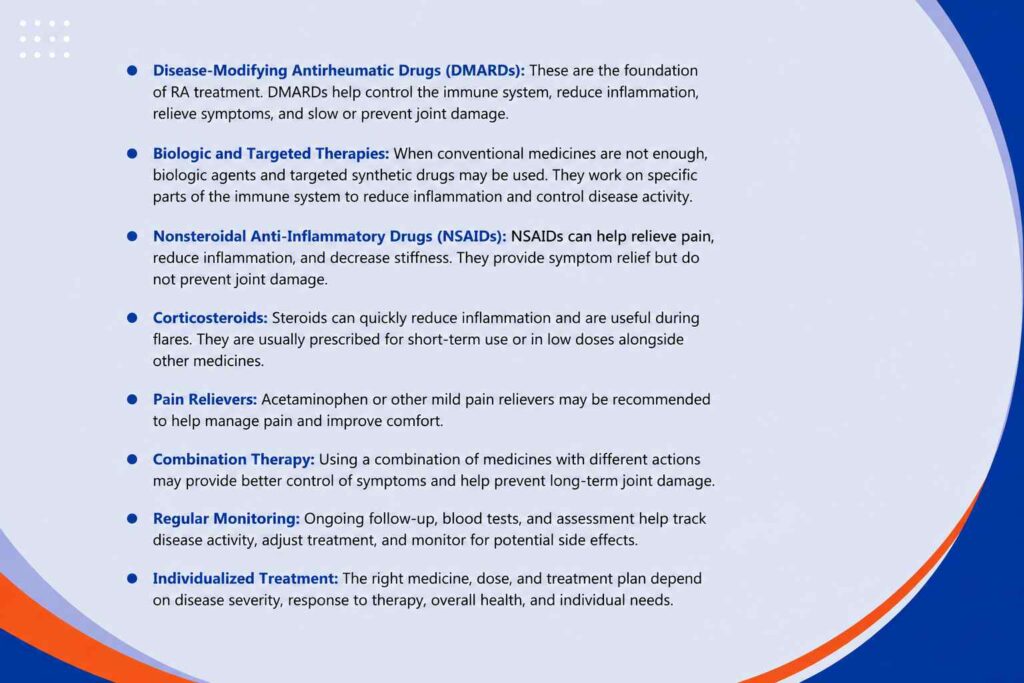
The primary objective of medical treatment is to reduce inflammation, control symptoms, prevent joint damage, and preserve physical function.
Treatment may involve several categories of medicines.
Disease-Modifying Antirheumatic Drugs
DMARDs are commonly used to control rheumatoid arthritis activity and reduce the risk of progressive joint damage. They work by modifying the abnormal immune response responsible for inflammation.
Biologic and Targeted Medicines
For some patients, conventional medicines may not provide adequate disease control. Biologic medicines and targeted synthetic therapies may be considered depending on disease severity, previous treatment, and individual risk factors.
Pain-Relieving Medicines
Pain-relieving medicines may help manage discomfort, although controlling the underlying inflammation remains an important part of treatment.
Corticosteroids
Corticosteroids can provide rapid reduction in inflammation in selected situations. Because long-term use can produce significant side effects, healthcare professionals generally consider their benefits and risks carefully.
The appropriate medication, dose, and duration should always be determined by a qualified healthcare professional.
Physiotherapy and Exercise
Movement is an important component of rheumatoid arthritis treatment and management. Pain and stiffness can make people reluctant to exercise, but prolonged inactivity may contribute to muscle weakness and reduced joint function.
A physiotherapist may recommend exercises that focus on:
- Joint mobility
- Muscle strength
- Flexibility
- Balance
- Posture
- Functional movement
Low-impact activities such as walking, swimming, cycling, and appropriately designed stretching exercises may be suitable for some people.
Exercise should be adjusted according to disease activity. During significant inflammation, strenuous activity involving painful joints may need to be reduced temporarily.
Lifestyle Measures That Support Joint Health
Daily habits can complement medical treatment and improve overall wellbeing. Lifestyle measures do not replace prescribed medicines, but they can support rheumatoid arthritis treatment and management.
Maintain a Healthy Weight
Maintaining a healthy body weight can reduce unnecessary stress on weight-bearing joints such as the knees and hips.
Follow a Balanced Diet
A balanced diet containing vegetables, fruits, whole grains, lean protein, and healthy fats can support general health. Foods containing omega-3 fatty acids, such as certain fish, may also be included as part of a balanced eating pattern.
Avoid Smoking
Smoking can negatively affect overall health and may interfere with the management of rheumatoid arthritis.
Prioritize Sleep
Poor sleep can worsen fatigue and make pain feel more difficult to manage. Establishing a regular sleep routine may support energy and daily functioning.
Managing Rheumatoid Arthritis Flares
A flare refers to a period when rheumatoid arthritis symptoms become more active or intense. During a flare, people may experience increased swelling, stiffness, pain, and fatigue.
Helpful strategies may include:
- Following the treatment plan provided by the healthcare professional
- Balancing activity with appropriate rest
- Avoiding unnecessary stress on painful joints
- Using prescribed medicines correctly
- Maintaining gentle movement when appropriate
- Keeping track of symptom changes
- Seeking medical advice if symptoms become persistent or severe
Frequent flares may indicate that the current treatment plan needs reassessment. Regular monitoring is therefore an important part of rheumatoid arthritis treatment and management.
Benefits of Early Rheumatoid Arthritis Management
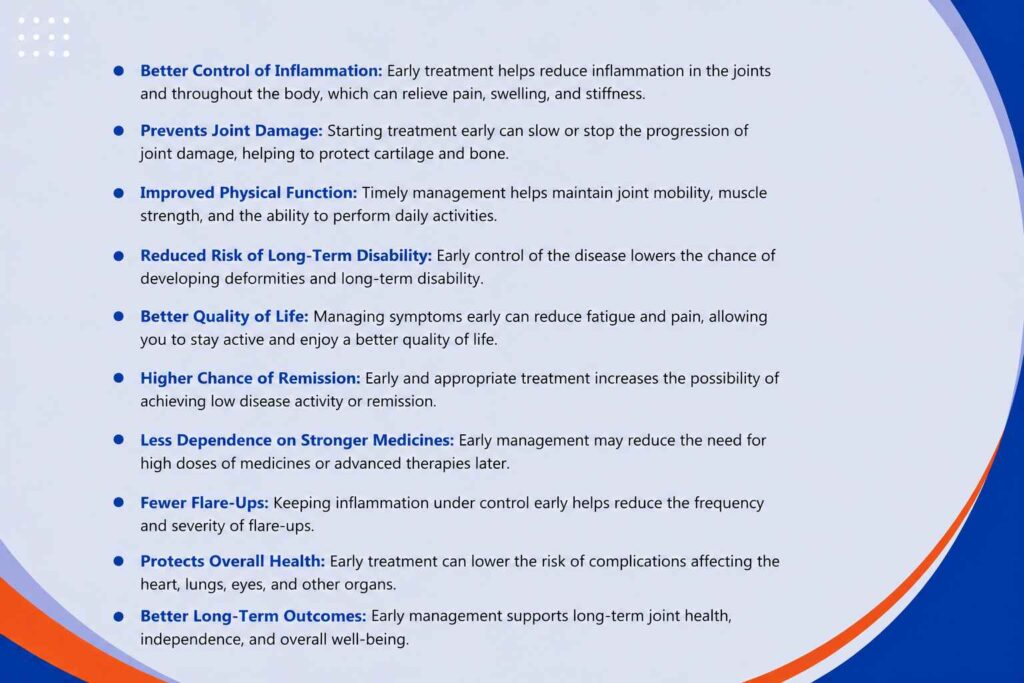
Starting appropriate treatment early can have several potential advantages. The inflammatory process can cause progressive joint damage if it remains uncontrolled for an extended period.
Potential benefits of timely rheumatoid arthritis treatment and management include:
- Better control of inflammation
- Reduced joint pain and swelling
- Improved mobility
- Better ability to perform daily activities
- Reduced risk of progressive joint damage
- Improved physical function
- Better quality of life
- More effective long-term disease monitoring
Early attention is particularly important when joint swelling and prolonged morning stiffness continue for several weeks.
Long-Term Monitoring and Follow-Up
Rheumatoid arthritis is generally a long-term condition, so treatment does not end once symptoms improve. Ongoing monitoring helps determine whether inflammation remains controlled and whether treatment needs adjustment.
Follow-up may involve:
- Reviewing symptoms
- Assessing joint activity
- Monitoring medication effects
- Checking blood tests when required
- Reviewing physical function
- Monitoring for treatment-related side effects
- Adjusting medicines when necessary
Patients should communicate changes in symptoms rather than stopping or changing medicines independently.
A consistent follow-up routine makes rheumatoid arthritis treatment and management more responsive to changes in disease activity.
Practical Tips for Living With Rheumatoid Arthritis
Living with rheumatoid arthritis becomes easier when treatment is combined with practical daily strategies.
Consider these habits:
- Protect painful joints during demanding activities.
- Use supportive equipment when recommended.
- Take short breaks instead of remaining inactive for long periods.
- Perform gentle mobility exercises regularly.
- Maintain a balanced diet.
- Get sufficient sleep.
- Avoid smoking.
- Keep scheduled medical appointments.
- Track changes in pain, swelling, stiffness, and fatigue.
- Follow prescribed medicines consistently.
Learning how your body responds to activity, rest, and treatment can help you identify patterns and communicate useful information during follow-up appointments.
When Should You Seek Medical Attention
Persistent joint swelling, unexplained stiffness, or recurring joint pain deserves professional assessment. This is particularly important when symptoms involve multiple joints or when morning stiffness lasts for a prolonged period.
Medical evaluation is also important if:
- Joint symptoms continue to worsen
- Swelling does not improve
- Daily activities become difficult
- Severe fatigue develops
- Treatment no longer seems effective
- New symptoms appear after starting medication
Early evaluation can help distinguish rheumatoid arthritis from other joint conditions and guide appropriate treatment
Conclusion
Rheumatoid arthritis treatment and management is a long-term process that combines appropriate medical treatment with exercise, healthy lifestyle habits, symptom monitoring, and regular follow-up. Recognizing symptoms such as persistent joint swelling, prolonged morning stiffness, pain, and fatigue can encourage timely evaluation.
With an individualized treatment plan and consistent monitoring, many people can achieve better control of inflammation, protect joint function, and maintain their daily activities. For people seeking rheumatoid arthritis treatment and management in Kozhikode, professional evaluation is important for developing a suitable and safe long-term care approach. You can learn more about rheumatoid arthritis symptoms, diagnosis, and treatment from the National Institute of Arthritis and Musculoskeletal and Skin Diseases (NIAMS), a trusted medical information source.
Frequently Asked Questions
1. Can rheumatoid arthritis be cured?
2. What is the main goal of rheumatoid arthritis treatment?
3. Is exercise safe for people with rheumatoid arthritis?
4. Does rheumatoid arthritis always affect both sides of the body?
5. Can diet cure rheumatoid arthritis?
6. How long does rheumatoid arthritis treatment take to work?
7. Can rheumatoid arthritis cause fatigue?
8. Why is early treatment important for rheumatoid arthritis?
9. Should rheumatoid arthritis medicines be stopped when symptoms improve?
10. Can rheumatoid arthritis affect areas other than the joints?
BAARC Rheumatology Specialists

Dr Athul Paul
MD, Post Doctoral Fellowship in Rheumatology (CMC Vellore)
Consultant Rheumatologist
BAARC Rheumatology Clinic, Kozhikode

Dr Binoy J Paul
MD, PhD, DNB, FRCP (Edin.)
Senior Consultant Rheumatologist
BAARC Rheumatology Centre, Kozhikode