
High uric acid is one of the most diet-responsive conditions in all of rheumatology. What you eat directly determines how much uric acid your body produces and how effectively your kidneys can eliminate it. For many people with mildly elevated uric acid, the right dietary changes alone can bring levels back into the safe range and prevent gout attacks entirely. For those requiring medication, a targeted diet reduces the dose needed and significantly lowers the frequency of flares.
What Is a Uric Acid Diet?
A uric acid diet sometimes called a low-purine diet or gout diet is a dietary pattern designed to reduce the amount of uric acid produced in the body and support its efficient excretion through the kidneys.
It works through two primary mechanisms:
Reducing purine intake – Purines are compounds found in many animal foods that break down into uric acid during digestion. Eating fewer high-purine foods directly reduces the raw material available for uric acid production.
Eliminating fructose-rich foods and drinks – Fructose raises uric acid through a completely separate metabolic pathway in the liver, independent of purines. Cutting fructose-rich beverages and processed foods is therefore just as important as reducing organ meats and shellfish.
A well-designed uric acid diet does not require extreme restriction or an unenjoyable eating pattern. It requires understanding which specific foods carry the highest risk, making targeted substitutions, and building consistent habits around lower-risk food choices.
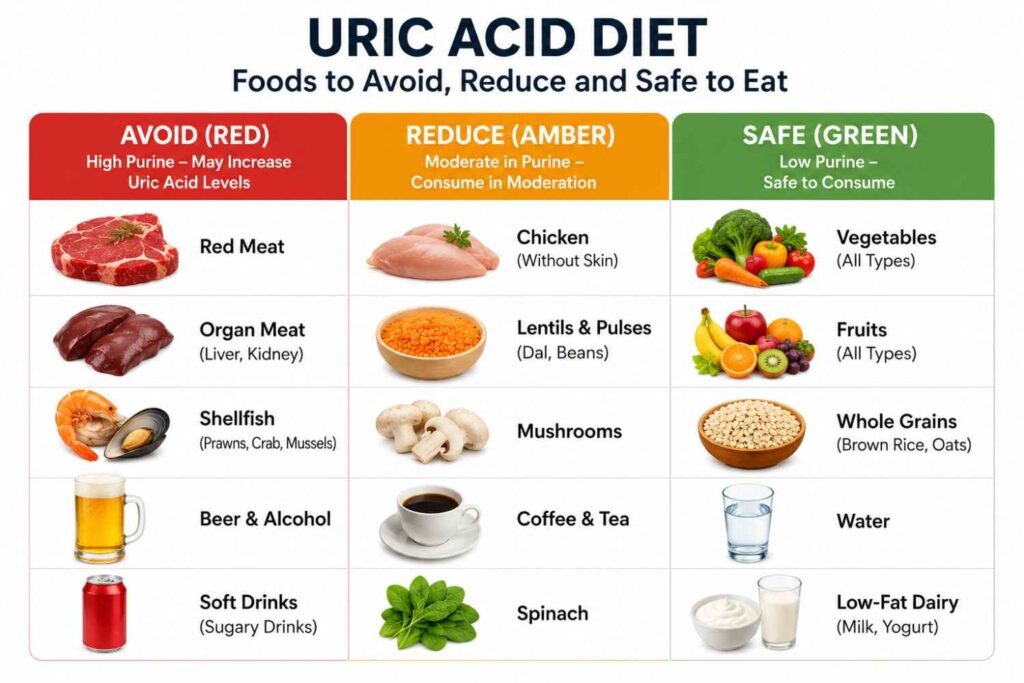
Foods That Significantly Raise Uric Acid: Avoid or Eliminate
Organ Meats – Highest Risk of All
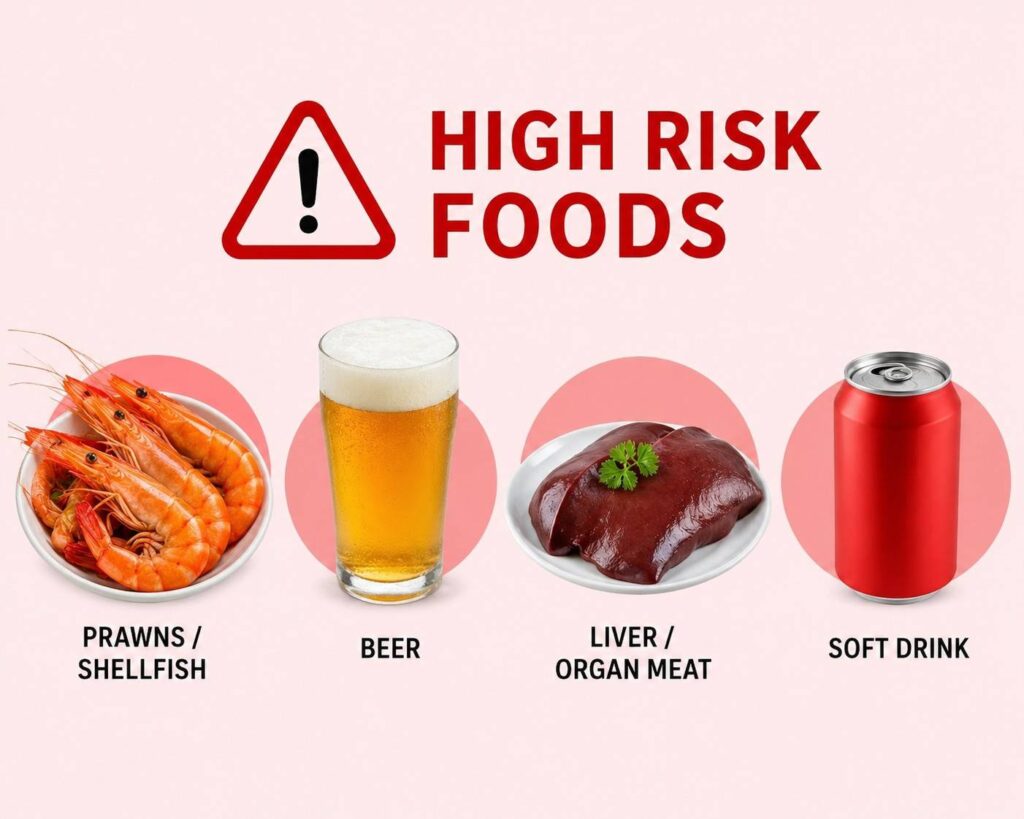
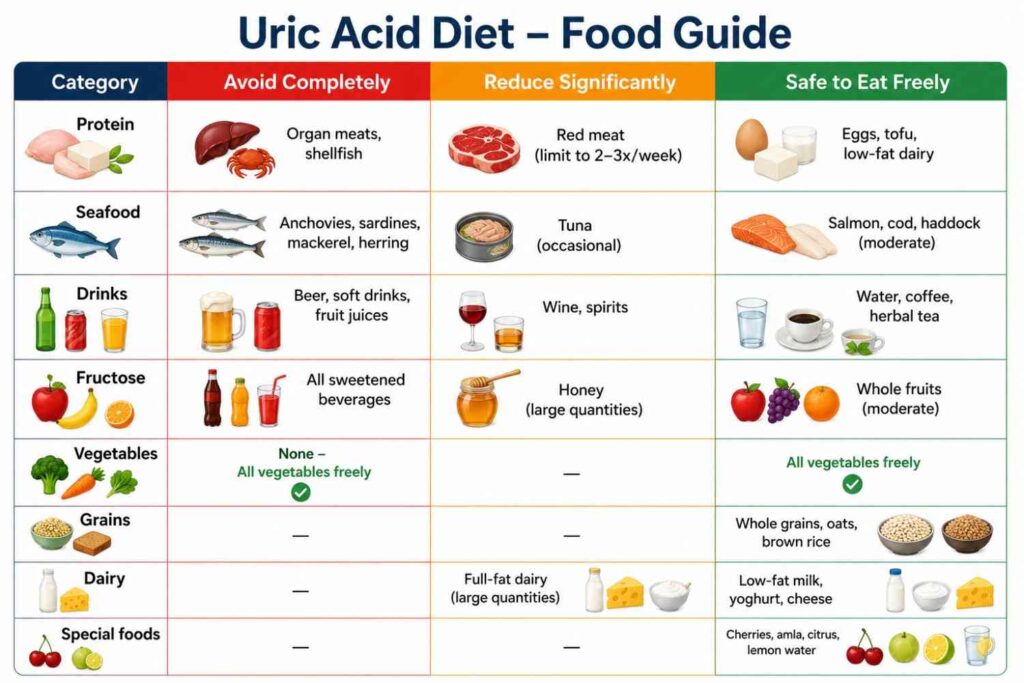
Liver, kidney, brain, heart, and sweetbreads are the single highest purine-containing foods in the human diet. A single serving of liver can contain 300–400 mg of purines more than the entire recommended daily limit for someone managing gout. These should be completely eliminated from the diet, not merely reduced.
Shellfish and Seafood
Prawns, shrimp, crab, lobster, mussels, oysters, and scallops are all extremely high in purines and are among the most consistently reported dietary triggers for acute gout attacks. They are particularly dangerous when consumed in large quantities alongside alcohol a combination that raises uric acid through multiple pathways simultaneously.
High-Purine Fish
While most fish is safe in moderation, several specific varieties are exceptionally high in purines and must be significantly restricted: anchovies, sardines, mackerel, herring, and sprats. These are often consumed in concentrated forms tinned sardines, fish sauce, anchovy paste which compounds the purine load further.
Beer
Beer raises uric acid through two simultaneous mechanisms it contains alcohol (which impairs renal uric acid excretion) and is itself high in purines from yeast and grain fermentation. Regular beer consumption is one of the strongest dietary predictors of gout in clinical research. Beer should be eliminated entirely for anyone managing elevated uric acid.
Sugary Drinks and Fructose-Rich Foods
Soft drinks, packaged fruit juices, energy drinks, and foods containing high-fructose corn syrup raise uric acid through a liver-based metabolic pathway completely independent of purines. This category is the most underestimated dietary trigger. Eliminating sweetened beverages is one of the highest-impact single changes a person with high uric acid can make.
Foods to Significantly Reduce
Red Meat
Beef, lamb, and pork consumed daily maintain a chronically elevated purine load. Limit to 2–3 servings per week maximum, keep portions moderate, and avoid slow-cooked stews where purines concentrate in the cooking liquid.
Spirits and Wine
All alcohol impairs the kidneys’ ability to excrete uric acid. While wine and spirits are less harmful than beer, regular consumption still raises serum uric acid meaningfully. No level of alcohol is entirely risk-free for someone actively managing gout.
Yeast Extracts
Marmite, Vegemite, nutritional yeast, brewer’s yeast supplements, and yeast-based spreads are extraordinarily concentrated sources of purines. Even small daily servings contribute meaningfully to elevated uric acid — a frequently overlooked dietary source.
Game Meats
Venison, rabbit, and other game meats are significantly higher in purines than farmed meats and should be treated with the same caution as organ meats.
Foods That Are Safe – and Actively Beneficial
Low-Fat Dairy
Milk, yoghurt, and low-fat cheese help lower uric acid levels and are excellent alternatives to meat-based proteins.
Eggs
Eggs are low in purines and provide a safe, high-quality protein source for people with high uric acid.
Cherries and Tart Cherry Juice
Cherries contain natural compounds that may lower uric acid levels and reduce the frequency of gout attacks.
Vitamin C-Rich Foods
Foods such as citrus fruits, amla, guava, and bell peppers support uric acid excretion and may help maintain healthy levels.
Most Vegetables
Vegetables, including spinach, mushrooms, asparagus, and cauliflower, are generally safe and do not significantly increase gout risk.
Whole Grains and Legumes
Oats, brown rice, lentils, chickpeas, and beans provide fibre and nutrients that support healthy uric acid metabolism.
Water
Drinking 2.5–3 litres of water daily helps the kidneys remove excess uric acid and supports overall health.
Coffee
Moderate coffee consumption may help lower uric acid levels and can be included as part of a uric acid-friendly diet.
Uric Acid Diet at a Glance: Quick Reference Chart
How Much Can Diet Actually Lower Uric Acid?
Being realistic about what diet can achieve is important. Research consistently shows that a well-maintained low-purine diet reduces serum uric acid by approximately 1–2 mg/dL. This is clinically meaningful, but it has limits.For a patient with serum uric acid of 7–7.5 mg/dL, dietary change may be sufficient to bring levels below the 6 mg/dL therapeutic target particularly when combined with adequate hydration and weight management.
For a patient with uric acid of 9–10 mg/dL, dietary change alone will not achieve the target. Urate-lowering medication becomes necessary, and diet works as a powerful complement reducing required medication dosage, preventing acute triggers, and improving broader metabolic health.This is why professional assessment matters. A rheumatologist can measure your uric acid level, identify contributing causes beyond diet, assess kidney function, and determine whether dietary modification alone is sufficient or whether medication is needed alongside it.
While diet is a powerful first step, understanding the full picture of your uric acid levels including whether medication or specialist treatment is needed begins with recognising the early symptoms of high uric acid before they progress into a painful gout attack.
Why Choose BAARC for Uric Acid and Gout Care?
Dietary advice for uric acid management is most effective when it is personalised based on your specific serum uric acid level, kidney function, current medications, body weight, and underlying health conditions. Generic dietary guidelines are a starting point, but a rheumatologist can identify exactly which factors are driving your uric acid elevation and tailor a management plan that addresses all of them.
BAARC is North Kerala’s first and oldest rheumatology centre, now in its 15th year of specialist practice.
BAARC provides:
- Comprehensive rheumatology evaluation and accurate diagnosis
- Advanced immunology laboratory for high-precision uric acid and autoimmune testing
- Personalised urate-lowering treatment plans combining dietary guidance and evidence-based medication
- Long-term monitoring and follow-up to ensure uric acid levels reach and maintain therapeutic targets
- Expert management of gout alongside comorbidities including hypertension, diabetes, and kidney disease

Ready to Get Your Uric Acid Under Control?
Diet is a powerful first step but understanding exactly where your uric acid levels stand, what is driving them, and whether you need additional support requires a proper clinical assessment.
Book a consultation with the rheumatology specialists at BAARC and get a personalised uric acid management plan designed around your specific numbers, health history, and lifestyle.
Conclusion
A uric acid diet is not a temporary fix or a punishing restriction plan it is a sustainable, evidence-based way of eating that works with your body’s chemistry to keep uric acid at safe levels and protect your joints, kidneys, and long-term health. The core principles are straightforward: eliminate the highest-risk foods organ meats, shellfish, beer, and fructose-rich drinks reduce red meat and alcohol, stay consistently well hydrated, and build your diet around eggs, low-fat dairy, vegetables, whole grains, and uric acid-lowering foods like cherries and vitamin C-rich fruits. These changes are not difficult to sustain once they become habit, and their cumulative impact on serum uric acid levels is clinically significant. That said, diet works best as part of a complete management strategy one that includes accurate diagnosis, regular monitoring of uric acid levels, and specialist guidance on whether medication is needed alongside lifestyle modification. At BAARC, every patient receives a personalised plan that integrates dietary advice with comprehensive rheumatology care, ensuring that uric acid is managed not just in the short term, but for life.
For further reading on evidence-based gout and uric acid management guidelines, the American College of Rheumatology (ACR) – the world’s leading rheumatology authority provides comprehensive clinical recommendations for the diagnosis and treatment of gout that form the foundation of specialist practice worldwide.
FREQUENTLY ASKED QUESTIONS
BAARC Rheumatology Specialists

Dr Athul Paul
MD, Post Doctoral Fellowship in Rheumatology (CMC Vellore)
Consultant Rheumatologist
BAARC Rheumatology Clinic, Kozhikode

Dr Binoy J Paul
MD, PhD, DNB, FRCP (Edin.)
Senior Consultant Rheumatologist
BAARC Rheumatology Centre, Kozhikode