
On this page
- What is high uric acid?
- Symptoms of high uric acid
- What causes high uric acid?
- Uric acid and gout
- Treatment options at BAARC
- Diet and lifestyle
- Cost of treatment
- Why choose BAARC?
- Explore related topics
High uric acid is one of the most common yet overlooked conditions affecting joints and kidneys. At BAARC, North Kerala’s premier rheumatology centre, we provide accurate diagnosis and personalised uric acid treatment in Kozhikode – helping you live pain-free and prevent long-term damage.
What is high uric acid?
Uric acid is a natural waste product formed when the body breaks down purines – substances found in certain foods and in body cells. Normally, uric acid dissolves in the blood, passes through the kidneys, and leaves the body in urine. But when the body produces too much uric acid or the kidneys excrete too little, levels build up in the blood a condition called hyperuricemia.
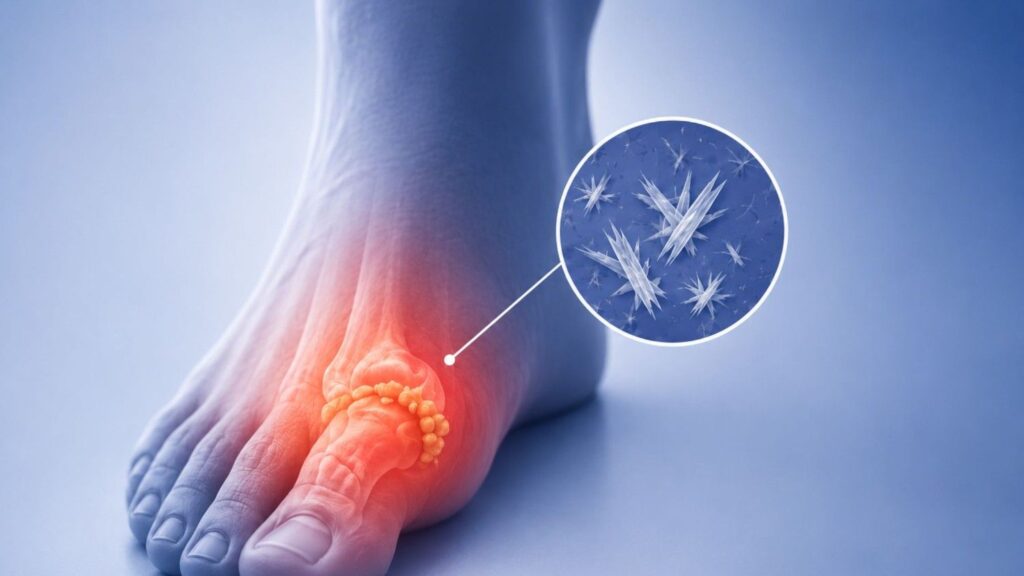
When uric acid crystals deposit in the joints, it causes intense pain and swelling, commonly known as gout. Left untreated, high uric acid can also damage the kidneys over time.
Symptoms
Symptoms of high uric acid
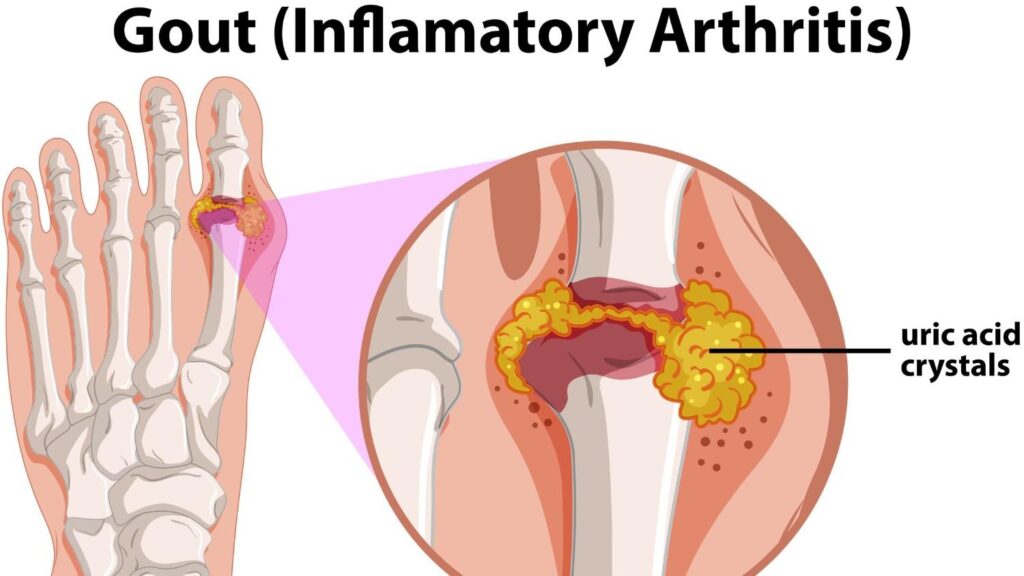
High uric acid often shows no symptoms until crystals form in the joints or kidneys. When symptoms do appear, they can range from mild discomfort to severe, debilitating pain.
- Sudden joint pain — especially in the big toe, ankles, knees, or wrists. Pain often begins at night and peaks within 12–24 hours.
- Swelling and redness — the affected joint becomes swollen, warm to the touch, and appears red.
- Symptoms in legs and feet — persistent aching in the legs, feet, or heel area even between gout attacks.
- Kidney stones — uric acid crystals can form kidney stones, causing back pain, painful urination, and blood in urine.
- Limited joint movement — long-standing high uric acid can reduce range of motion in affected joints.
Symptoms in the legs and feet are among the earliest warning signs of high uric acid.
Learn more about uric acid symptoms in legs
Causes
What causes high uric acid?
Uric acid levels rise when the body produces more than it can eliminate. Several factors contribute to this imbalance.
Diet high in purines
Red meat, organ meats, shellfish, and alcohol especially beer raise uric acid levels significantly.
Dehydration
Insufficient water intake reduces the kidney’s ability to flush out uric acid through urine.
Certain medications
Diuretics (water pills), low-dose aspirin, and some blood pressure medications can raise uric acid.
Other health conditions
Diabetes, high blood pressure, kidney disease, and obesity are closely linked with elevated uric acid.
Read about the main causes of high uric acid in detail->
Gout
Uric acid and gout attacks
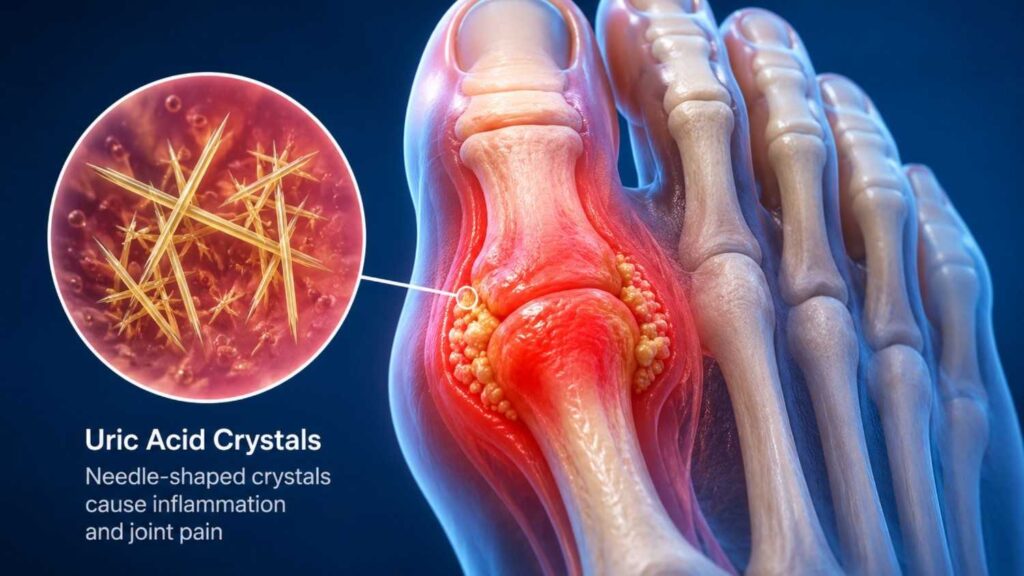
Gout is the most common and painful consequence of high uric acid. It occurs when sharp, needle-like uric acid crystals deposit in a joint triggering a sudden, intense inflammatory response. A gout attack typically lasts 5 to 10 days if untreated, but repeated attacks can permanently damage the joint.
Many patients in Kozhikode dismiss the first attack as a minor injury, only to suffer repeated episodes. Early diagnosis and treatment at a specialist centre like BAARC can prevent this cycle entirely.
Treatment
Uric acid treatment at BAARC, Kozhikode
At BAARC, our expert rheumatologists – Dr. Binoy J. Paul (MD, PhD, FRCP) and Dr. Athul Paul – provide comprehensive, evidence-based uric acid treatment tailored to each patient’s profile. Treatment is not just about lowering numbers; it’s about protecting your joints and kidneys for the long term.
Accurate diagnosis
On-site immuno-diagnostics lab for precise uric acid testing and joint fluid analysis.
Medication management
Xanthine oxidase inhibitors, uricosuric agents, and anti-inflammatory medications prescribed and monitored.
Joint injections
Therapeutic injections for acute gout attacks to rapidly reduce pain and swelling.
Long-term monitoring
Personalised care plans with regular follow-ups to track uric acid levels and prevent flares.
The right treatment approach for high uric acid depends on your levels, symptoms, and overall health.
Diet and lifestyle for managing uric acid
Medication alone is rarely enough. Diet and lifestyle changes are a critical part of any uric acid management plan. Patients who combine proper medical treatment with dietary adjustments see significantly better and longer-lasting results.

Cost
Cost of uric acid treatment in Kozhikode
The cost of uric acid treatment at BAARC depends on the severity of the condition, diagnostic tests required, and the duration of the treatment plan. BAARC offers transparent, affordable pricing with all consultations, diagnostics, and follow-ups available under one roof — eliminating the need to visit multiple facilities.
For a personalised cost estimate, contact BAARC directly at 092492 74681 or visit the clinic at Mavoor Road, Kottooli, Kozhikode.
Why BAARC
Why choose BAARC for uric acid treatment?
15 years of rheumatology expertise
North Kerala’s first and most trusted rheumatology centre, with over a decade of specialised experience.
Everything under one roof
Consultation, lab tests, pharmacy, injections, and follow-up care all at one convenient location.
Advanced diagnostics lab
State-of-the-art immunology lab for high-precision uric acid testing and autoimmune diagnostics.
Personalised treatment plans
Every patient receives a tailored management plan focused on long-term wellness, not just symptom relief.
Ready to manage your uric acid levels?
Book a consultation with BAARC’s specialist rheumatologists today — Monday to Saturday, 9 AM to 6 PM.
Conclusion
Managing uric acid is possible – with the right care
High uric acid is not a condition you have to simply live with. When diagnosed early and managed correctly, most people can keep their uric acid levels under control, prevent painful gout attacks, and protect their joints and kidneys for the long term. The key is accurate diagnosis, personalised treatment, and consistent monitoring all of which are available at BAARC.
Whether you are experiencing your first gout attack, dealing with recurrent flares, or have been told your uric acid levels are high during a routine test consulting a specialist rheumatologist is the most important step you can take.
Learn more from global health authorities ->American College of Rheumatology (ACR)
Table Of Contents
Treatment for high uric acid
High uric acid can silently damage your joints and lead to painful gout attacks if left untreated. Early diagnosis, the right treatment, and healthy lifestyle changes can help you stay active, pain-free, and protect your joints long-term.
Learn more about Treatment for high uric acid -> Treatment For High Uric Acid
Symptoms Of High Uric Acid
Persistent joint pain, sudden swelling in the big toe, stiffness, redness, and burning sensations can all be warning signs of high uric acid levels.Discover the common symptoms, causes, and expert treatment options for high uric acid to protect your joint health and improve daily comfort.
Learn more about Symptoms-> Symptoms Of High Uric Acid
Uric Acid Symptoms In Legs
High uric acid levels can cause pain, swelling, redness, and stiffness in the joints of the legs, particularly in the knees, ankles, and feet. In some cases, uric acid crystal buildup may lead to sudden gout attacks, making walking or standing uncomfortable.
Learn More about Uric Acid Symptoms In Legs-> Uric Acid Symptoms In Legs
Uric Acid Symptoms In Feet
High uric acid in the feet often causes sudden pain, swelling, redness, warmth, and tenderness, most commonly affecting the big toe joint. During a gout attack, even light pressure from footwear or bedsheets may cause significant discomfort.
Learn More About Uric Acid Symptoms In Feet-> Uric Acid Symptoms In Feet
Early Symptoms of High Uric Acid
Early symptoms of high uric acid may include mild joint pain, stiffness, or discomfort, especially in the big toe, ankles, knees, or feet. Some people also experience swelling, redness, warmth around the joints, or occasional gout attacks that become more frequent over time.
Learn More About Early Symptoms Of High Uric Acid -> Early Symptoms Of High Uric Acid
Uric Acid Diet
A uric acid diet focuses on reducing foods that increase uric acid production while encouraging foods that support healthy uric acid levels. Limiting red meat, organ meats, sugary drinks, and alcohol, while increasing water intake, fruits, vegetables, whole grains, and low-fat dairy products, may help reduce the risk of gout attacks and high uric acid complications.
Learn More About Uric Acid Diet -> Uric Acid Diet
Uric Acid And Gout Attack
High uric acid can lead to gout attacks when uric acid crystals accumulate in the joints, causing sudden episodes of severe pain, swelling, redness, and warmth. Gout most commonly affects the big toe but can also involve the ankles, knees, and other joints, often developing suddenly and becoming intensely painful within hours.
Learn More About Uric Acid And Gout Attack-> Uric Acid And Gout Attack
FREQUENTLY ASKED QUESTIONS
BAARC Rheumatology Specialists

Dr Athul Paul
MD, Post Doctoral Fellowship in Rheumatology (CMC Vellore)
Consultant Rheumatologist
BAARC Rheumatology Clinic, Kozhikode

Dr Binoy J Paul
MD, PhD, DNB, FRCP (Edin.)
Senior Consultant Rheumatologist
BAARC Rheumatology Centre, Kozhikode