
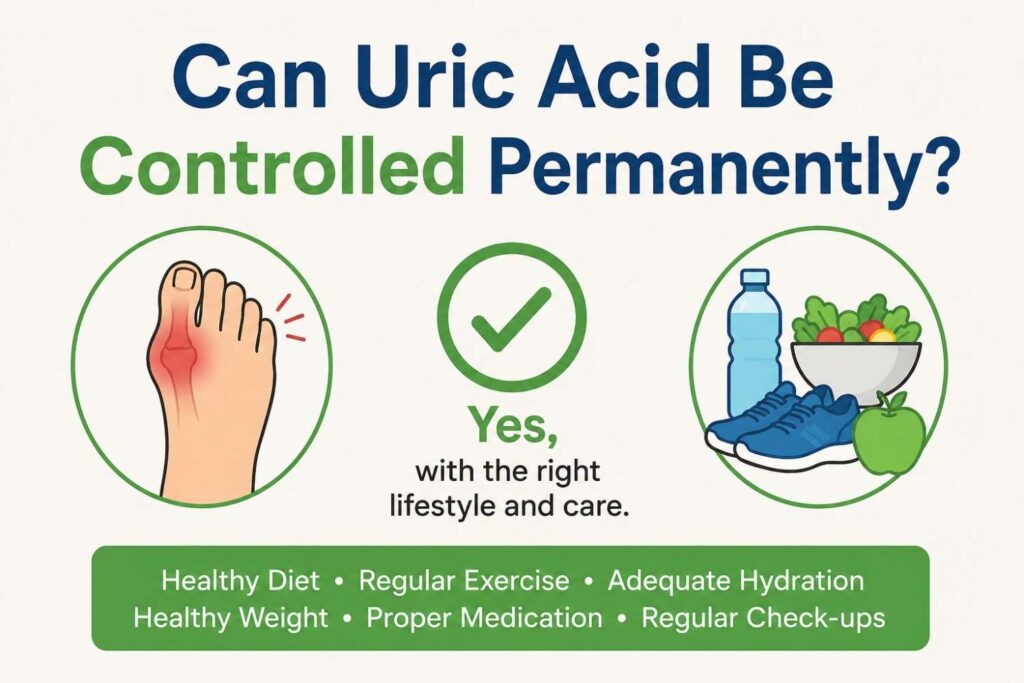
Can Uric Acid Be Controlled Permanently? What You Need to Know
Yes — uric acid can be controlled permanently in most people. With the right combination of medical treatment, dietary changes, and consistent monitoring, it is entirely possible to keep uric acid levels within a healthy range, prevent painful gout attacks, and protect your joints and kidneys for life.
What Does "Controlling Uric Acid Permanently" Actually Mean?
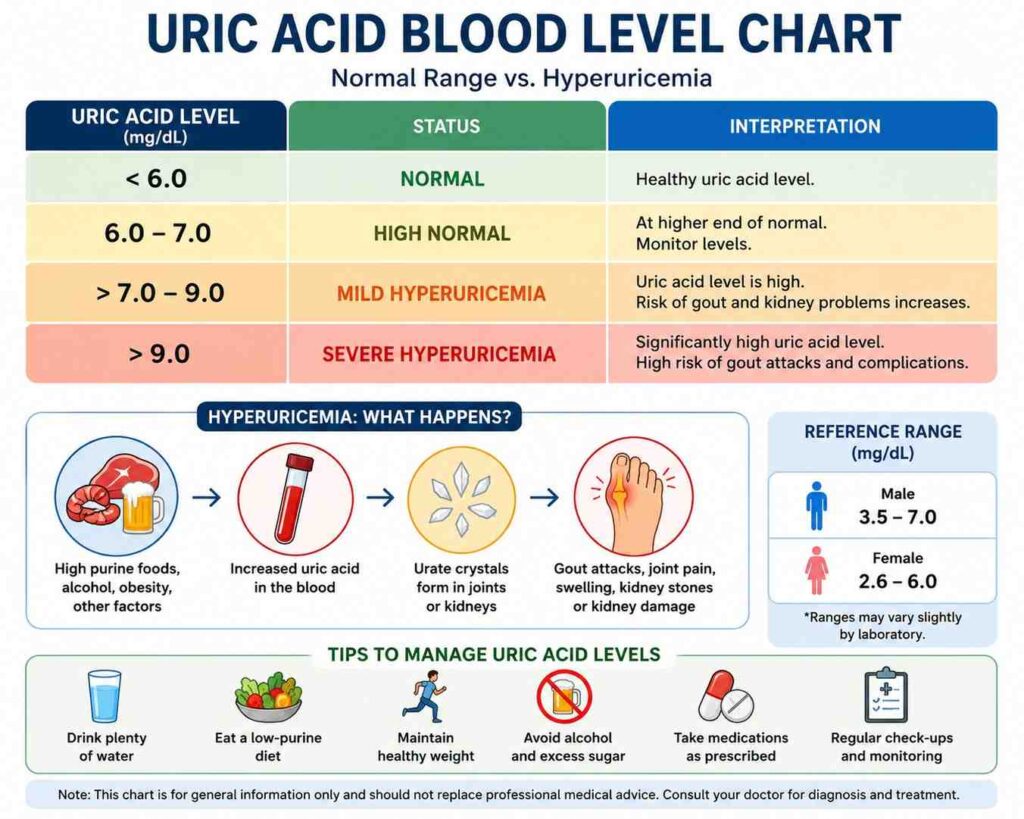
Permanent control of uric acid means maintaining your serum uric acid levels consistently below 6.0 mg/dL the target recommended by the American College of Rheumatology (ACR) for patients with gout or recurrent hyperuricemia. At this level, existing uric acid crystals in the joints gradually dissolve, new crystals cannot form, and the risk of kidney damage drops significantly.
This is not a one-time fix. It requires an ongoing commitment to:
- Prescribed medication (if needed)
- A low-purine, uric-acid-friendly diet
- Adequate daily hydration
- Regular blood tests to monitor levels
- Timely follow-up with a specialist rheumatologist
Can You Control Uric Acid Without Medication?
In mild cases particularly when uric acid is only slightly elevated and no gout attacks have occurred — lifestyle changes alone can bring levels back to normal. This typically involves:
Diet changes: Reducing red meat, organ meats, shellfish, beer, and high-fructose beverages. Increasing water intake, low-fat dairy, vegetables, and vitamin C-rich foods.
Weight management: Losing excess weight reduces the body’s overall purine production and improves kidney efficiency in clearing uric acid.
Hydration: Drinking 2.5 to 3 litres of water daily helps the kidneys flush out uric acid continuously.
Avoiding triggers: Certain medications (diuretics, low-dose aspirin) and medical conditions (diabetes, hypertension) can push uric acid levels higher. Managing these with your doctor is essential.
However, for patients with recurrent gout attacks, uric acid levels consistently above 8.0 mg/dL, or evidence of tophi or kidney stones, medication is not optional — it is the foundation of long-term control.
How Long Does It Take to Control Uric Acid Permanently?
There is no single timeline -it depends on your starting uric acid level, how long you have had hyperuricemia, and how strictly you follow your treatment plan. As a general guide:
First 3–6 months
Uric acid levels begin to fall with medication and dietary changes. Some patients may experience paradoxical gout flares as crystals dissolve this is normal and expected.
6–12 months
Levels typically stabilise within the target range. Gout attack frequency reduces significantly.
12–24 months
Most patients on consistent therapy go attack-free. Existing tophi begin to shrink.
Beyond 2 years
With continued medication and lifestyle adherence, many patients require only annual monitoring and experience no further flares.
At BAARC, your rheumatologist will set individual milestones and adjust your plan based on test results at each follow-up visit.
Does Uric Acid Come Back After Treatment?
Uric acid levels can rise again if:
- Medication is stopped without medical advice
- Diet reverts to high-purine foods
- Hydration becomes inadequate
- Underlying conditions like kidney disease or diabetes are uncontrolled
- New medications with uric acid-raising effects are introduced
This is why the term permanently controlled is more accurate than permanently cured. The biological mechanisms that produce uric acid do not switch off but they can be consistently outpaced by a well-maintained treatment plan.
Patients who experience a relapse after a period of control are not starting from zero. In most cases, returning to the treatment protocol quickly restores uric acid levels within a few months.

Why Specialist Care Makes the Difference at BAARC
General physicians can prescribe basic uric acid medication, but long-term control requires specialist oversight. Rheumatologists are trained to:
- Interpret uric acid trends over time, not just single readings
- Identify when medication dosage needs adjustment
- Distinguish between gout and other forms of inflammatory arthritis
- Manage the interaction between uric acid medications and other health conditions
- Monitor for kidney involvement — the silent long-term risk of untreated hyperuricemia
BAARC’s on-site immuno-diagnostics laboratory means you can have your serum uric acid tested, reviewed, and acted upon in a single visit — no referrals, no waiting.
Conclusion
Can uric acid be controlled permanently? Absolutely – and thousands of patients at BAARC are living proof of that. High uric acid is not a life sentence of painful gout attacks and damaged joints. When diagnosed accurately and managed with the right combination of urate-lowering medication, a low-purine diet, consistent hydration, and regular specialist monitoring, most people achieve stable, long-term uric acid control and go years without a single flare. The most important step is not waiting for the pain to become unbearable early intervention with a specialist rheumatologist gives you the best chance of protecting your joints and kidneys for the long term. At BAARC, dedicated to helping every patient in Kerala reach that goal with a personalised, evidence-based treatment plan built around their specific needs.
Learn more from global health authorities ->American College Of Rheumatology(ACR)
FREQUENTLY ASKED QUESTIONS
BAARC Rheumatology Specialists

Dr Athul Paul
MD, Post Doctoral Fellowship in Rheumatology (CMC Vellore)
Consultant Rheumatologist
BAARC Rheumatology Clinic, Kozhikode

Dr Binoy J Paul
MD, PhD, DNB, FRCP (Edin.)
Senior Consultant Rheumatologist
BAARC Rheumatology Centre, Kozhikode