
Arthritis is a common medical condition that affects the joints, causing pain, stiffness, swelling, and reduced mobility. It is not a single disease but a broad term used to describe more than one hundred different disorders that impact joint health and movement. Arthritis can affect people of all ages, from children to older adults, and its severity can range from mild discomfort to disabling joint damage. In regions like Kerala, where increased life expectancy and lifestyle-related health issues are becoming more common, arthritis has emerged as a significant cause of chronic pain and reduced quality of life.
At a basic level, arthritis occurs when one or more joints become inflamed or damaged. Joints are the points where two bones meet, allowing movement and flexibility. Healthy joints are protected by cartilage, a smooth tissue that cushions the bones and enables painless motion. When arthritis develops, this protective system is disrupted, leading to friction, inflammation, and pain during movement or even at rest.
One of the most common forms of arthritis is osteoarthritis. This type develops gradually over time as the cartilage covering the ends of bones wears away due to aging, repetitive stress, injury, or excess body weight. As the cartilage thins, bones begin to rub against each other, causing pain, stiffness, swelling, and reduced flexibility. Osteoarthritis commonly affects weight-bearing joints such as the knees, hips, spine, and hands, and symptoms often worsen with activity and improve with rest.
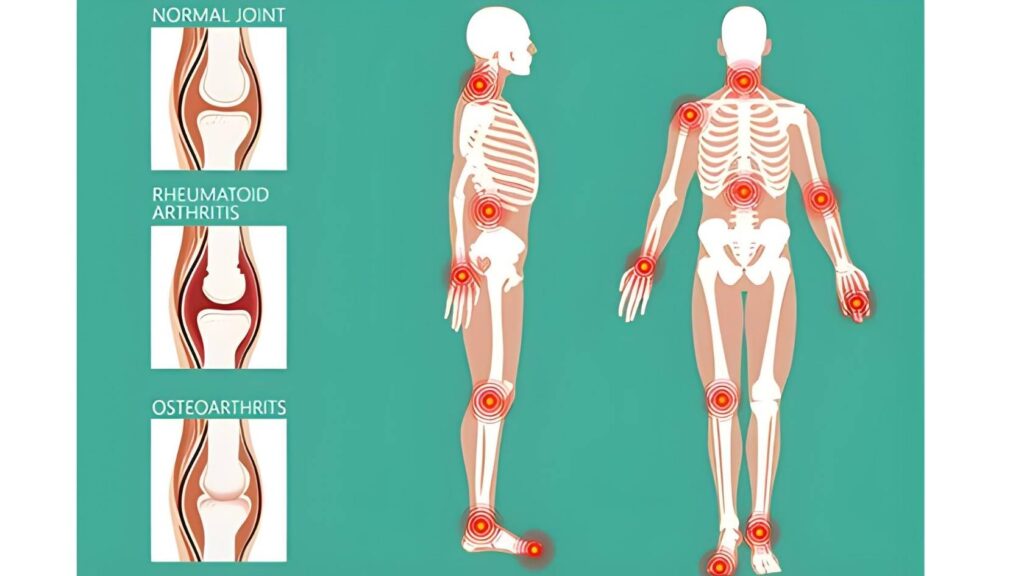
Another major type is rheumatoid arthritis, which is an autoimmune condition. In this form, the body’s immune system mistakenly attacks the lining of the joints, known as the synovium. This leads to chronic inflammation, joint swelling, pain, and eventually joint deformity if not managed properly. Unlike osteoarthritis, rheumatoid arthritis often affects joints on both sides of the body symmetrically and may also cause fatigue, fever, and involvement of other organs.
Psoriatic arthritis is another inflammatory type of arthritis that occurs in people with psoriasis, a skin condition characterized by red, scaly patches. This form can affect joints, tendons, and ligaments, leading to pain, swelling, and stiffness. Ankylosing spondylitis primarily affects the spine and sacroiliac joints, causing chronic back pain and stiffness that may gradually reduce spinal flexibility over time.
Gout is a different form of arthritis caused by the accumulation of uric acid crystals in the joints. It often presents as sudden, severe attacks of pain, redness, and swelling, commonly affecting the big toe but also involving other joints. Lupus-related arthritis occurs as part of systemic lupus erythematosus, an autoimmune condition that can affect joints along with skin, kidneys, and other organs.
Regardless of the type, arthritis commonly presents with symptoms such as joint pain, stiffness (especially in the morning or after rest), swelling, warmth around the joint, and reduced range of motion. In some cases, joints may become visibly enlarged or deformed over time. These symptoms can make everyday activities like walking, climbing stairs, writing, or lifting objects difficult and painful.
Arthritis does not only affect physical movement but can also have a significant emotional and psychological impact. Chronic pain and limited mobility may lead to fatigue, sleep disturbances, reduced independence, anxiety, and depression. Many individuals with arthritis experience changes in work ability, social participation, and overall confidence, especially when symptoms are not adequately managed.
Early diagnosis plays a crucial role in arthritis management. Identifying the type of arthritis and its severity allows timely intervention to reduce inflammation, prevent joint damage, and preserve mobility. Diagnosis is typically based on clinical evaluation, imaging tests such as X-rays or MRI scans, and blood tests that help identify inflammation, autoimmune markers, or metabolic abnormalities.
While arthritis may not always be curable, modern medical approaches focus on long-term control rather than temporary relief. Treatment strategies aim to reduce pain, control inflammation, maintain joint function, and slow disease progression. Management may involve medications, lifestyle modifications, physical therapy, weight management, joint protection techniques, and ongoing monitoring based on the specific type of arthritis.
It is important to understand that arthritis is not simply a normal part of aging that must be tolerated. Many people live active, productive lives with arthritis when the condition is recognized early and managed appropriately. Education, awareness, and consistent care are key to minimizing joint damage and maintaining quality of life.
With increasing awareness and access to specialized arthritis care across Kerala, individuals are better equipped to recognize symptoms early and seek appropriate management. Understanding arthritis as a manageable medical condition rather than an inevitable decline empowers people to take control of their joint health, remain mobile, and continue leading active, fulfilling lives despite the challenges posed by chronic joint disease.
TABLE OF CONTENT
Candidate: Individuals with persistent joint pain, stiffness, swelling, or movement difficulty that interferes with routine activities are good candidates for arthritis treatment. Learn more
Cost: The cost of arthritis treatment varies based on the type of arthritis, severity of symptoms, and treatment approach required. Learn more
Consultation: During an arthritis consultation, the doctor reviews symptoms, examines the joints, and may suggest blood tests or imaging to understand the cause and severity. Learn more
Questions: Before starting arthritis treatment, ask about the diagnosis, treatment options, expected benefits, possible side effects, and long-term management. Learn more
Risks: The risks of arthritis treatment can include medication side effects, infections from injections, or variable response depending on the individual. Learn more
Preparation: To prepare for arthritis treatment, keep a record of symptoms, list current medications, and follow any instructions given before tests or procedures. Learn more
Steps: Arthritis treatment generally involves diagnosis, identifying the type and severity, initiating therapy, monitoring response, and adjusting treatment as needed. Learn more
Recovery: Recovery may include gradual pain reduction, improved joint movement, physical therapy, and ongoing symptom monitoring. Learn more
Results: Expected results often include better pain control, improved joint function, reduced stiffness, and enhanced daily activity levels. Learn more
Terms: Key terms include inflammation, autoimmune, osteoarthritis, rheumatoid arthritis, disease-modifying drugs, flare-ups, and remission. Learn more
Choose the right doctor: Choosing the right doctor involves evaluating experience with arthritis care, treatment approach, patient communication, and access to long-term follow-up. Learn more